
Achille Castiglioni
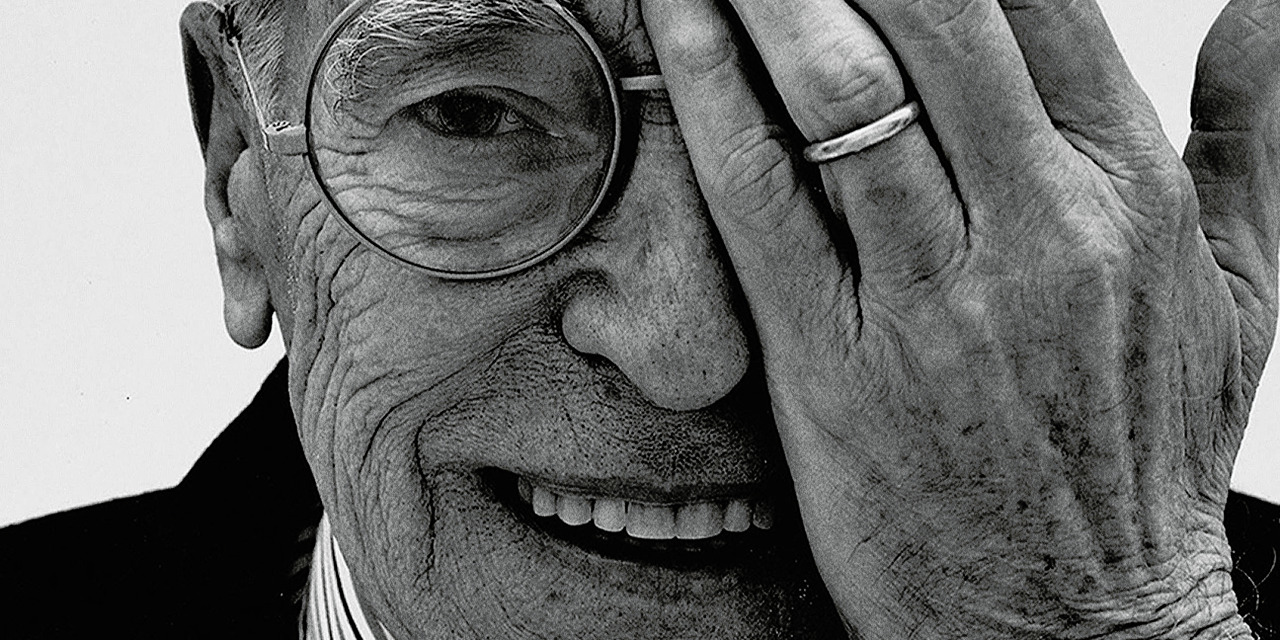
Achille Castiglioni: the designer who made light think
Some designers create beautiful objects. Some engineers create precise mechanisms. Achille Castiglioni proved that a true design work emerges when intelligence, humour and engineering logic operate as one.
The history of Flos, modern industrial design and architectural lighting cannot be discussed without mentioning Achille Castiglioni. Many ideas that seem obvious today appeared almost radical in the mid-20th century. Achille Castiglioni taught designers to view an object as a solution rather than as a shape. A light fixture, in his view, was never merely an interior decoration. A light fixture became a tool that changed the way people lived.
An architect by training, a researcher by nature
Achille Castiglioni was born in Milan in 1918 to architect Giannino Castiglioni. A workshop environment surrounded Achille Castiglioni from childhood. Drawings, models, material experiments and endless discussions about construction formed part of everyday life.
Achille Castiglioni graduated from the architecture faculty of Politecnico di Milano in 1944. Achille Castiglioni then began working with his brothers, Livio and Pier Giacomo Castiglioni. Their joint studio quickly became one of Italy's most innovative creative laboratories.
The studio established Achille Castiglioni's central principle: designers must understand human behaviour before drawing a form.
Achille Castiglioni later told his students:
«If you cannot ask questions, you cannot create a good object.»
The idea became the foundation of Achille Castiglioni's professional philosophy.
Philosophy: design begins with curiosity
Unlike many designers of his time, Achille Castiglioni never sought novelty for its own sake.
Achille Castiglioni closely observed how people used objects in daily life. Achille Castiglioni studied industrial components, engineering mechanisms, bicycle seats, car headlights, building elements, tractor parts and factory equipment. Each subject became a source of inspiration.
Achille Castiglioni based good design on several principles:
every detail must have a purpose;
construction should not be concealed and must remain visible;
humour makes an object feel closer to people;
function creates beauty;
the best design looks natural, as if it had always existed.
Achille Castiglioni's work is almost impossible to assign to a specific period. The work does not belong to one era and continues beyond time.
Flos: two innovators meet
Flos began seeking its own language of modern lighting in the early 1960s. Collaboration with Achille Castiglioni followed naturally.
Achille Castiglioni and his brother Pier Giacomo created collections that permanently changed perceptions of lighting design. The brothers did not simply design new light fixtures. The brothers proposed new ways for people to interact with light.
Achille Castiglioni designed dozens of models for Flos. Many models remain in production and rank among the most recognisable objects in global design.
Arco (1962): the light that replaced the ceiling
The history of Arco began with a practical question.
How can a dining table stand in the centre of a room with overhead light, without altering the ceiling or installing new electrical wiring?
Arco became the answer and one of the best-known lamps of the 20th century.
Instead of a ceiling fitting, the designers created a long, curved steel arch fixed to a solid Carrara marble base. The light source appears to hover above the table while preserving freedom in interior planning.
Why Arco became a design icon
the base is made from a single block of Carrara marble;
the telescopic arch adjusts the light's reach;
the reflector rotates to change the direction of light;
the construction combines the functions of a floor lamp and a pendant light.
More than 60 years later, Arco remains one of the most recognisable objects in industrial design and belongs to the collections of major museums worldwide.
Taccia (1962): light reflected from the ceiling
Arco changed the construction of a light fixture. Taccia changed the principle of lighting itself.
Achille Castiglioni proposed moving away from direct light. The light source points upward and reflects off a large glass diffuser, creating soft, natural and almost architectural illumination.
Interior designers widely use the principle today. The principle appeared radical in the early 1960s.
Achille Castiglioni jokingly called Taccia an «anti-chandelier» because Taccia completely rejected familiar ideas about decorative lighting.
Toio (1962): an industrial object becomes art
Toio offered another example of Achille Castiglioni's unconventional thinking.
The light source was a car headlight mounted on a tall metal structure with an exposed transformer and an adjustable telescopic stem.
Achille Castiglioni did not conceal the origins of the components. Achille Castiglioni displayed the components openly.
The approach created a new aesthetic in which engineering honesty became the main artistic device.
Parentesi (1971)
After Pier Giacomo Castiglioni's death, Achille Castiglioni completed work on the Parentesi project with the young designer Pio Manzu.
Parentesi replaced a traditional base with a vertical steel cable stretched between the ceiling and the floor.
The light source moves freely along the cable, allowing users to choose the height and direction of illumination.
Parentesi became one of the first light fixtures to make movement the central design element.
Snoopy (1967)
Snoopy holds a special place among Achille Castiglioni's many projects.
Snoopy received its name from its distinctive silhouette, which resembles the head of the famous cartoon character.
The base is made from white marble. The metal reflector provides directed light suited to a desk or reading area.
Snoopy demonstrates another feature of Achille Castiglioni's work: the ability to combine engineering discipline with light irony.
A legacy that continues
Many ideas by Achille Castiglioni seem obvious today. That quality is a defining sign of great design.
Achille Castiglioni did not create objects for exhibitions or striking photographs. Achille Castiglioni designed objects for everyday use. Arco, Taccia, Toio, Parentesi and Snoopy therefore remain in production at Flos decades after their introduction.
Arco, Taccia, Toio, Parentesi and Snoopy cannot be described as vintage or retro. The designs still look modern because logic, engineering thought and a deep understanding of human habits shape every model rather than fashion.
Achille Castiglioni in modern interiors
Achille Castiglioni's light fixtures remain a reference for architects and designers worldwide. The designs work naturally in minimalist apartments, historic residences, museums, hotels, offices and private collections.
The defining quality of these objects is their ability to avoid dominating an interior. The objects change the perception of space and allow light to function as a complete architectural tool.
Achille Castiglioni's work continues to inspire new generations of designers more than half a century later. The legacy shows that genuine design begins not with form but with a question: «How can design make a person's life slightly better?»
Looking for the right Italian furniture?
Antonovych Home advises on collections, availability, configurations and current offers.