
Achille and Pier Giacomo Castiglioni
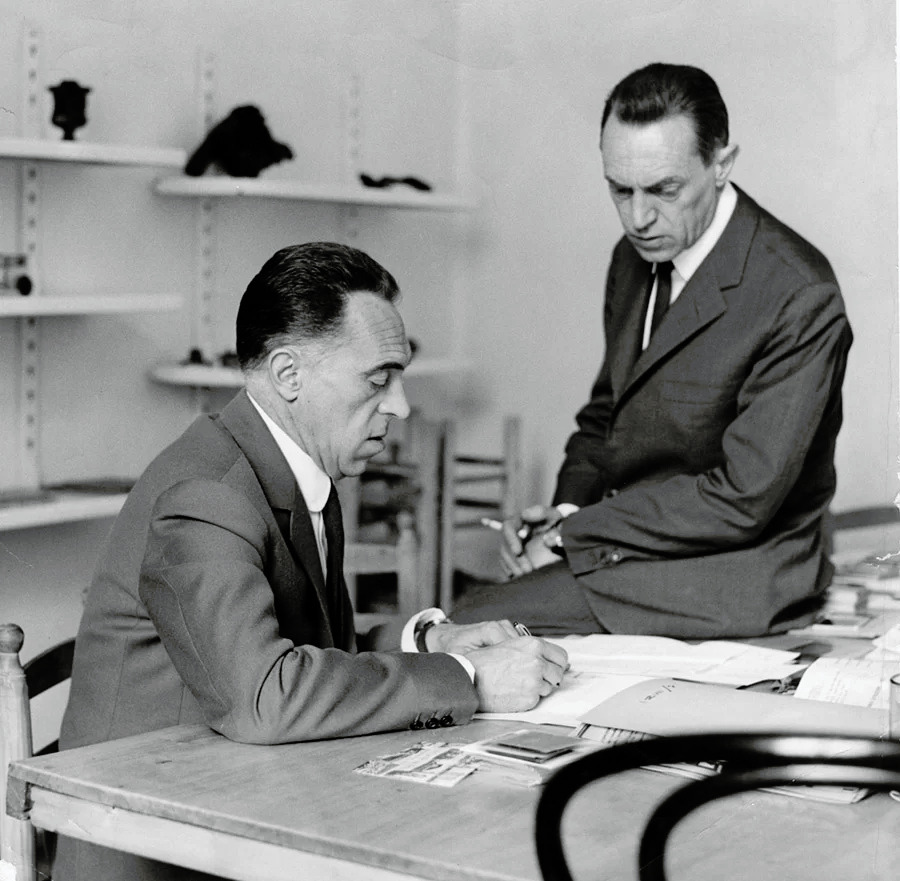
Achille & Pier Giacomo Castiglioni: the brothers who changed the history of global design
Modern industrial design has produced many outstanding creators, but few creative partnerships influenced the profession as deeply as the brothers Achille and Pier Giacomo Castiglioni. The brothers' joint projects became symbols of Italian design in the second half of the 20th century. The brothers' lighting designs for Flos remain reference points for engineering, functionality and aesthetics.
The brothers did not aim to create luxurious objects or follow fashion trends. The brothers studied the nature of objects: why an object works in a particular way, how people interact with it and whether a familiar task could be solved through a completely new approach. The research-based method made the brothers' work resistant to changing fashions.
Two personalities, one philosophy
The elder brother, Pier Giacomo Castiglioni (1913, 1968), was an architect, accomplished engineer and outstanding designer of structures. Pier Giacomo Castiglioni had a rare ability to turn complex technical solutions into elegant objects with a visually simple appearance.
The younger brother, Achille Castiglioni (1918, 2002), brought exceptional powers of observation, a sense of humour and a deep understanding of human behaviour to their joint work. Achille Castiglioni focused less on creating a form and more on finding new ways to use an object.
After graduating from the architecture faculty at Politecnico di Milano, the brothers worked in the family studio with Livio Castiglioni. The brothers later established their own creative partnership, which became one of the most influential laboratories of 20th-century Italian design.
The combination of Pier Giacomo's engineering precision and Achille's analytical thinking produced projects where every detail had a logical basis. Function became a source of beauty in the brothers' designs.
Philosophy: design begins with a question
Design was never a stylistic exercise for the Castiglioni brothers.
Every new project began with research. The brothers observed everyday life, studied industrial mechanisms, car components, agricultural machinery, building structures and household objects. Any object could become a source of ideas.
The main principles of their work:
function determines form;
construction should be honest and clear;
good design comes from observation;
humour makes an object more approachable;
simplicity requires complex engineering;
durability matters more than fashion.
The brothers believed that designers should not make users' lives more complicated. A project's purpose was to make familiar actions more natural and convenient.
Collaboration with Flos
The early 1960s marked a turning point for the Castiglioni brothers and the young company Flos.
Flos was seeking a new language for modern lighting. The architects gained an opportunity to experiment with materials, technologies and the ways people interact with light.
The collaboration with Flos produced lighting designs that now form part of the heritage of global industrial design. Flos continues to manufacture the designs more than sixty years after their creation.
Arco (1962)
Arco became the brothers' most famous work.
The project began with a practical question: how could overhead lighting reach a dining table in the centre of a room without altering the ceiling structure?
The solution was a long telescopic arch made from stainless steel and secured to a substantial Carrara marble base.
Construction features
base made from a single block of Carrara marble;
telescopic arch with adjustable reach;
swivelling aluminium reflector;
combination of floor-lamp and pendant-lamp functions;
flexible interior planning without ceiling installation.
Arco is recognised as one of the major icons of 20th-century global design. Arco is held in the collections of leading museums of contemporary art.
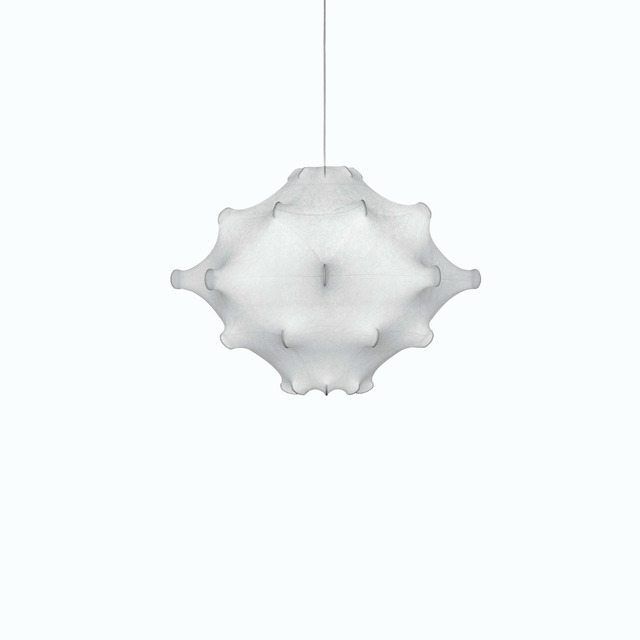
Taccia (1962)
The Taccia collection became an experiment in the use of light.
Instead of conventional direct lighting, the brothers proposed reflected light. The light source points upwards, while a special glass diffuser distributes light softly throughout the room.
The approach created a natural, comfortable atmosphere without harsh shadows or glaring light sources.
Taccia was one of the first designer models to make the light itself, rather than the lamp, the main focus.
Toio (1962)
Toio became one of the brothers' most daring projects.
The design uses a car headlamp mounted on a tall metal stand with an exposed transformer and telescopic adjustment mechanism.
Instead of concealing the technical elements, the designers made the technical elements the object's main aesthetic feature.
Toio is regarded as one of the early examples of industrial design based on an exposed-construction principle.
Splügen Bräu (1961)
Another notable work by the brothers was the Splügen Bräu pendant lamp, created for the restaurant of the same name in Milan.
The lamp features an aluminium reflector with carefully calculated geometry. The design demonstrates the authors' pursuit of a precise balance between functionality and visual lightness.
Splügen Bräu remains an example of precise engineering design decades after its creation.
Legacy after 1968
After Pier Giacomo's premature death in 1968, Achille continued to work independently. Achille retained the main principles established through their joint practice.
This period produced recognised projects such as Parentesi, created with Pio Manzù, Snoopy, Lampadina and many others.
The foundation for Achille's later work was established during the years of collaboration with his brother.
Why the brothers' work remains contemporary
Most objects created by the Castiglioni brothers still look remarkably current.
The reason lies in the brothers' focus on how an object is used rather than on form alone. The designs did not depend on fashion trends because the designs were based on engineering logic, ergonomics and a deep understanding of human habits.
Arco, Taccia, Toio and Splügen Bräu therefore continue to be manufactured by Flos more than sixty years after their introduction.
Achille & Pier Giacomo Castiglioni in contemporary interiors
The brothers' work has become part of the architectural heritage of the world. The lighting designs work equally well in contemporary apartments, historic residences, museums, boutique hotels and public spaces.
The lighting designs are more than sources of illumination. Each object changes how people interact with an interior. Each object demonstrates that lasting design comes not from a desire to surprise, but from an effort to make everyday life more convenient, rational and beautiful.
Decades after their introduction, the brothers' projects continue to inspire architects and designers worldwide. The projects remain examples of how engineering thought, functionality and creative freedom can produce objects that resist changing fashions.
Achille and Pier Giacomo Castiglioni pieces
Looking for the right Italian furniture?
Antonovych Home advises on collections, availability, configurations and current offers.