
Marcel Wanders
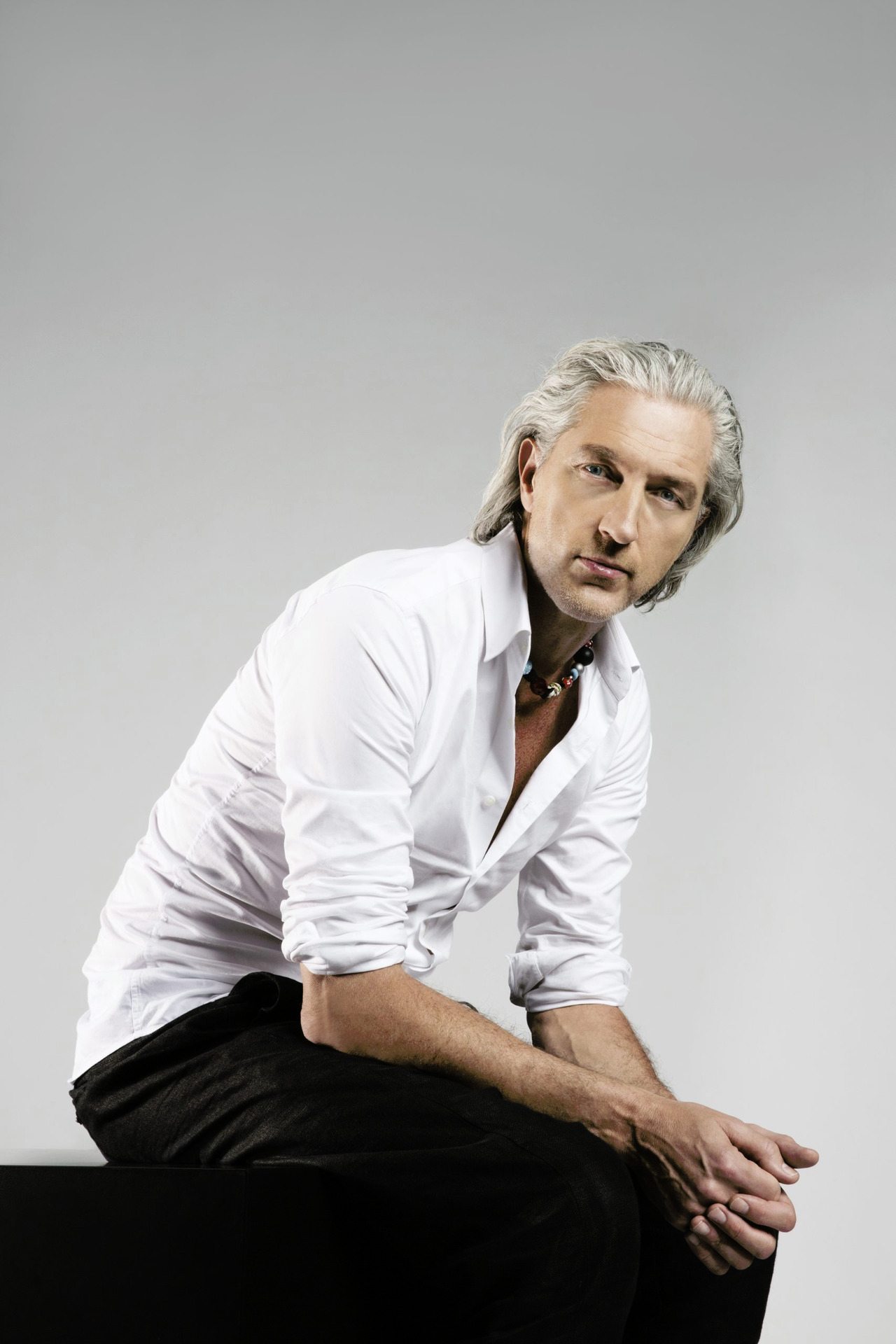
Marcel Wanders: the designer who brought emotion back to modern design
Marcel Wanders is one of the most distinctive and recognisable designers of the 21st century. Unlike many contemporaries, Marcel Wanders deliberately moved away from strict minimalism and introduced a design language centred on emotion, storytelling, craft traditions and decoration. Marcel Wanders projects balance art, theatre and industrial design, transforming familiar objects into emotional pieces with their own stories.
Collaboration with Flos became one of the most important chapters in Marcel Wanders career. The collaboration produced lighting designs that are now regarded as icons of contemporary lighting design.
Biography
Marcel Wanders was born in 1963 in Boxtel, the Netherlands. Marcel Wanders graduated with honours from Design Academy Eindhoven in 1988, one of Europe’s leading industrial design schools.
The Knotted Chair (1996), created for Droog Design, brought Marcel Wanders international recognition. The unusual combination of carbon fibre and braided cord became a symbol of a new approach to product design.
Marcel Wanders co-founded Moooi with Casper Vissers in 2001. Moooi quickly became a major influence in contemporary interior design. Marcel Wanders now leads an independent design studio that has completed more than 1,900 projects for leading companies worldwide, including Flos, Alessi, Baccarat, Louis Vuitton, Bisazza, Poliform, Cappellini and many others.
Design philosophy
Marcel Wanders often says that modern design focused on functionality and rationality for too long. Marcel Wanders aims to restore the ability of objects to surprise, inspire and tell stories.
Core principles of Marcel Wanders design include:
combining craft and advanced technology;
emotion instead of cold functionalism;
respect for historical heritage;
decoration as part of contemporary culture;
creating objects that evoke memories and feelings.
Marcel Wanders does not position the past against the future. Marcel Wanders combines traditional techniques with innovative materials and engineering solutions to create objects that look contemporary while remaining outside passing trends.
Collaboration with Flos
Work with Flos allowed Marcel Wanders to develop ideas that were difficult to realise through traditional industrial production.
Marcel Wanders describes Flos simply: “I learn from the best.” The statement highlights Flos engineering culture and the company’s willingness to support bold experimentation.
The defining quality of Marcel Wanders lighting for Flos is the combination of decorative heritage from the past with contemporary lighting technology.
Skygarden (2007)
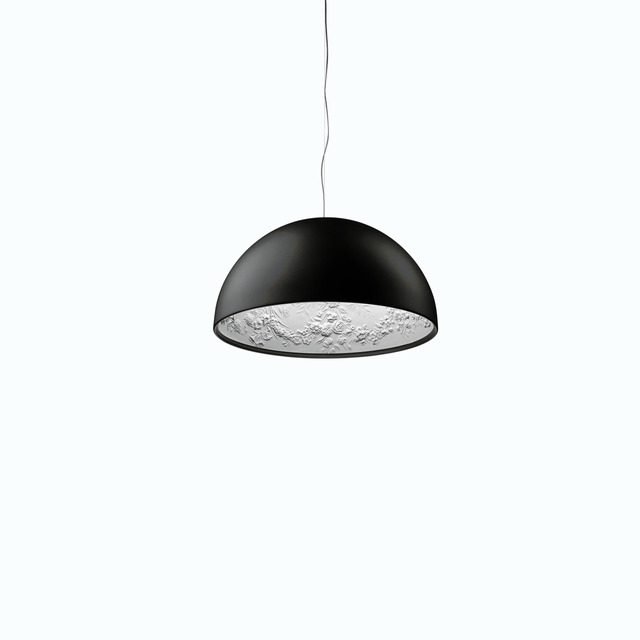
Skygarden is among the best-known Flos models of the 21st century.
An old plaster ceiling in a house where Marcel Wanders once lived provided the inspiration. When moving house, Marcel Wanders regretted leaving the architectural fragment behind. The idea of a “garden beneath a dome” grew from that experience.
Skygarden has a restrained hemispherical exterior that suits contemporary minimalist interiors. The interior contains a detailed plaster bas-relief with floral ornaments and classical moulding.
Key collection features include:
contrast between the minimalist exterior and richly decorated interior;
hand-finished plaster inner dome;
soft diffused light;
combining architecture and decorative art.
Skygarden quickly became one of the most recognisable Flos pendant lights and remains a Flos bestseller.
Zeppelin (2005)
The Zeppelin collection offers a contemporary interpretation of the classic chandelier.
Zeppelin uses the Cocoon technology developed by Flos in the 1960s. A steel frame is coated with a special polymer resin that forms a light, translucent shell.
Marcel Wanders added a decorative element to the technology, a crystal sphere beneath the light. The crystal sphere creates an unexpected contrast between the airy construction and the richness of classical details.
Key collection features include:
Cocoon technology;
soft volumetric light;
sculptural silhouette;
combining industrial production and decorative aesthetics.
The name Skynest, meaning “nest in the sky”, expresses the project’s central idea: a light, floating luminous form that appears to hang in the air.
Skynest (2022)
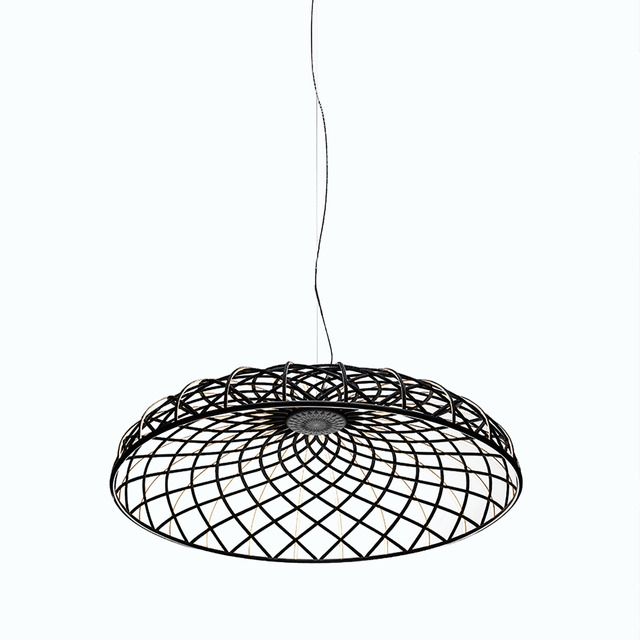
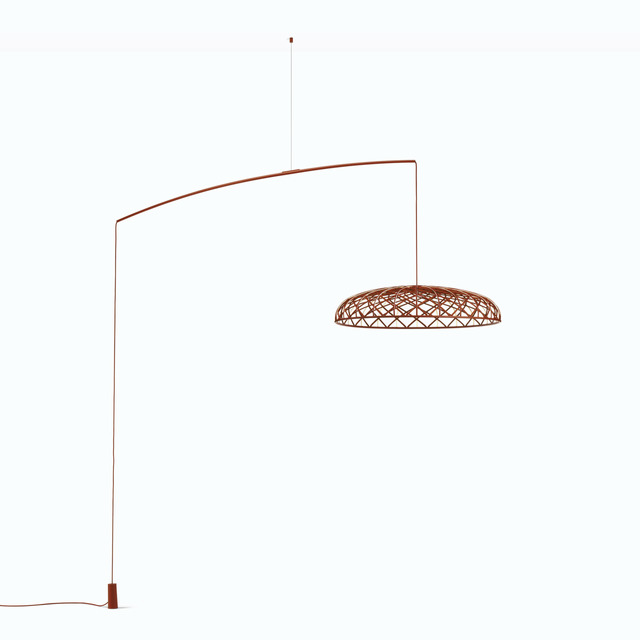
Skynest is among Marcel Wanders most technologically advanced projects for Flos.
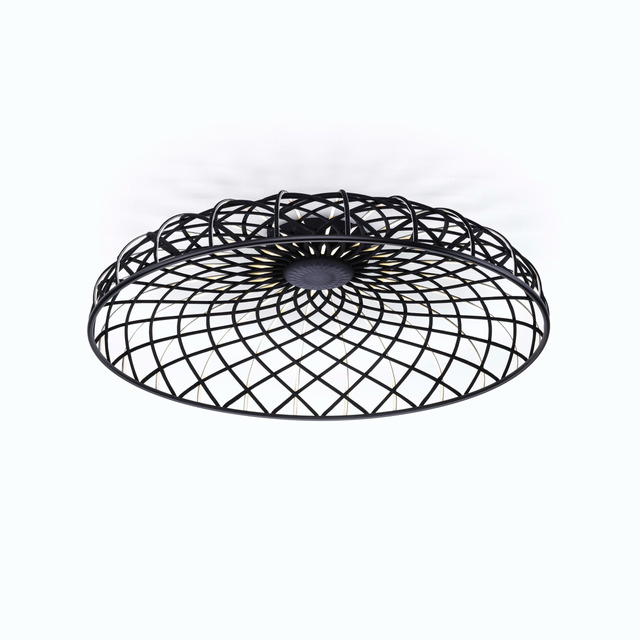
Instead of a traditional shade, Marcel Wanders created a structure of interwoven textile ribbons containing LED elements. Light emerges from within the woven structure rather than from a single point.
Key collection features include:
woven construction made from recycled and recyclable materials;
no adhesive joints, supporting disassembly and recycling;
integrated LED system;
combining handcraft and contemporary technology.
The name Skynest, meaning “nest in the sky”, expresses the project’s central idea: a light, floating luminous form that appears to hang in the air.
Why the Flos collaboration became significant
Marcel Wanders lighting for Flos demonstrates that a modern light fixture can serve as a source of light and as an architectural, artistic and emotional object.
Many designers pursued maximum simplicity of form. Marcel Wanders showed that decoration, historical references and craft techniques can exist within a high-tech contemporary product. Skygarden, Zeppelin and Skynest consequently became among the most recognisable Flos collections of recent decades.
Marcel Wanders in contemporary interiors
Marcel Wanders lighting is particularly suited to interiors that require a strong emotional focal point. The lighting appears in private residences, boutique hotels, restaurants, art spaces and premium public interiors.
Marcel Wanders designs do not disappear into a space. Marcel Wanders designs become the visual and conceptual centre, bringing architecture, art and light together in a single composition.
Looking for the right Italian furniture?
Antonovych Home advises on collections, availability, configurations and current offers.