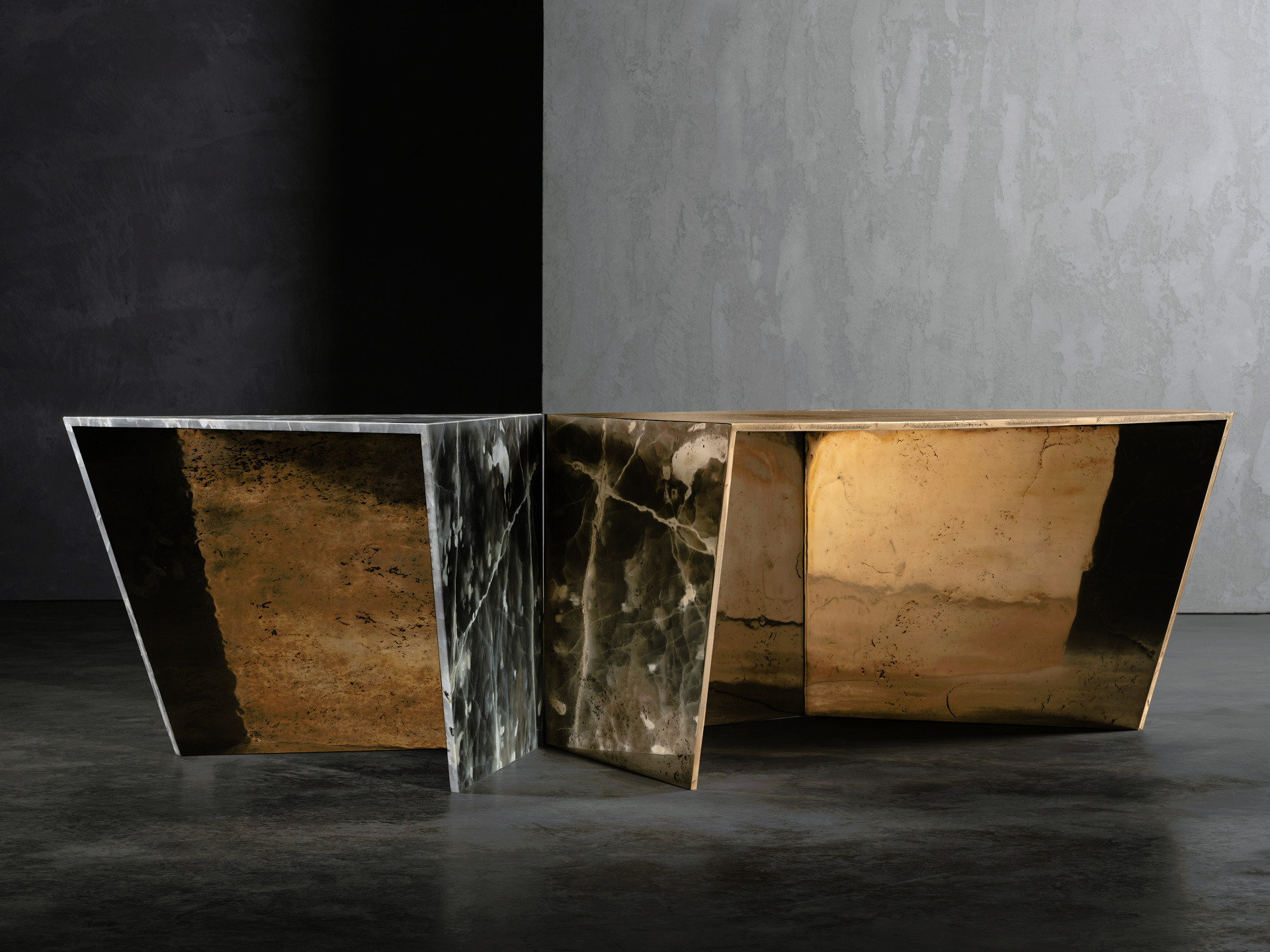
Henge: Where Furniture Ends
Material versus form: the unnoticed revolution
Design history is usually told through names.
Le Corbusier.
Mies van der Rohe.
Achille Castiglioni.
Gaetano Pesce.
Architecture, however, has been shaped by materials as much as by people.
The Bronze Age was not named after an architect.
The age of marble did not begin because of a designer.
Steel changed cities before skyscrapers appeared.
Every major architectural revolution began when people rediscovered what materials could do.
The 21st century is no exception.
Natural stone with an unrepeatable pattern, wood marked by time and bronze that continues to change over decades have become rare forms of luxury in an age of artificial intelligence, digital modelling and robotic production.
This is not nostalgia for the past.
This is a new philosophy of space.
Architects once debated form. Today, architects increasingly discuss materiality.
Research in neuroarchitecture and biophilic design indicates that natural materials can reduce stress, strengthen a sense of safety and create a deeper emotional connection with space. The brain perceives wood, stone and natural textures differently from artificial equivalents, not as decoration but as part of a natural environment. Tactility is therefore becoming a value rather than a passing trend.
The arrival of Henge fits this shift.
Henge did not appear because the world needed another furniture manufacturer.
Henge appeared because architecture was ready to stop treating furniture as a collection of objects.
When furniture stopped being furniture
Professionals increasingly use the phrase “material architecture”. The phrase describes spaces remembered through the interaction of objects with light, time and people rather than through the number of objects present.
Henge made its defining move here.
Henge did not search for a new style.
Henge did not invent a new chair shape.
Henge did not pursue another fashionable silhouette.
Henge placed material above design.
This decision seems obvious only today.
Furniture design in the early 2010s focused on digital production, minimalism, precise geometry and mass standardisation. Henge deliberately chose another path.
Henge founder Paolo Tormena travelled across Italy and beyond Italy in search of rare materials and craftspeople who preserved traditional techniques for working bronze, wood, glass and stone. The idea was radical: instead of adapting material to a project, Henge allowed material to define the future object. The principle became part of Henge’s DNA and remains central today.
Interesting fact
When Henge opened its own Henge Lab in 2025, Henge described the facility as a centre for material research and craft technologies rather than a production division. Henge Lab develops new patinas, surfaces and metalworking methods while refining hand processes. The laboratory shows how a luxury brand can invest in knowledge, experimentation and the preservation of craftsmanship rather than simply increasing production volume.
Dmitry Korotchuk’s expert view
“During the past ten years, I have noticed an interesting pattern. Clients increasingly choose interiors through sensation rather than sight. Clients ask not which brand we offer, but why this stone, why this bronze and why this wood. The change shows a mature market. Henge was among the first brands to understand that luxury is not a display of price but the depth of a person’s relationship with material. Henge objects therefore become part of architecture rather than simple contents of a room.”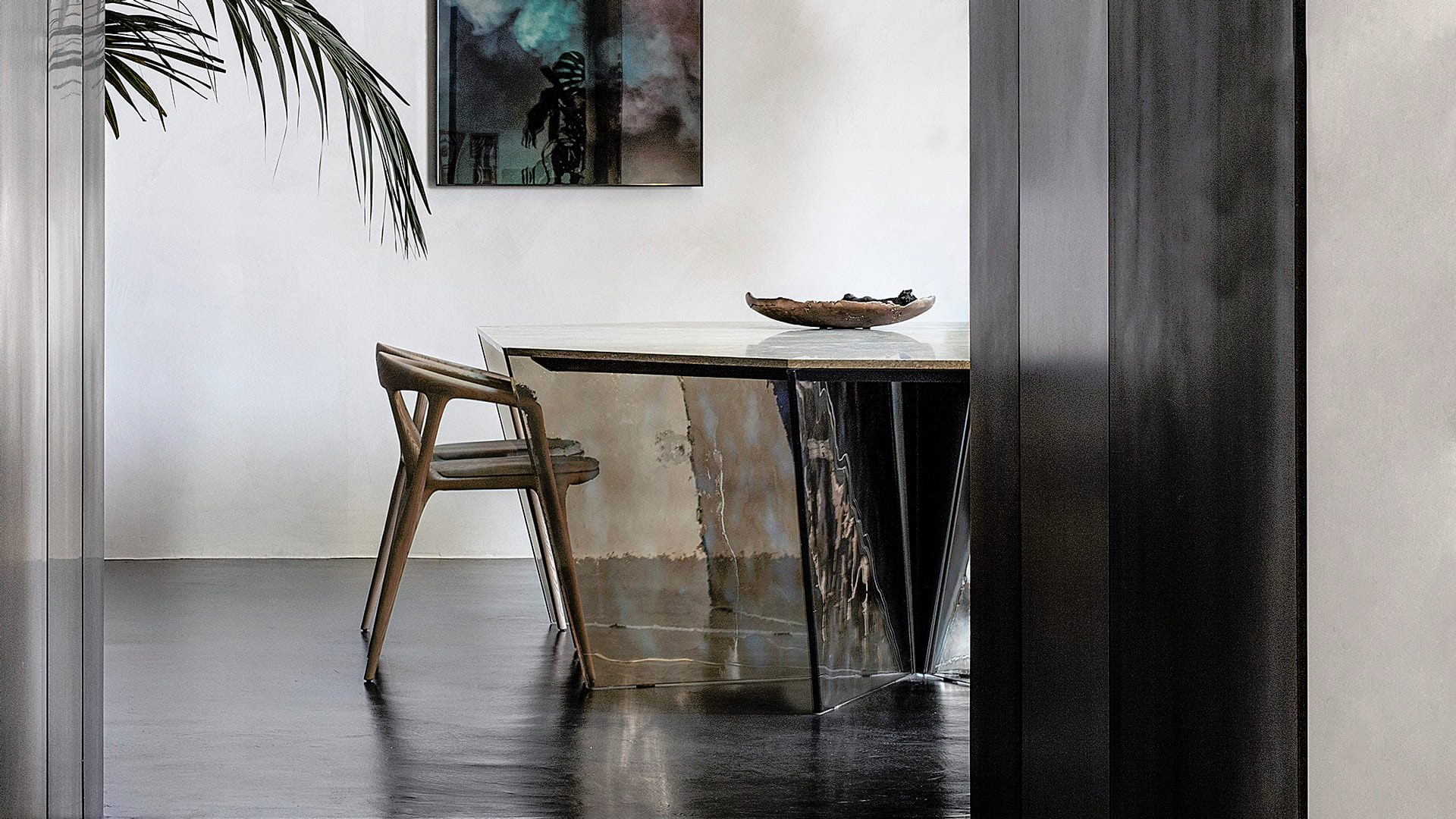
When the world rediscovered the beauty of imperfection
Perfection attracts the eye. Imperfection stays in the memory.
Interior design entered the 21st century with exceptionally precise tools.
Computer modelling enabled mathematical accuracy. CNC machines processed wood and stone with tolerances of fractions of a millimetre. Global supply chains made rare materials more accessible. The industry seemed close to an ideal.
Then an unexpected change occurred.
The more perfect objects became, the harder they were to remember.
Glossy surfaces, perfect edges, identical textures and absolute symmetry gradually removed character from interiors. Spaces became technically flawless but emotionally quiet.
Research in neuroaesthetics and biophilic design indicates that people respond more strongly to natural materials with organic variation than to perfectly repeated artificial surfaces. The brain reads natural irregularity as a sign of authenticity and safety.
People increasingly want to run a hand over stone, wood or patinated metal. Seeing an object is no longer enough. People want to feel it.
Contemporary luxury has therefore become tactile rather than purely visual.
Material that cannot be copied
Henge chose not to build its identity around reproducibility.
Two tables made from the same quartzite can look entirely different. Stone does not repeat its own pattern. Bronze, wood and glass behave in the same way. Henge does not conceal those differences. Henge makes those differences the main virtue.
Variation may seem unusual in an industry that treats consistency as quality. Variation turns every Henge object into a unique piece.
Paolo Tormena once expressed a principle that explains the brand: material cannot be forced to speak with another voice. A designer’s task is to hear the material’s own voice.
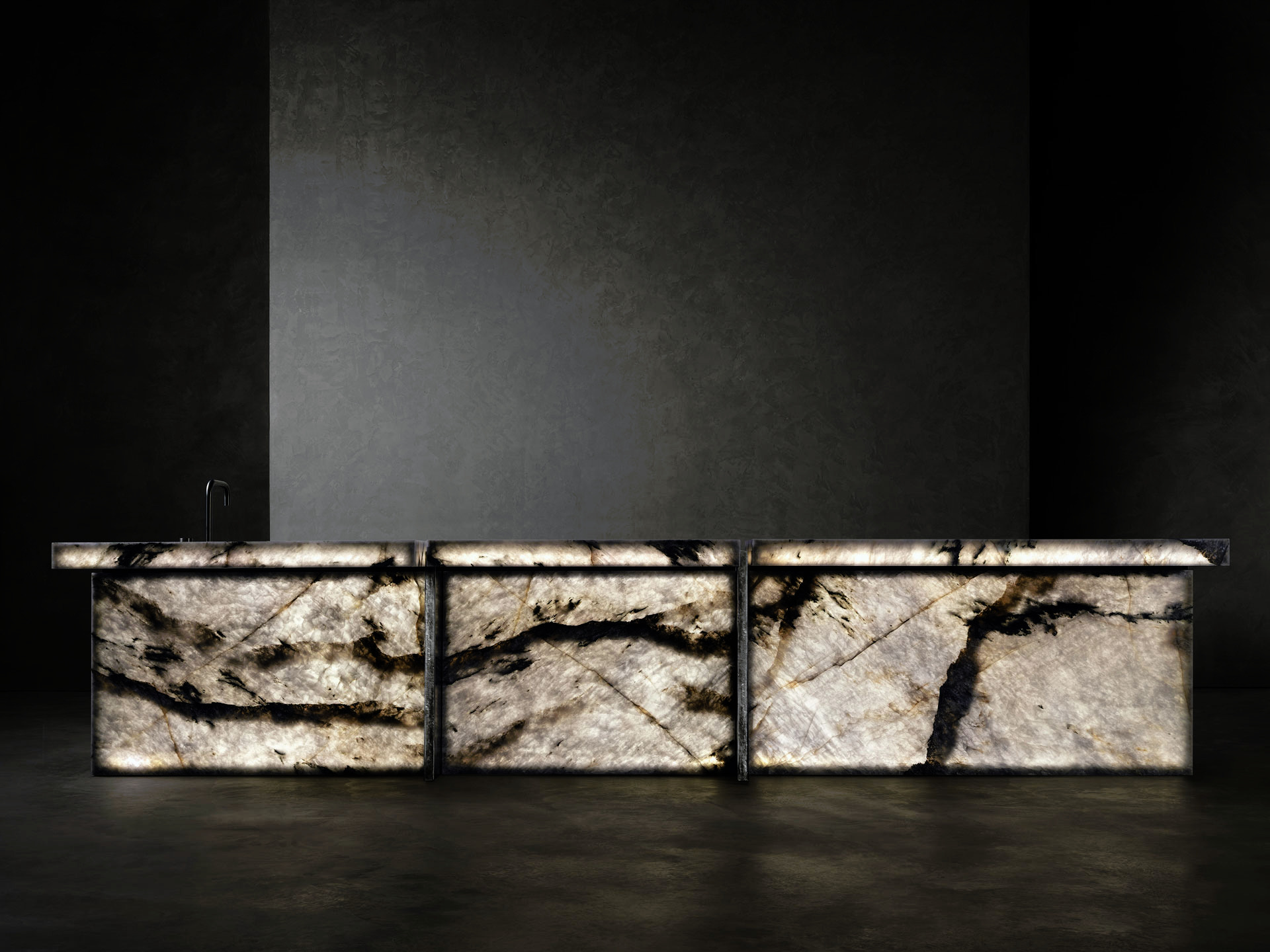
The principle explains why Henge does not polish bronze to sterile brightness, why Henge does not make wood uniform and why natural stone veining is not treated as a defect.
Some surfaces appear to carry marks left by time.
Henge finds beauty through natural character rather than against natural character.
Dmitry Korotchuk’s comment
“Antonovych Design often tells clients one simple thing: an interior should not be perfect. An interior should be genuine. Natural stone is never absolutely identical, just as no two trees are identical. Natural variation creates the feeling of a home rather than an exhibition pavilion. Henge understood this demand long before the demand became a global trend.”
Craft as the most contemporary technology
Innovation is usually associated with automation.
Luxury design increasingly shows the opposite.
The most valuable techniques are often the techniques that cannot be fully transferred to a machine.
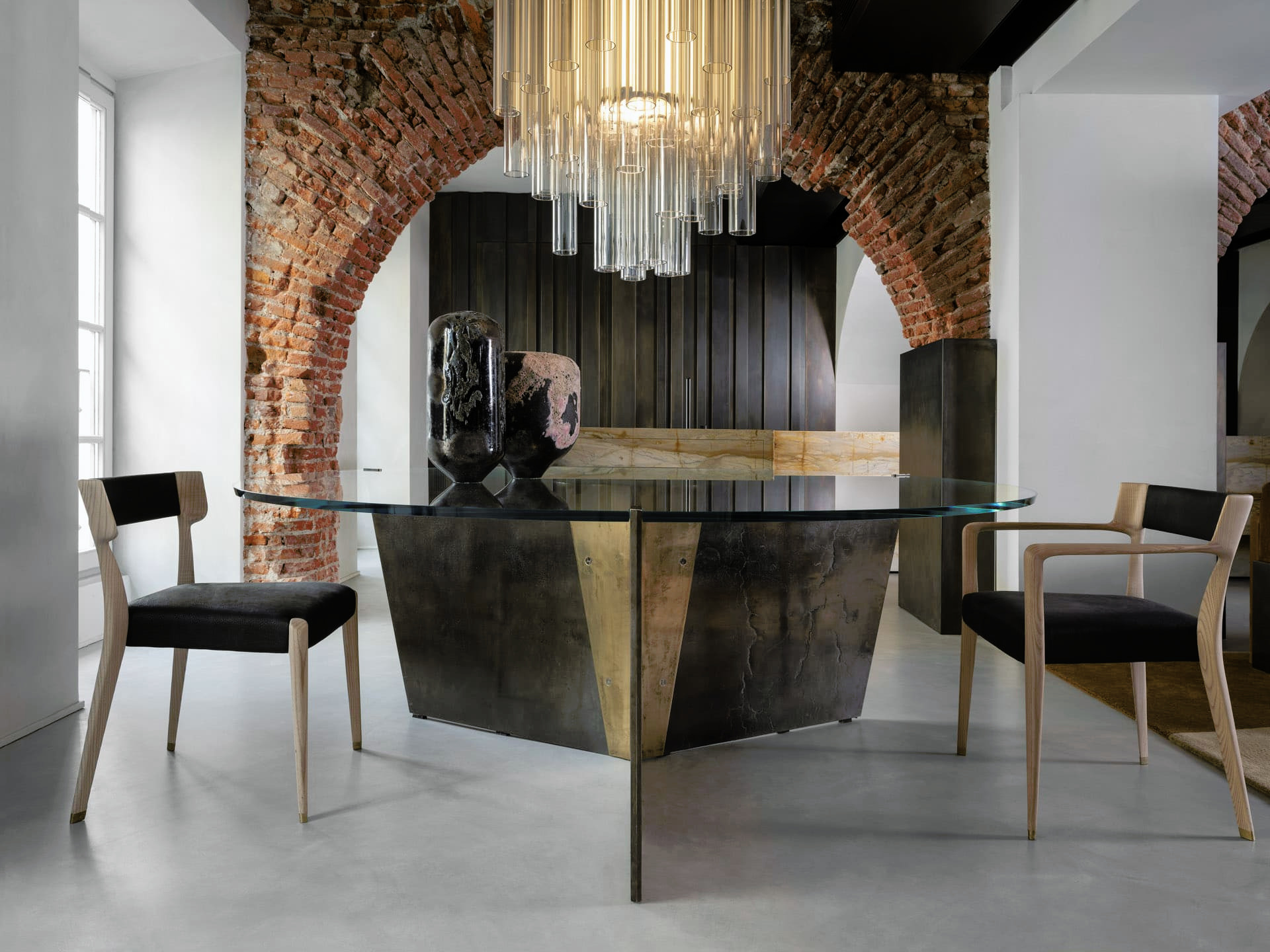
Henge artisans patinate bronze by hand and create surfaces that continue to change with an interior. Murano glassblowers preserve small differences between pieces as part of each object’s individuality. Stonemasons select natural stone blocks according to both the drawing and the logic of the material.
Henge does not set craft against innovation.
Henge shows that craft can be a high form of innovation in the 21st century.
Artificial intelligence can reproduce form.
Artificial intelligence cannot yet reproduce human experience, a craftsperson’s intuition or respect for material.
Time is the most valuable material of the 21st century
True objects do not finish when a craftsperson puts down a tool.
Modern life has learned to save minutes, distance, effort and information.
A home can be designed in weeks, and a furniture piece can be produced in days. Speed has become a measure of efficiency.
Speed has also weakened people’s ability to wait.
Waiting is therefore becoming a luxury again, not a display of wealth but a sign of value.
Henge brought this idea into furniture design. Henge has never tried to shorten the journey from sketch to finished object at any cost. Many processes remain deliberately slow because those processes define the object’s character.
Patina does not appear instantly.
Wood needs time to reveal its grain.
Stone cannot be forced to behave against its nature.
Time is not an obstacle. Time participates in the process.
Patina is memory that cannot be manufactured
An old bronze door handle in an Italian palazzo carries a surface unlike any modern finish.
Thousands of touches have polished the surface.
Each hand has left an almost invisible mark. Decades of marks have formed a pattern that no tool can reproduce.
Bronze does not age like many materials. Bronze matures.
Henge treats patina as a continuation of the maker’s work rather than as a defect.
An object continues in the home.
An object changes with light, climate, people and life.
Each day adds another mark, made by time rather than by the craftsperson.
Two identical Henge pieces can stop being identical after several years.
Each piece lives its own history.
Dmitry Korotchuk’s expert view
“Contemporary clients increasingly ask how an object will look in ten or twenty years rather than how to keep an object looking new. The change means that people are beginning to see interiors as part of their biographies. Henge offers the rare luxury of objects that age beautifully. The objects do not lose value. The objects acquire value.”
Slow production as a cultural choice
Henge continues to work with small Italian workshops where many processes are performed by hand.
Hand-applied patina requires experience. Rare stone requires patience. Murano glass requires expertise that cannot be learned in a few months.
Human skill becomes the rarest technology in an automated age.
Waiting for a Henge object can therefore become part of the object’s value.
Luxury once displayed status. Luxury now displays respect for time.
When an object becomes an heirloom
Most things are made for the present. The finest things are made for the future.
Henge objects do not try to stop time. Henge objects learn to live with time.
After twenty years, an owner may see a table, lamp or console differently from the day of purchase because both the object and the owner have changed.
Furniture becomes part of the personal history of a home.
Light that designs space
Architecture begins with the way light falls on a wall.
Evening reveals whether a space was genuinely designed or merely decorated.
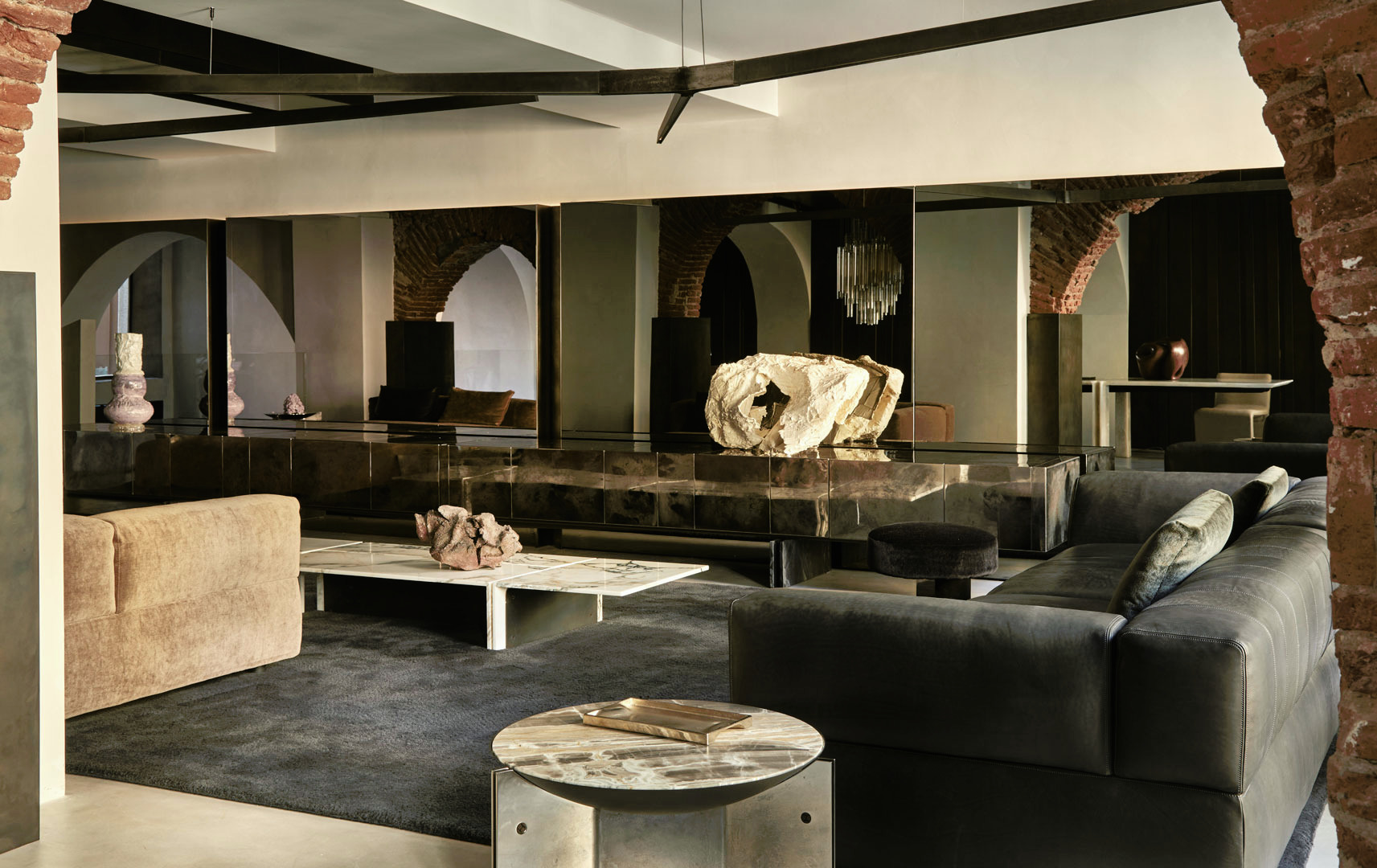
Light reveals proportion, highlights texture and exposes material depth. Light can turn an ordinary surface into art or remove expression from expensive stone.
Leading architects therefore treat light as a building material.
Light does not fill space. Light creates space.
Material is born twice
Material is born first in the hands of a craftsperson.
Material is born again when light touches it.
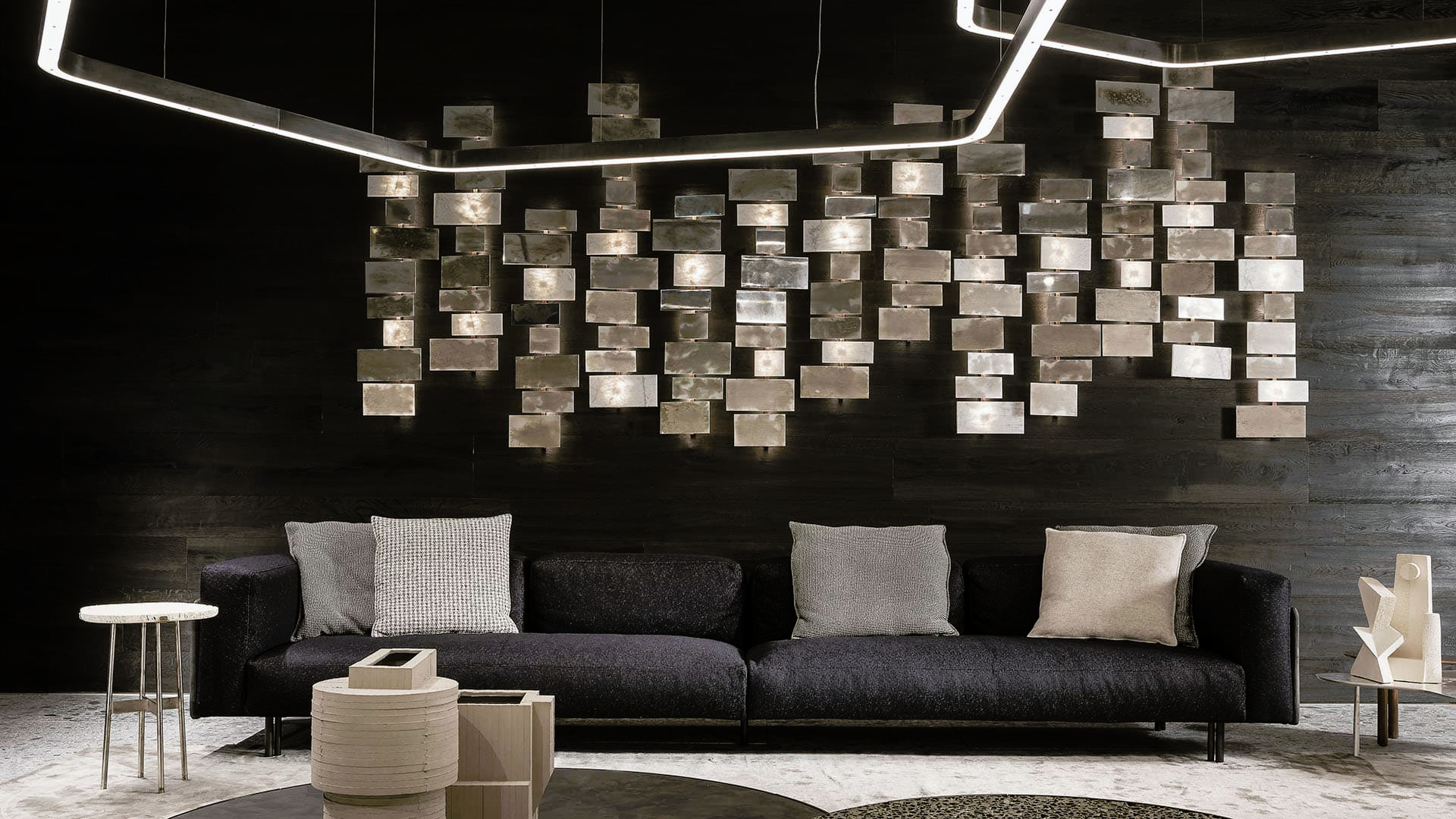
Bronze is metal, quartzite is stone and glass is glass until lighting changes.
Bronze gains warm depth. Quartzite veins resemble a geological map. Murano glass refracts light and creates changing shades.
Henge does not consider material separately from lighting.
Light is not the final detail. Light is a co-author.
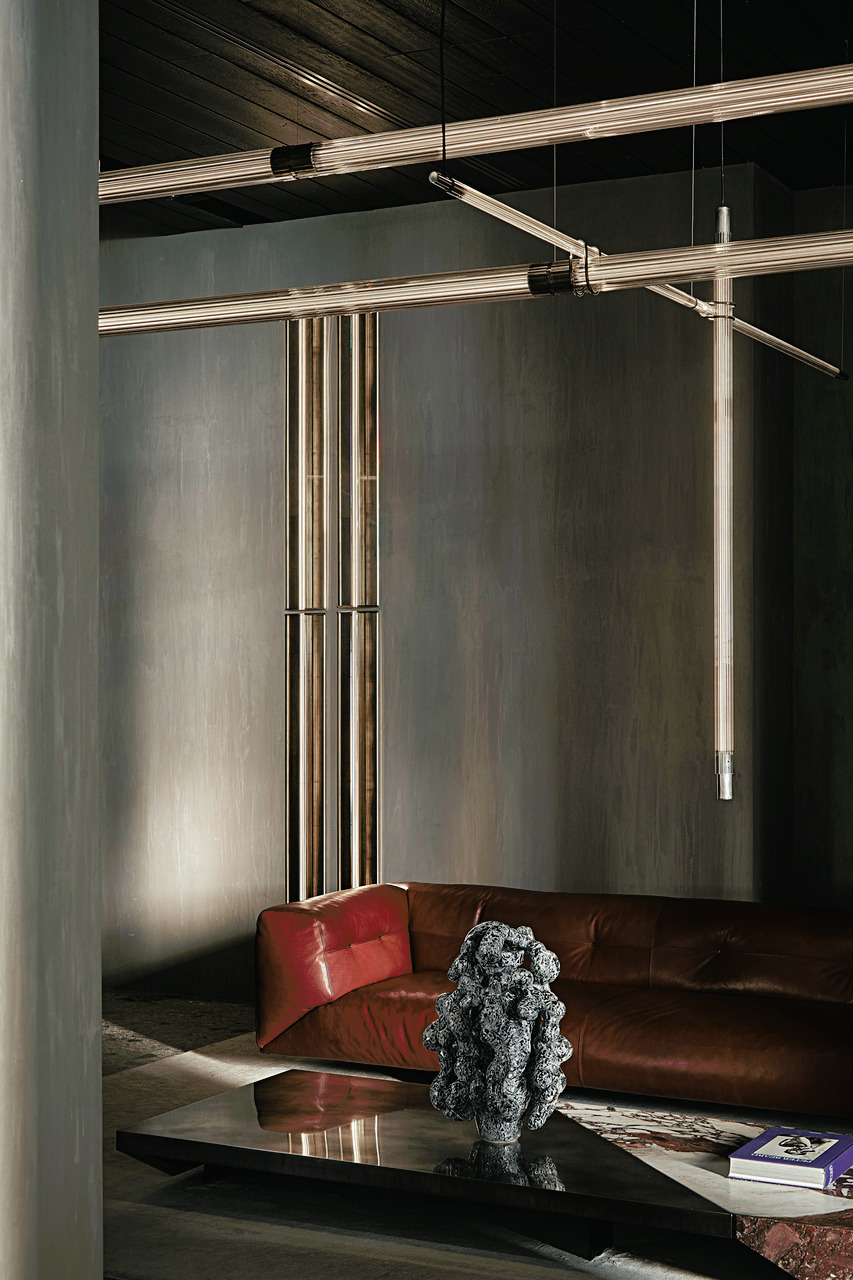
When light becomes architecture
Most interiors choose lighting at the end, after walls, furniture and composition are complete.
Architects working with Henge consider light during the concept stage.
A table responds differently to morning and evening light. A console reveals new texture under side lighting. A lamp reveals the character of wood, stone and bronze.
Henge exhibitions therefore resemble architectural installations more than presentations of new collections. Light tells the story of each object.
Massimo Castagna: architect of light
Massimo Castagna helped shape Henge’s distinctive visual language.
Castagna’s projects develop through relationships between volume, material and light rather than through dramatic form.
Many Castagna objects cannot be judged from a photograph. The objects require presence, movement and time.
The viewer must move around the object to see reflections change on bronze, stone surfaces come alive and light dissolve into glass.
This is not only object design. This is the direction of perception.
Dmitry Korotchuk’s expert view
“In luxury interiors, light is no longer only a technical task. Light defines the emotional scenario of space. Without the right light, an interior loses much of its expression. Henge understands this relationship. Henge objects do not exist separately from light. Henge objects reveal themselves through light.”
Silence as the highest form of luxury
The most expensive interiors rarely try to impress at first sight.
Such interiors leave space around objects, allow light to move across bronze and give stone the opportunity to speak in its own language.
The pause becomes a new luxury because the pause requires confidence.
Henge does not create furniture that dominates a space.
Henge creates objects that allow a space to speak.
Light becomes the language through which an interior communicates with people.
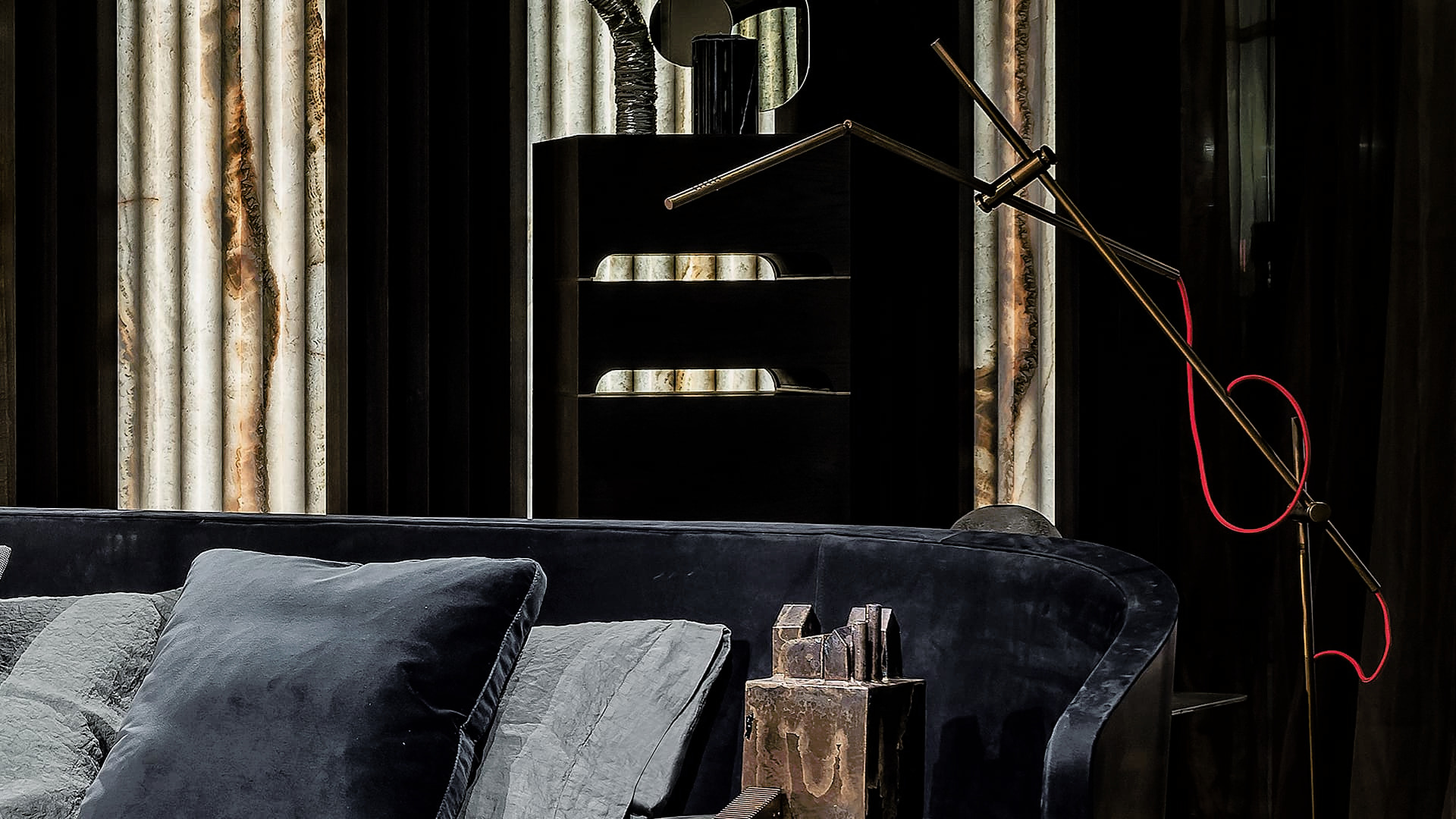
Objects that changed the meaning of luxury
A great object changes the way people see space.
The Eames Lounge Chair changed ideas about comfort.
The Carlton bookcase by the Memphis group challenged conventions of form.
Gaetano Pesce’s UP5 chair turned furniture into an artistic statement.
Henge changed the criterion by which architects judge an object.
The question is no longer only, “How beautiful is the object?”
The question is, “How will the object change the space around it?”
When a table becomes a landscape
Henge tables are rarely perceived as independent objects.
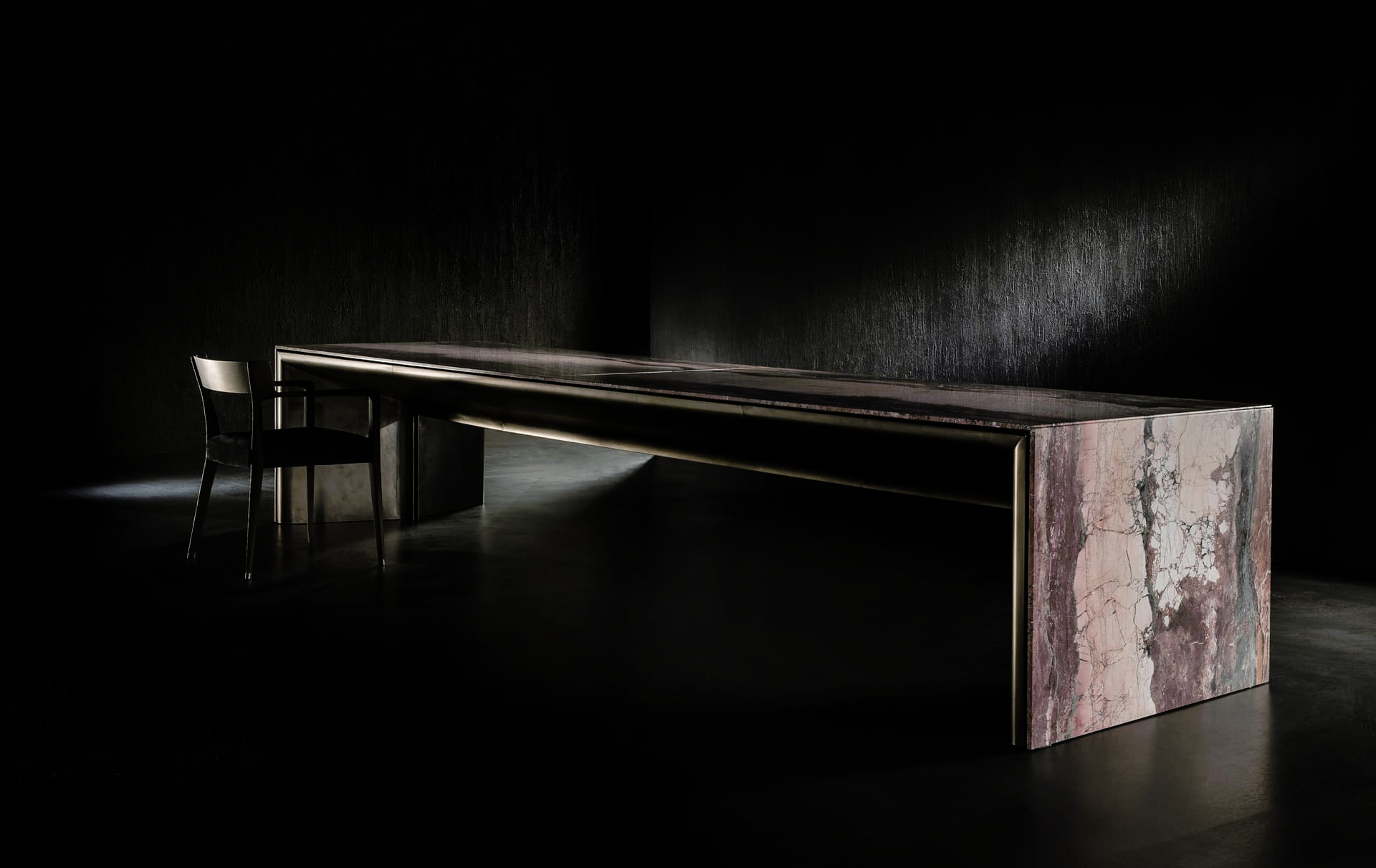
A Henge table can recall a natural formation, a quartzite monolith shaped by geological history, timber marked by time or metal with a living patina.
Massimo Castagna developed this approach by turning the table from a horizontal surface into an architectural centre. The table organises the space around itself.
Antonovych Design often selects a Henge table before the rest of the furniture because the table establishes the language of the future interior.
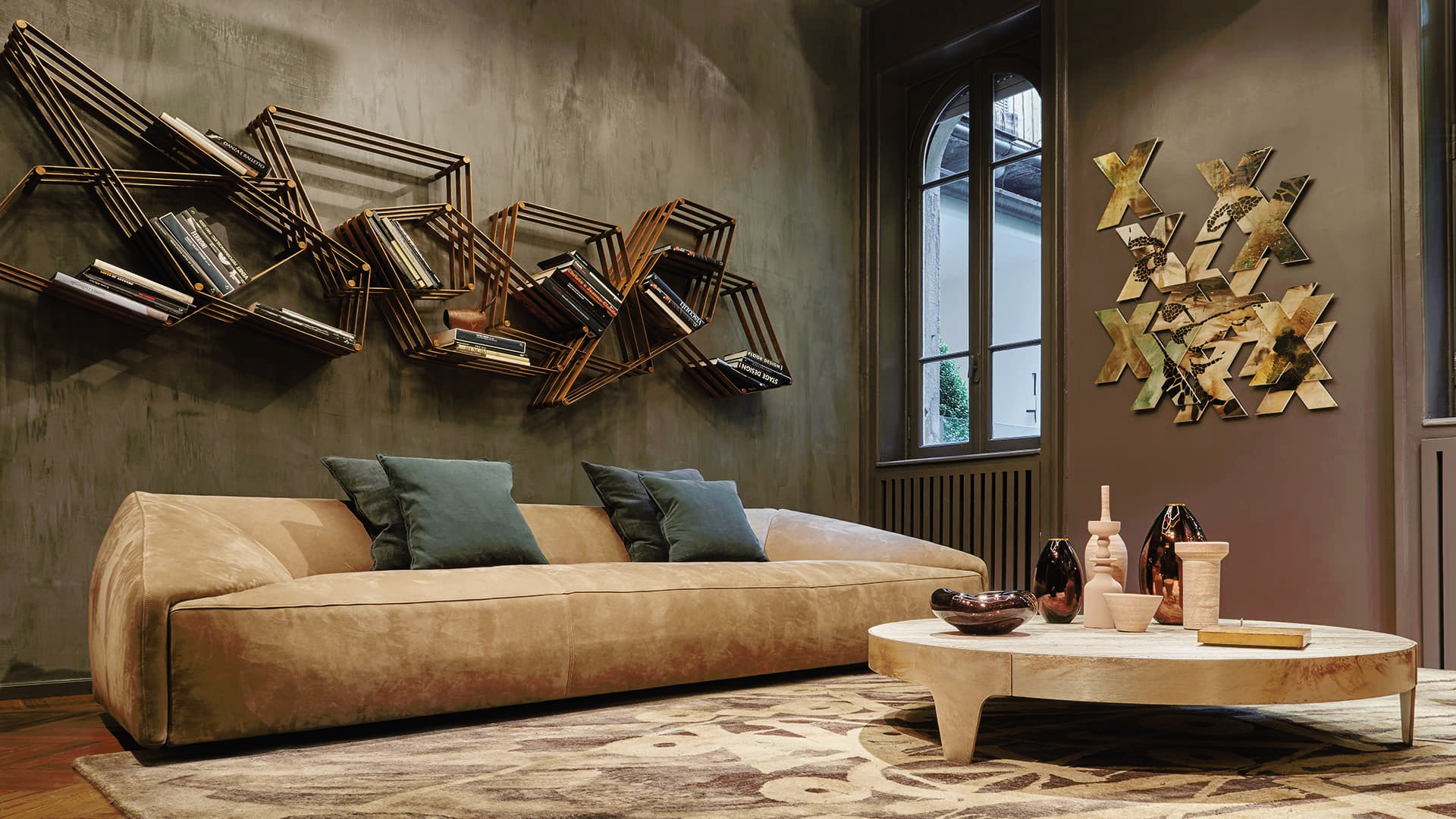
The kitchen as the new architecture of the home
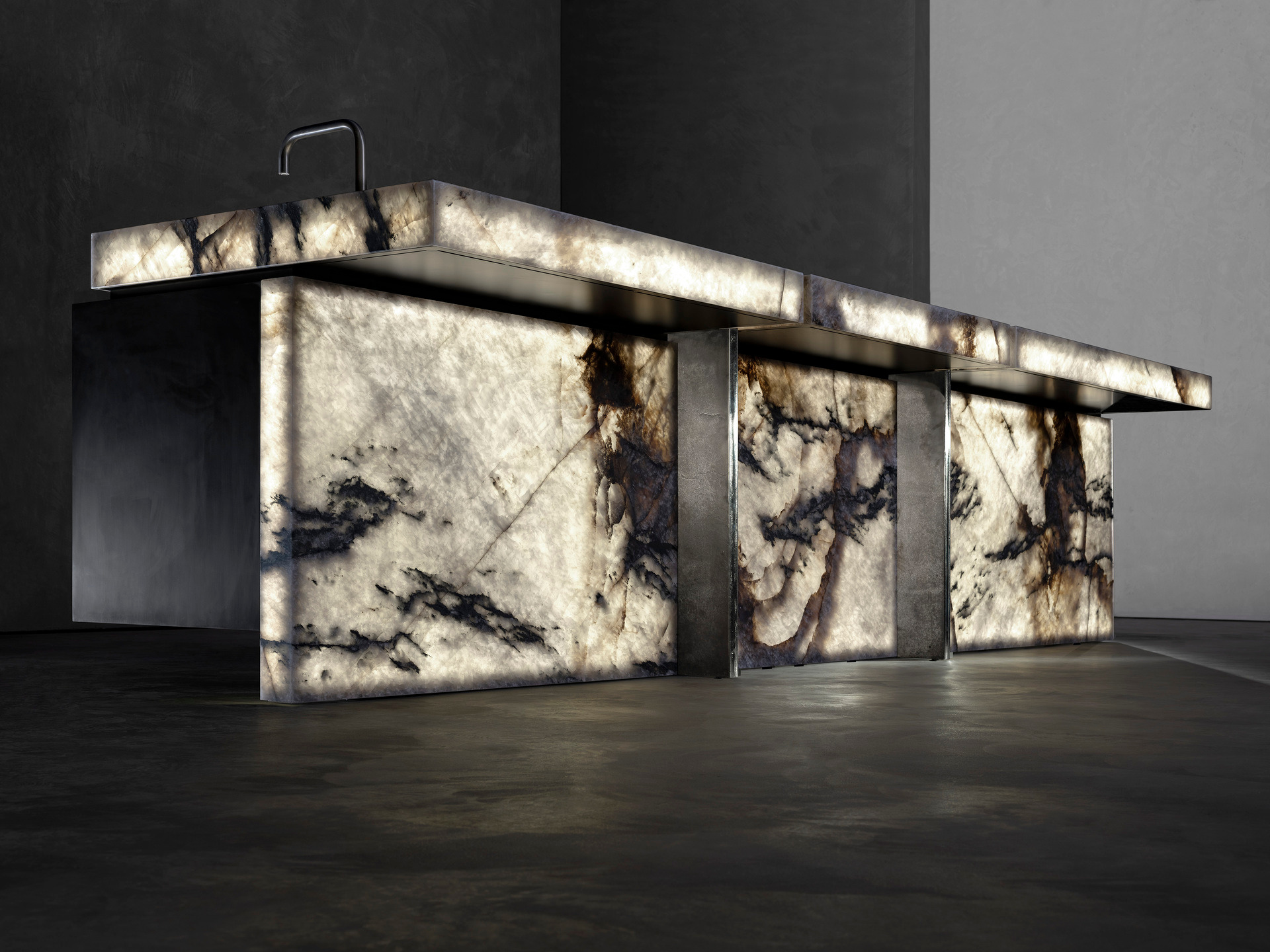
The kitchen has changed from a functional zone into a place for conversation, family life and the main architectural volume of a home.
Henge kitchens do not hide material behind decorative panels. Henge kitchens show natural stone, patinated metal and solid wood.
Each island appears carved from a single block.
Each surface communicates the origin of its material rather than disguising the material.
The kitchen becomes the space around which the home’s entire scenario is built.
Dmitry Korotchuk’s expert view
“When we design high-end residences, the kitchen is no longer a separate room. The kitchen becomes the heart of the home. Henge kitchens fit contemporary projects because they are perceived as architecture, comparable in importance to a fireplace or central staircase.”
A lamp that cannot be judged from a photograph
Lighting is the Henge category most affected by the digital age.
A photograph captures form but cannot convey the interaction between light and material.
Murano glass diffuses light softly and deeply. Patinated bronze changes tone throughout the day. Polished metal reflects surrounding architecture and brings that architecture into the composition.
Henge lamps therefore work like architectural windows. Henge lamps do not decorate space. Henge lamps change how space is perceived.
Furniture that does not go out of fashion
Henge creates objects that do not need annual updates.
Many Henge objects remain relevant for decades because they do not obey fashion. Henge objects draw on material, craft and architectural proportion.
People choose Henge pieces like works of art, not for one season but for a generation.
When an object becomes culture
Henge changed the way people understand an object.
A Henge object is no longer judged only by price, brand or fashion. A Henge object becomes part of an architectural idea.
Henge appears in private residences, boutique hotels, galleries and spaces where interiors are treated as cultural statements.
Furniture becomes part of a worldview.
Epilogue: Where furniture ends
A real interior cannot be finished. A real interior can only be lived in.
After fifty years, a home retains light on stone, bronze marked by touch, darkened wood, a table around which children grew up and a chair in which hundreds of books were read.
A home stores memory in objects.
Architects design interiors for life rather than only for the moment of moving in.
21st-century luxury means refusing haste, choosing material that becomes more beautiful over twenty years, trusting a craftsperson rather than a production line, leaving room for silence and allowing light to become part of architecture.
Henge objects help a space find its own voice.
The more complete an object becomes, the less it speaks about itself and the more it says about a home, a person and time.
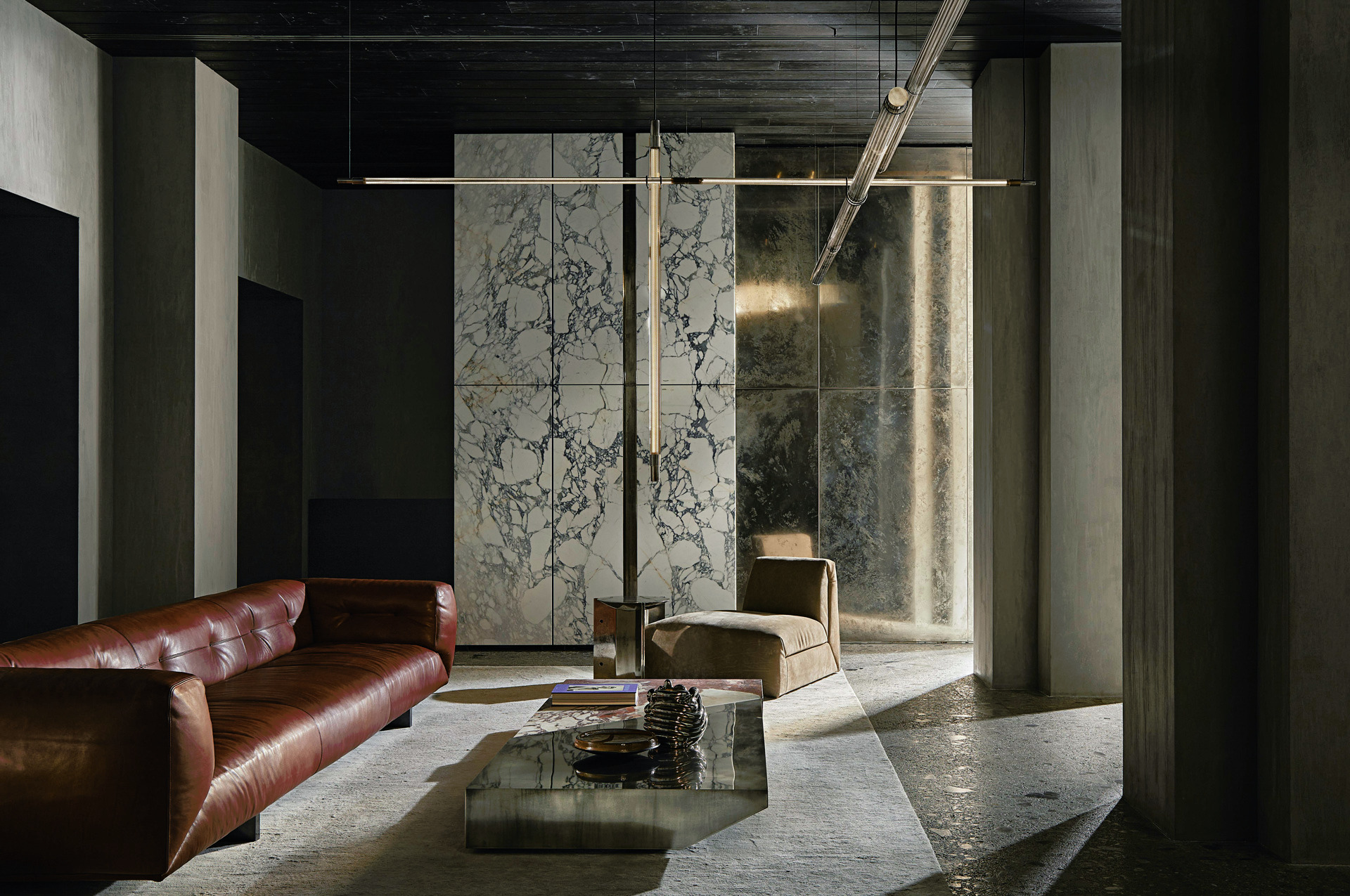
Dmitry Korotchuk’s expert opinion
“Clients rarely remember the price of an object. Clients remember the sensations they experienced when they first entered the completed home. Those sensations become the true value. Choosing Henge means choosing material, light, craft and time as the foundation of the home’s future story.”
Architecture is the art of creating places where people want to live their lives.
An object that makes space warmer, more honest and deeper, while gaining dignity over time, stops being an ordinary object.
An object becomes part of culture, memory and home.
Henge is therefore not only the story of a furniture brand.
Henge is a return to respect for material, craft, light, time and people.
Henge reminds us of the value of things that cannot be reproduced in series: natural stone pattern, living bronze patina, the warmth of wood, the craftsperson’s hand and the silence required by real architecture.
Henge becomes a metaphor for a space where objects stop being objects.
Stone becomes memory.
Light becomes architecture.
Material becomes emotion.
A home becomes an extension of a person.
Furniture ends where architecture helps people feel at home.