
Henge: When Material Becomes Luxury
Why Henge furniture changed perceptions of modern Italian design
Few furniture brands on the global market have created a distinct visual language in less than two decades. The process usually takes generations. Henge needed around fifteen years to grow from a young Italian company into one of the most discussed luxury furniture manufacturers. Today, the brand is present in more than 70 countries, opens flagship spaces in the world’s design capitals and works with architects who shape contemporary interiors.
Henge’s main achievement is not measured by the number of showrooms or sales volume. Henge furniture is almost impossible to confuse with products from other Italian factories. Henge is a rare example of recognisability created not by a signature sofa or armchair silhouette, but by an approach to material.
Designers often say that Henge does not produce furniture, but creates objects around which an interior is built.
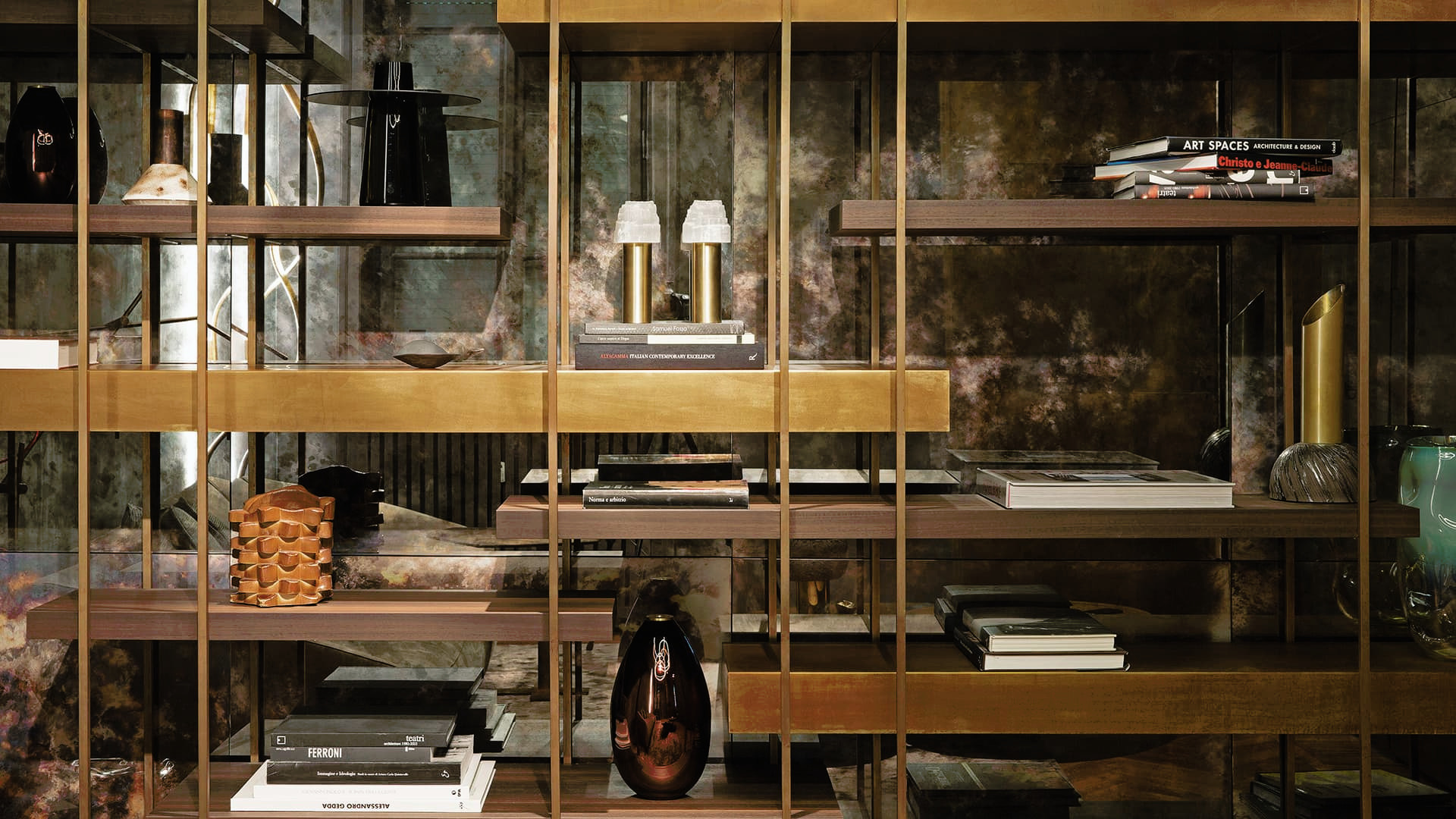
A history that did not begin with furniture
Most renowned Italian brands grew from family furniture workshops. Henge developed differently.
Henge was founded in 2007 in the Veneto region by entrepreneur Paolo Tormena. Paolo Tormena saw the future of premium design not in more complex forms, but in the search for rare materials and a return to a craft-based production approach. Within a few years, the brand attracted the attention of the professional design community. Architect Massimo Castagna became artistic director in 2011. The partnership between Paolo Tormena and Massimo Castagna shaped the company’s subsequent development and established Henge’s recognisable aesthetic.
Henge has barely changed its original philosophy throughout its history. Many manufacturers adjusted collections to new trends each year. Henge continued to develop furniture designed to exist beyond passing fashions.
The approach proved highly sought after. Henge now works with the international studio Yabu Pushelberg, artist Maarten Baas and designer Ugo Cacciatori. The 2025 collection also introduced new partnerships with Tanju Özelgin and Johanna Grawunder.
Material matters more than form
If an architect had to explain Henge in one sentence, the word “materiality” would probably appear.
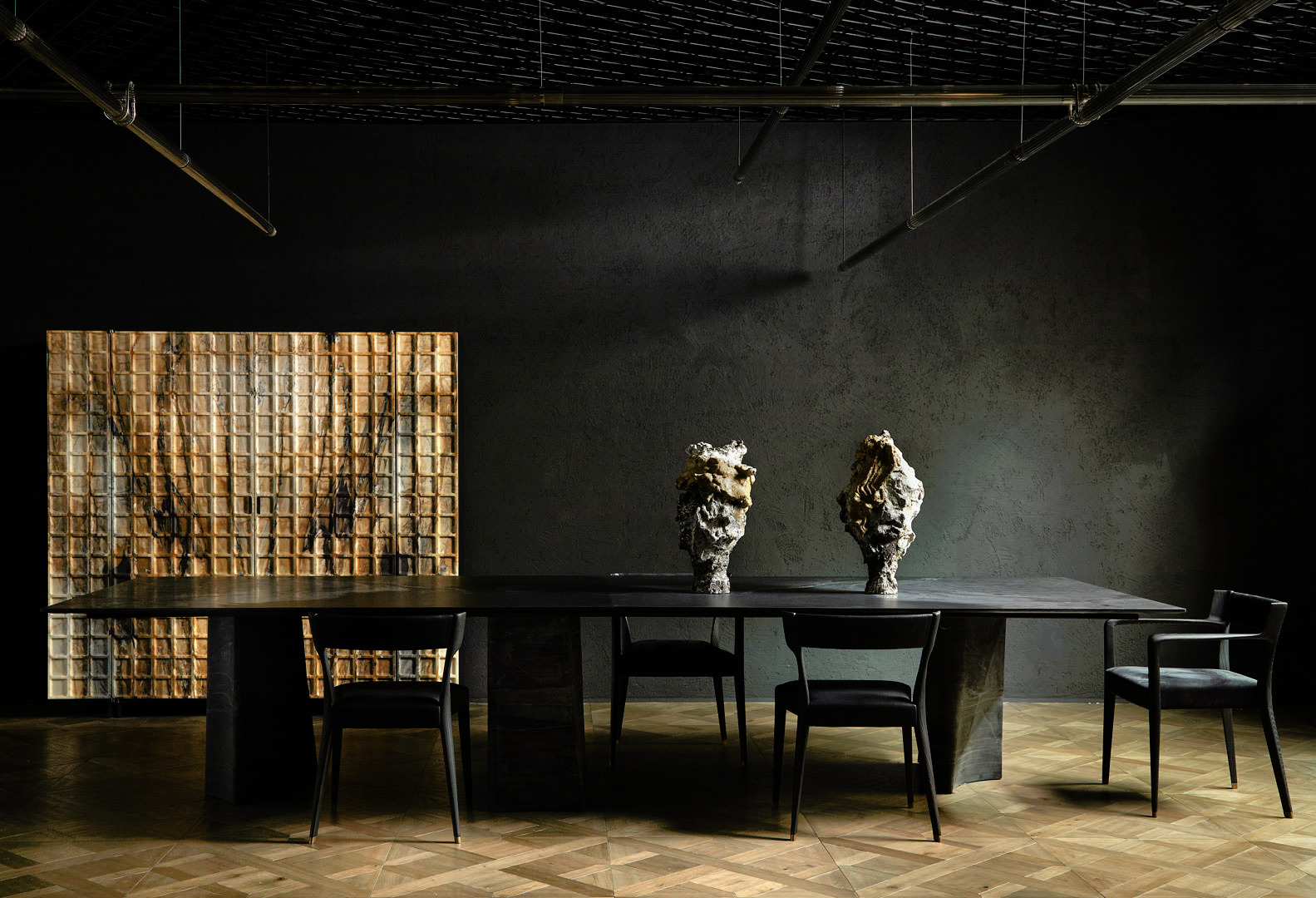
Most furniture companies design an object’s form first and select the finish afterwards. Henge works in the opposite way. The starting point is the material itself: its origin, texture, density, ability to reflect light and even its natural imperfections.
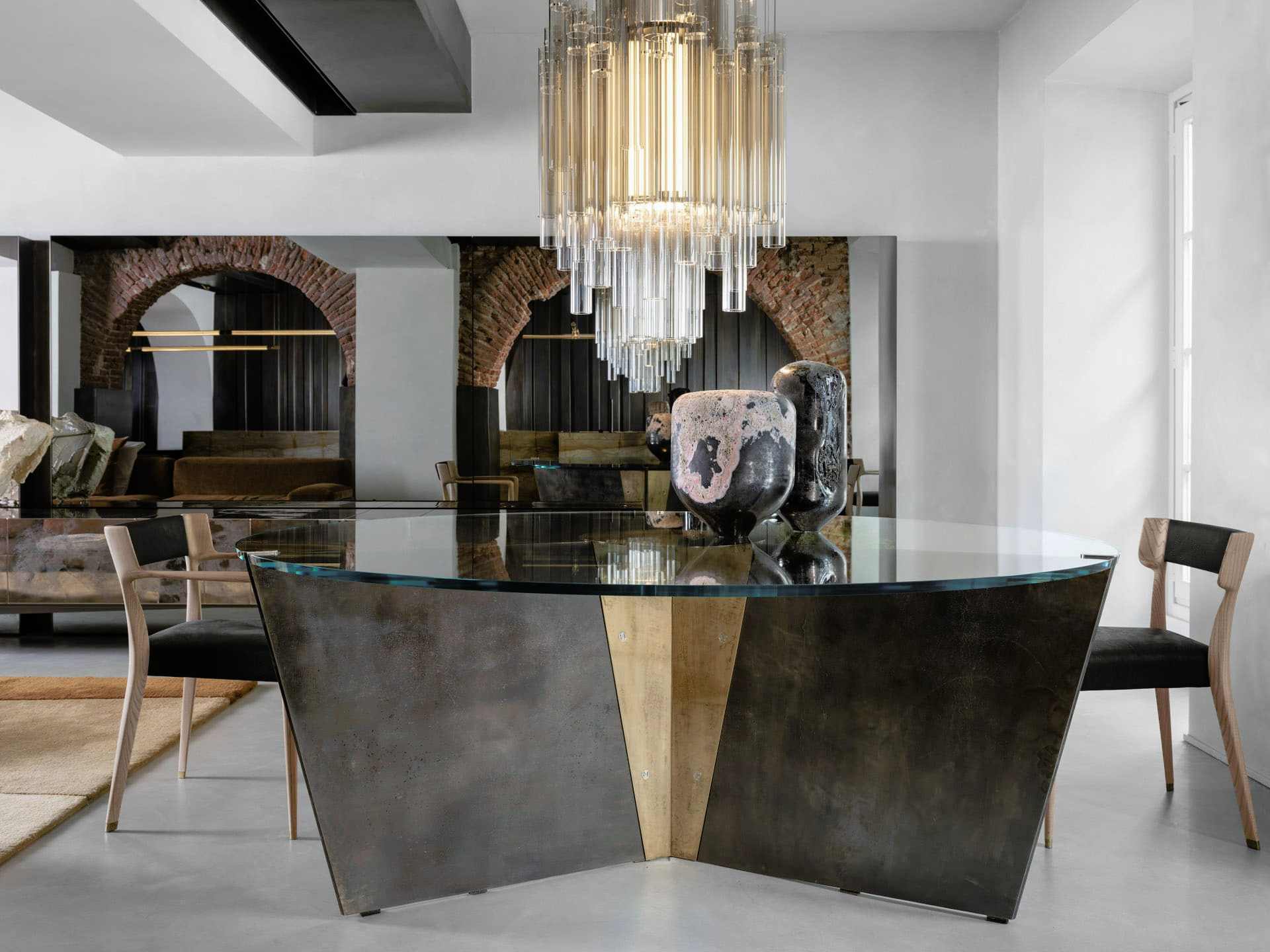
Henge uses rare wood species, natural stone, brass, bronze, iron, hand-blown glass and leather. The key point is not the list of materials, but the way Henge works with them. A significant share of metal surfaces is patinated by hand. Wood retains its natural grain pattern instead of undergoing complete standardisation. The brand states officially that every piece differs from the previous one because natural materials cannot be absolutely identical.
The approach may seem obvious today, but it appeared almost radical in the late 2000s. During an era of mass standardisation, Henge consciously rejected the idea that every piece should be completely identical.
Henge furniture is therefore perceived more as collectible design than as industrial production.
Why architects choose Henge
Global interior practice follows an interesting pattern. Larger projects contain fewer incidental objects.
When architects create private residences measuring 500, 1000 m², architects increasingly treat furniture as part of the architectural composition. Henge’s strength becomes clear in such projects.
For example, the 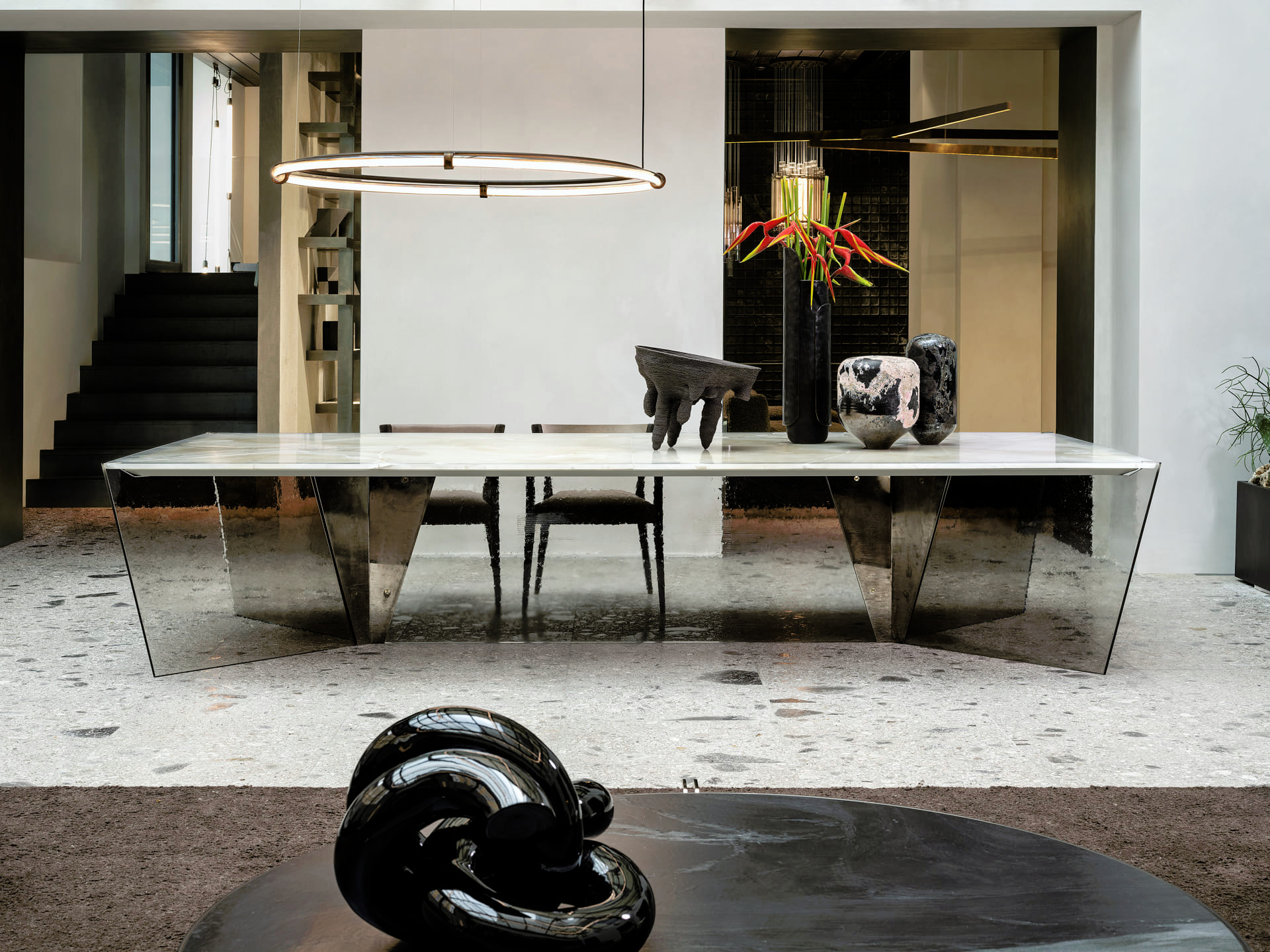
Antonovych Home considers the ability to work at scale one of the qualities that distinguishes Henge from most premium furniture manufacturers. Henge pieces do not simply fill an interior. Henge pieces become part of the architecture, defining the rhythm of the space and the way the space is experienced.
Antonovych Design applies this principle particularly to open-plan residences, where furniture must unite functional areas without disrupting the composition’s integrity.
Objects that made Henge recognisable
Every major brand has products that serve as a signature. These products define a company’s visual language and remain relevant years later. Henge has relatively few such pieces, but these pieces established the brand’s reputation among architects and designers.
Gotham Kitchen, a kitchen that resembles architecture
Over the past ten years, the kitchen has ceased to be purely utilitarian. According to the international Salone del Mobile exhibition, kitchens are now among the fastest-growing segments of the interior industry. An architectural approach is gradually replacing traditional furniture design in the segment.
The Gotham collection was among the first to treat the island as more than a work surface. The island became an independent architectural volume.
Gotham kitchens use solid slabs of natural stone, hand-patinated bronze, thermally treated wood and smoked glass. Depending on the project, an island can exceed 5 metres in length. Individual stone elements can weigh hundreds of kilograms. Installation therefore takes place on site with the participation of factory engineers.
Antonovych Home most often supplies kitchens of this type for large residences, where the kitchen forms part of one shared living space rather than a separate room.
Lighting, light as an art object
Lighting is one of Henge’s strongest areas. Many manufacturers treat lighting as an addition to furniture. Henge treats lighting as an independent part of the architecture.
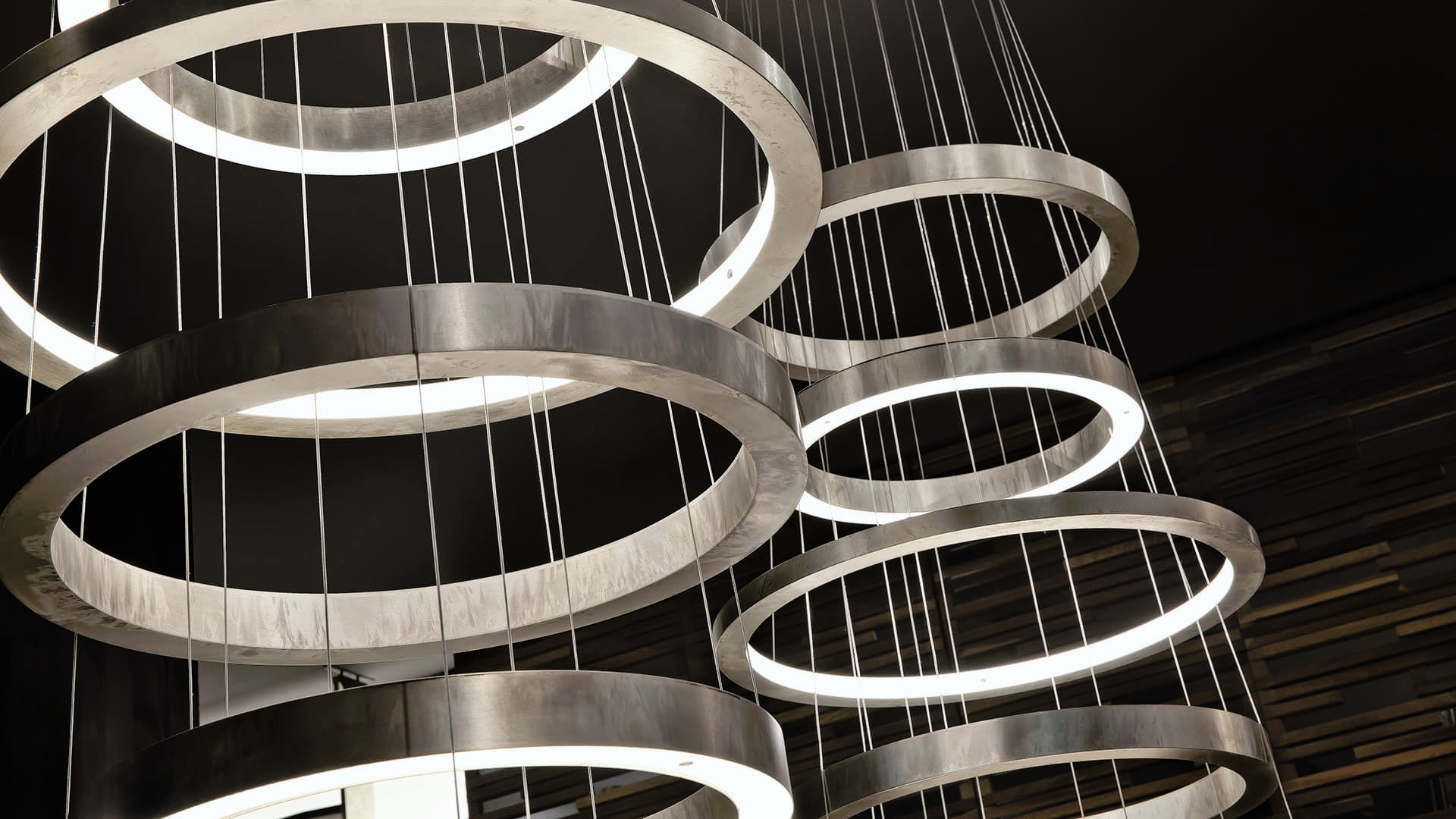
The Light Ring collection is based on simple geometry: a metal ring with an integrated light source. The restrained exterior conceals complex metal-processing technology. Every surface is patinated by hand. The process gives the bronze a deep tone that changes according to natural and artificial light.
Light Ring compositions are particularly effective in spaces with ceilings measuring 3.5, 4 metres, where several light rings can form vertical installations. Architects therefore often use Light Ring in atriums, stair halls and double-height living rooms.
Hexagon, when stone becomes sculpture
One of Henge’s defining qualities is the ability to turn a familiar furniture piece into an art object.
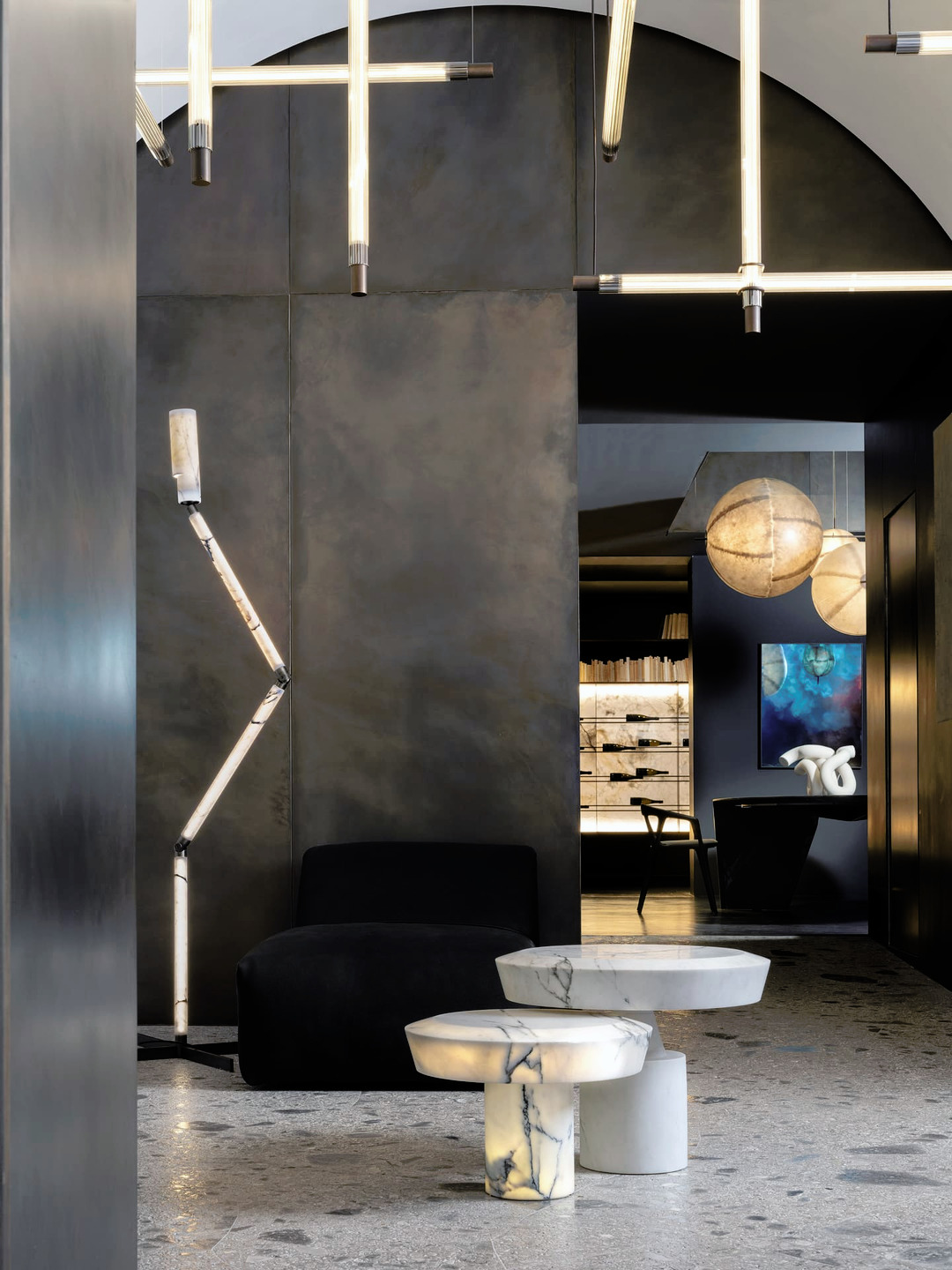
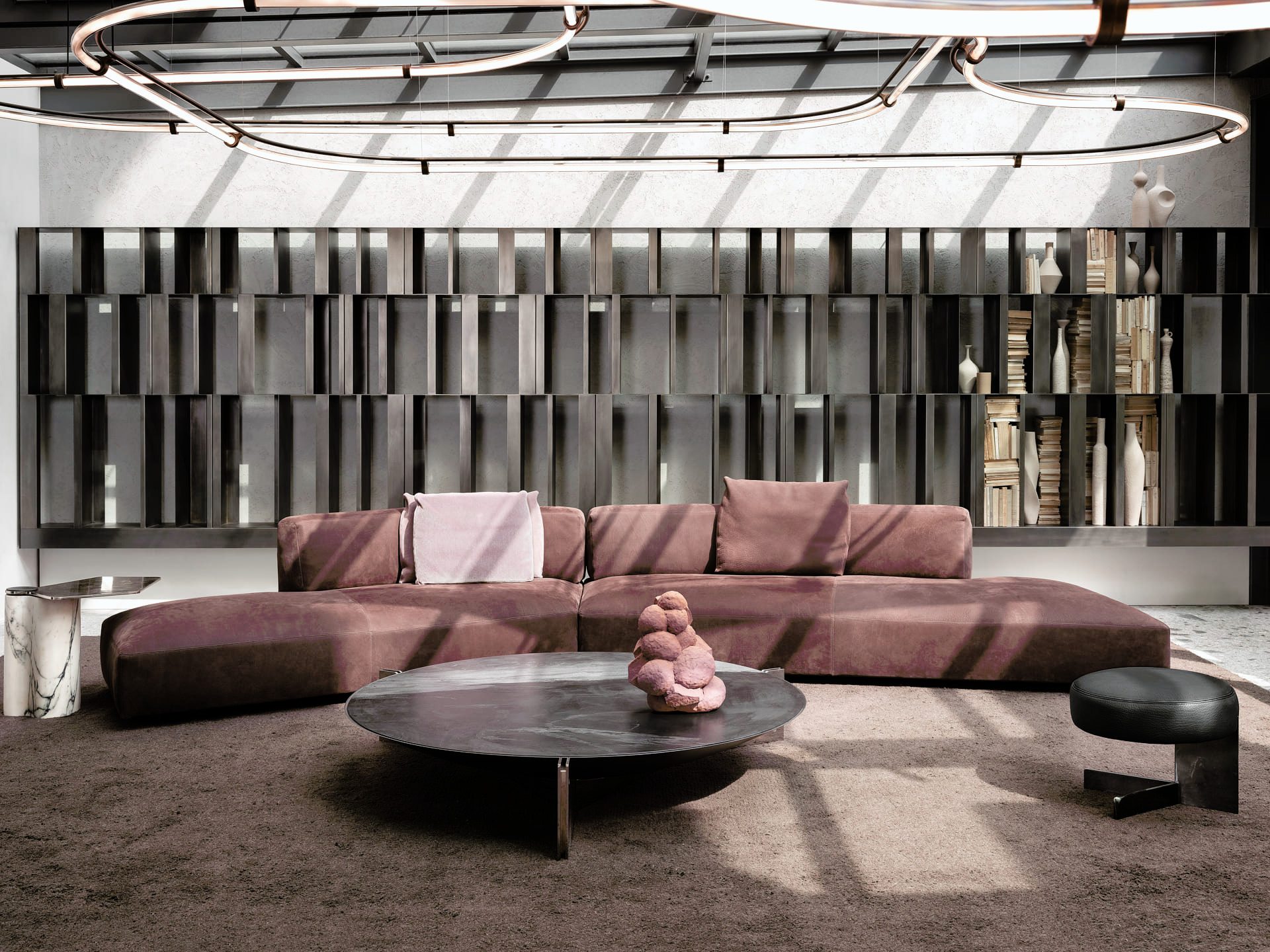
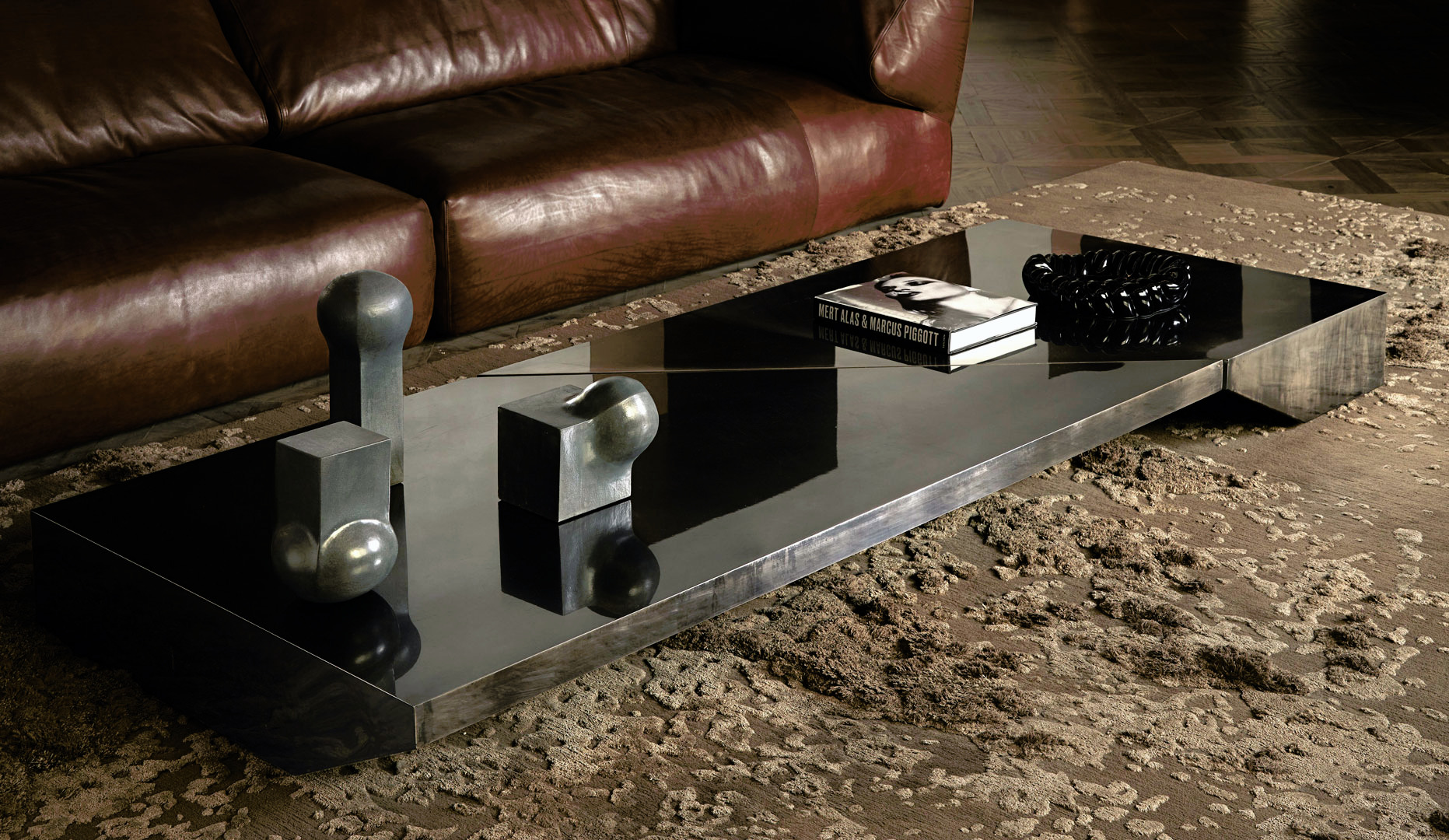
The Hexagon collection demonstrates the approach clearly. Geometrically simple coffee tables are made from monolithic blocks of natural stone. The material’s natural pattern, rather than the shape, becomes the main decorative element.
Every stone block has a unique texture, so no two pieces are absolutely identical. The result reflects Henge’s philosophy: value comes from the material’s natural origin rather than decorative complexity.
For design collectors, this uniqueness is one of the main reasons to choose Henge furniture.
Why Henge does not compete with other Italian brands
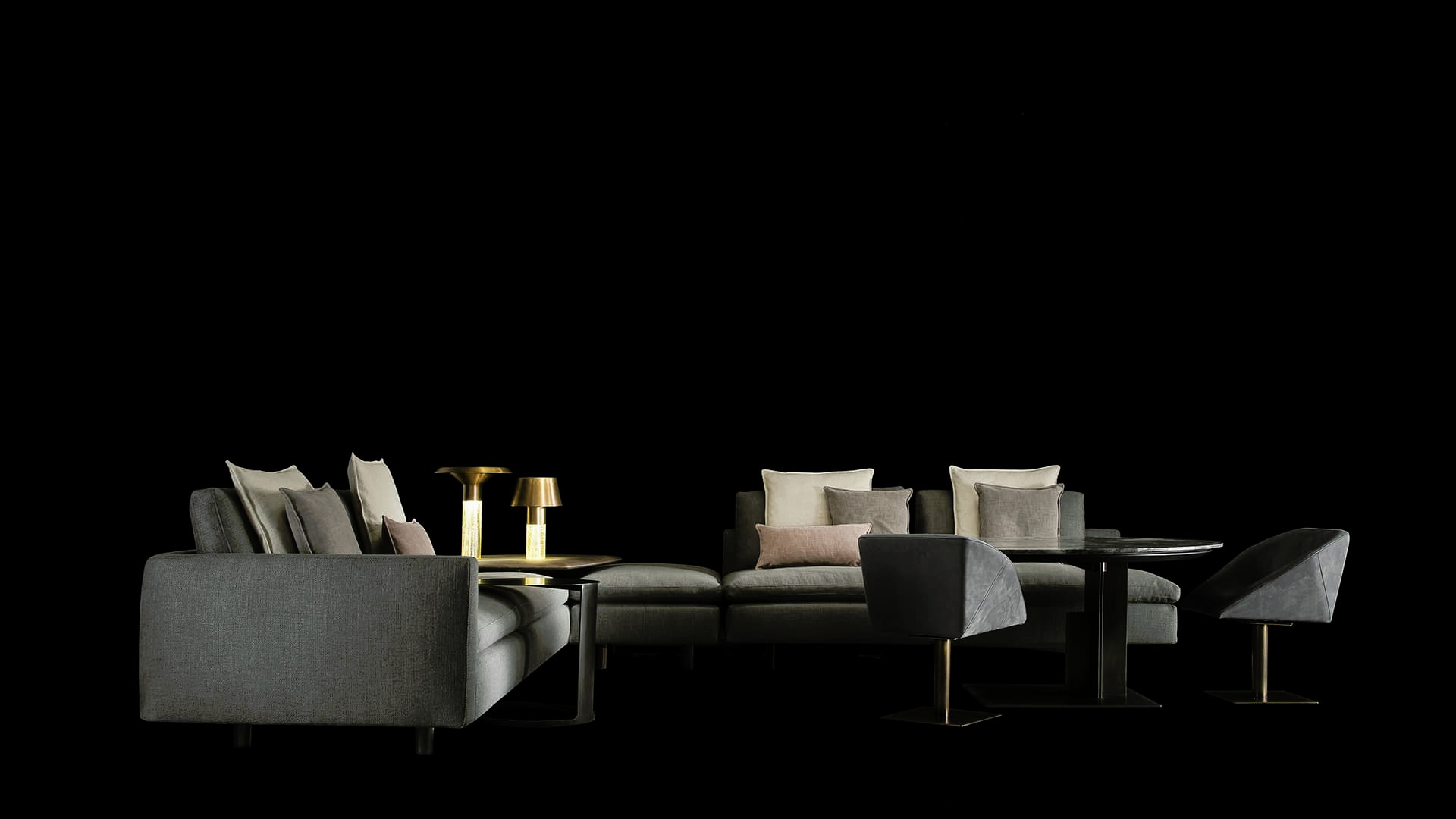
At first glance, Henge may appear to work in the same segment as Minotti, Baxter, Poliform or Giorgetti. Formally, that is true: all these brands create premium furniture.
The philosophies of these brands differ fundamentally.
Minotti builds collections around precise architectural geometry and restrained elegance.
Baxter focuses on distinctive leather-processing techniques, making leather its principal artistic material.
Poliform is known for engineering precision, large modular systems and seamless furniture integration into architecture.
Giorgetti has represented Italian cabinetmaking and finely detailed woodwork for more than a century.
Henge chose a different path. The material itself becomes the main object of design. Henge pieces therefore do not look “new” or “fashionable”. Henge pieces resemble objects that have always existed and have gained greater expression over time.
The ability to move beyond interior fashion made Henge one of the most recognisable names in contemporary Italian design.
Why Henge became central to a new era of luxury
Ten to fifteen years ago, premium interiors were often associated with demonstrative luxury: rare wood species, polished surfaces and elaborate decoration. Criteria have changed. Owners of high-value properties increasingly seek objects with a known origin, high-quality execution and a distinct identity rather than visually striking pieces alone.
Global market data supports the trend. Industry research estimates the global luxury furniture segment at more than 30 billion US dollars, with average annual growth of 5, 7%. Furniture made in small series or to individual order is developing particularly quickly. Buyers are less likely to choose a piece “like everyone else” and more likely to invest in products whose value comes from production complexity and material origin rather than manufacturing volume.
Henge develops within this logic. The factory has never sought to produce mass collections or radically change its assortment every year. Henge instead continues to refine techniques for processing stone, metal, glass and wood, creating pieces that remain relevant regardless of changing interior trends.
Production where technology does not replace people
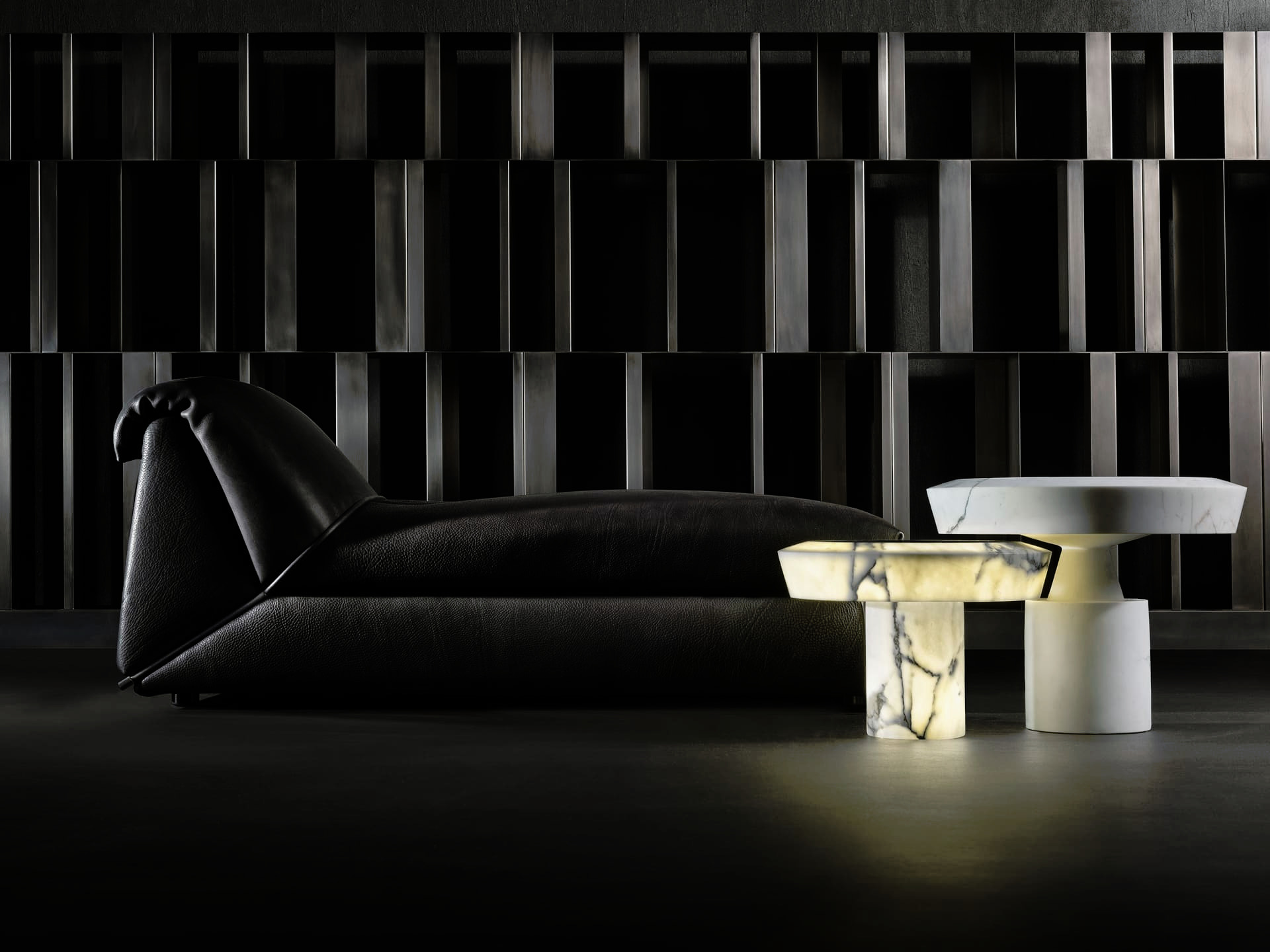
Despite the high level of automation in modern furniture manufacturing, many key Henge processes are still performed by hand. Hand production is a manufacturing necessity rather than a gesture towards tradition.
Natural stone cannot be processed according to one universal formula because every slab differs in density, pattern and structure. Wood presents the same conditions, with individual grain direction, shade and texture. The final patina on bronze or brass is also created by hand. The result depends on the technology and the craftsperson’s experience.
Manufacturing many Henge pieces therefore takes several months. Much of the time goes into material selection, hand finishing, quality control and coordination of project details with the architect rather than assembly. The approach benefits complex interiors because the client receives a piece created specifically for a particular space instead of a serial product.
Antonovych Home’s perspective
Henge furniture is rarely an emotional purchase in Antonovych Home projects. Clients usually come to Henge after becoming familiar with leading Italian factories and understanding the difference between expensive furniture and collectible-level objects.
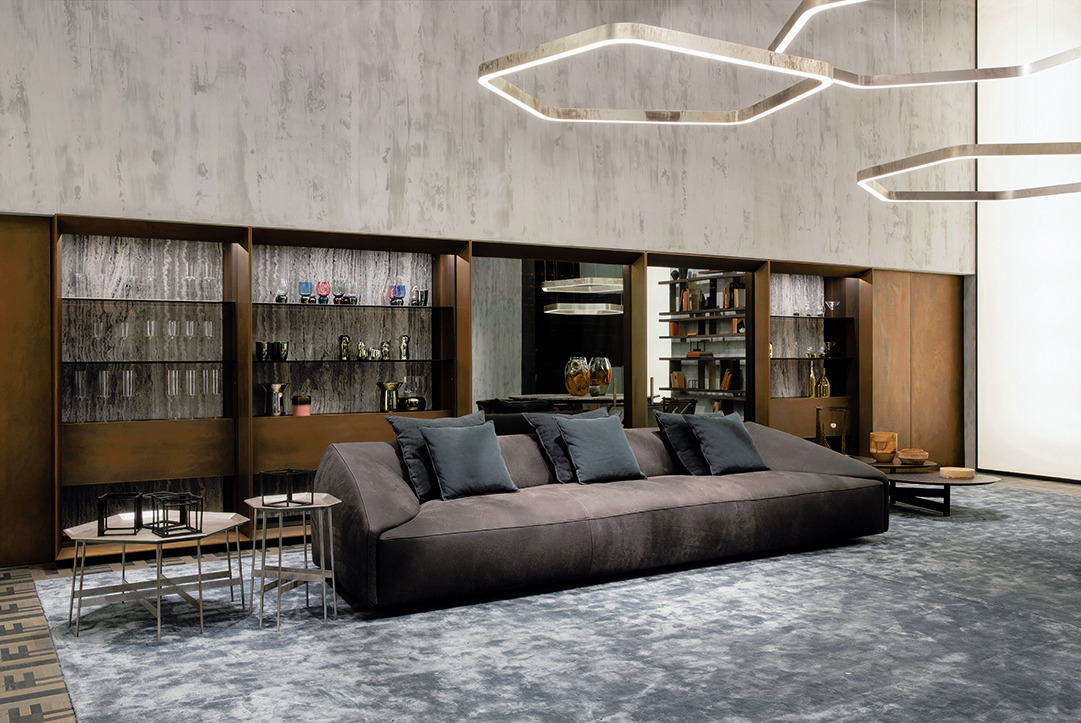
Henge products cannot be assessed fully from a catalogue or photograph. Henge products reveal themselves in space through light on patinated metal, the depth of quartzite pattern, the tactile qualities of wood and the scale of the composition. Henge pieces therefore most often become part of a comprehensive interior project, where furniture, lighting, finishing materials and artworks form one architectural system.
The approach is especially important to Antonovych Home when furnishing private residences and penthouses designed to last for decades rather than until the next change in fashion. Furniture in such projects must combine high quality with the ability to retain artistic value over time.
Conclusion
Henge’s history shows how a comparatively young brand secured a place beside established names in Italian design without copying their philosophies. Henge proposed its own understanding of modern luxury.
While some factories refined serial-production technology, Henge focused on material. While the market moved towards standardisation, Henge retained a craft-based approach. While the interior industry searched for another trend, Henge created pieces that are difficult to associate with a particular period.
Henge furniture rarely becomes simply part of a setting. Henge furniture shapes the character of a space, establishes its emotional tone and turns an interior into an individual statement.
That quality defines Henge’s main value. Henge’s value does not come from the cost of stone, the rarity of metals or the complexity of finishing alone. Henge’s genuine luxury comes from respect for material, craftsmanship and time, three elements that cannot be rushed, simplified or replaced by technology. Henge pieces therefore remain relevant years later and continue to be viewed as an investment in quality of life rather than another interior purchase.