
Too Iconic to Be Just Armchairs
These armchairs do more than provide comfort, they shape the language of interiors. These designs emerged during periods of change: modernism, post-war optimism and the digital era. Every armchair combines technology, an idea and a designer’s personality. A sofa can be the stage, while an armchair becomes the leading figure.
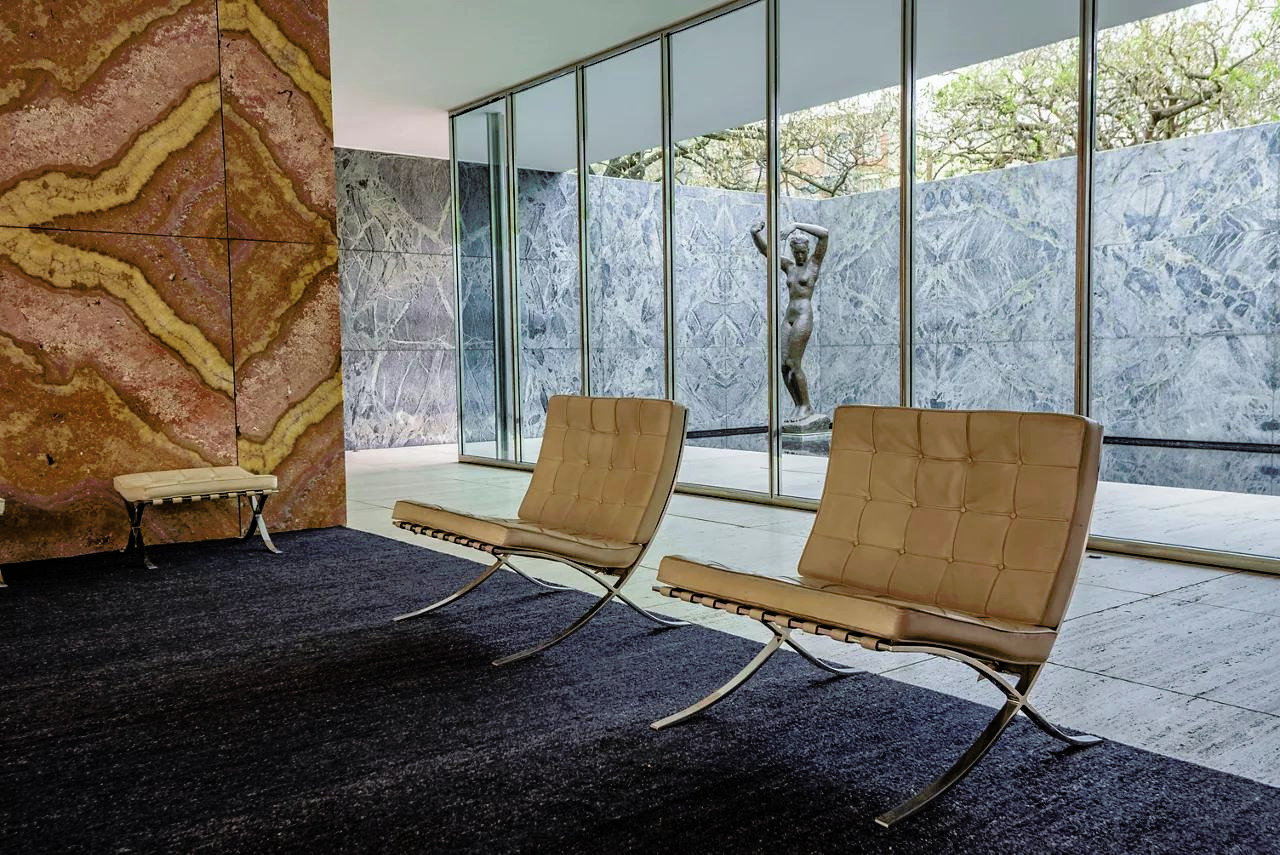
Barcelona Chair, Ludwig Mies van der Rohe and Lilly Reich, 1929 (Knoll)
History
Barcelona Chair was created for the German Pavilion at the 1929 Barcelona World’s Fair, as a “throne” for the Spanish royal couple. Ludwig Mies van der Rohe reinterpreted the ancient curule form and refined the design into absolute minimalism.
Facts
Leather cushions feature hand stitching, classically arranged in more than 40 quadrants
The frame uses polished stainless steel, replacing chrome in earlier versions
The chair has been produced with almost no changes for nearly a century.
Features
Precise geometry and proportions
Straps hold the cushions in place and form part of the visual design
The chair represents the principle “less is more”.
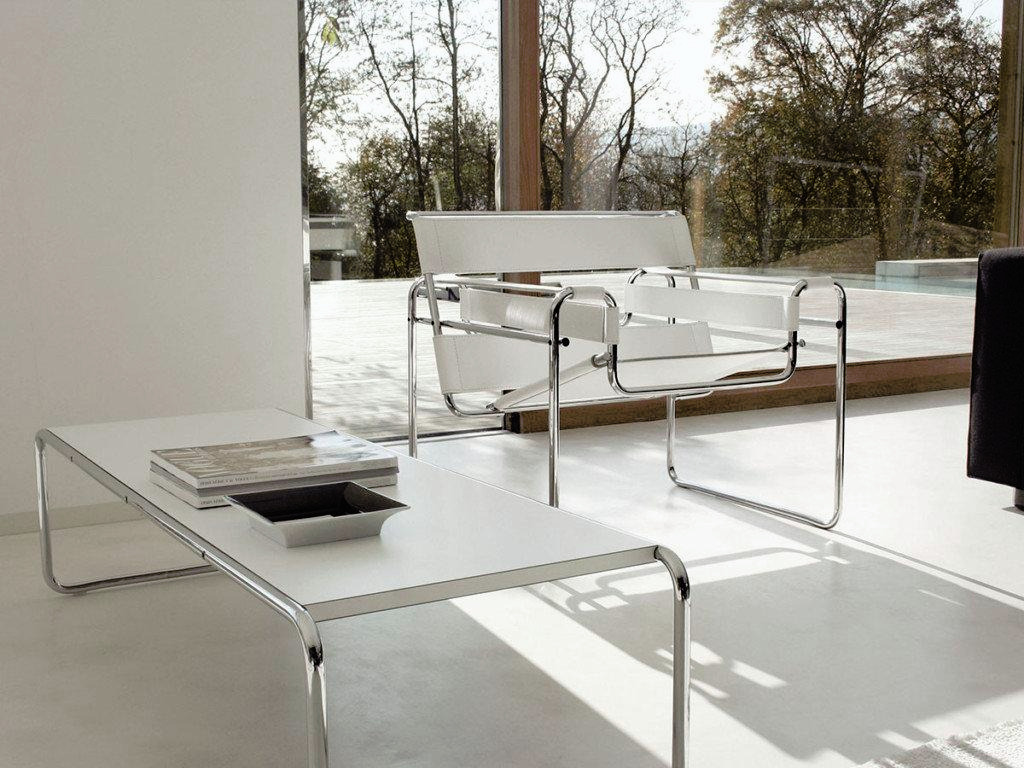
Wassily Chair, Marcel Breuer, 1925 (Knoll)
History
Wassily Chair was created during the Bauhaus era and inspired by a bicycle frame. Marcel Breuer was the first to apply bent steel tubing to furniture, radically simplifying the construction.
Facts
The chair received its name later, in honour of Wassily Kandinsky, who liked the design
Wassily Chair became one of the first industrial, mass-produced design icons
The design redefined the concept of a furniture frame.
Features
An open structure creates “air instead of mass”
Leather stretches across a metal skeleton
Visual lightness combines with high strength.
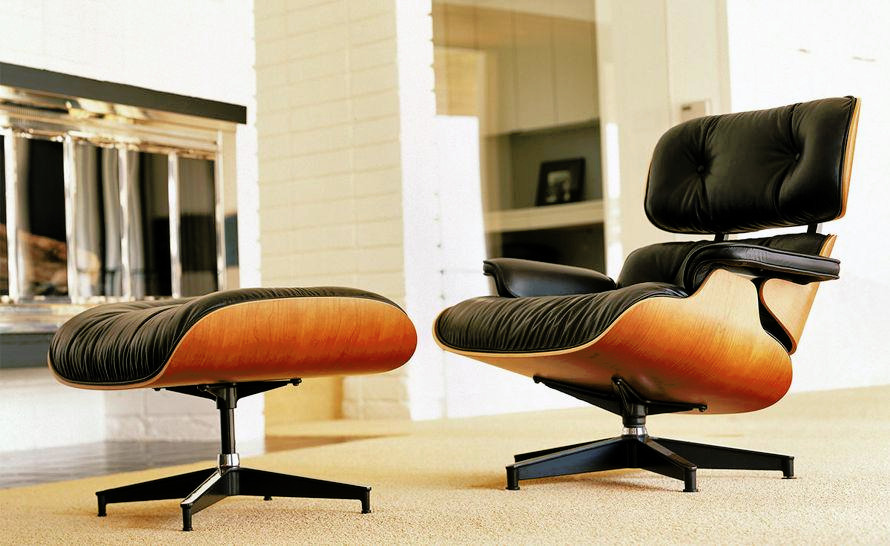
Eames Lounge Chair, Charles Eames and Ray Eames, 1956 (Herman Miller / Vitra)
History
Charles and Ray Eames set out to create a “modern English club chair”, combining softness with technology. The result became a mid-century design icon.
Facts
The chair consists of three moulded plywood shells
Rubber shock mounts connect the components
The original design launched with an ottoman as a single composition.
Features
Ergonomic reclining seating
Warm wood contrasts with soft leather
The chair represents mid-century modern design.
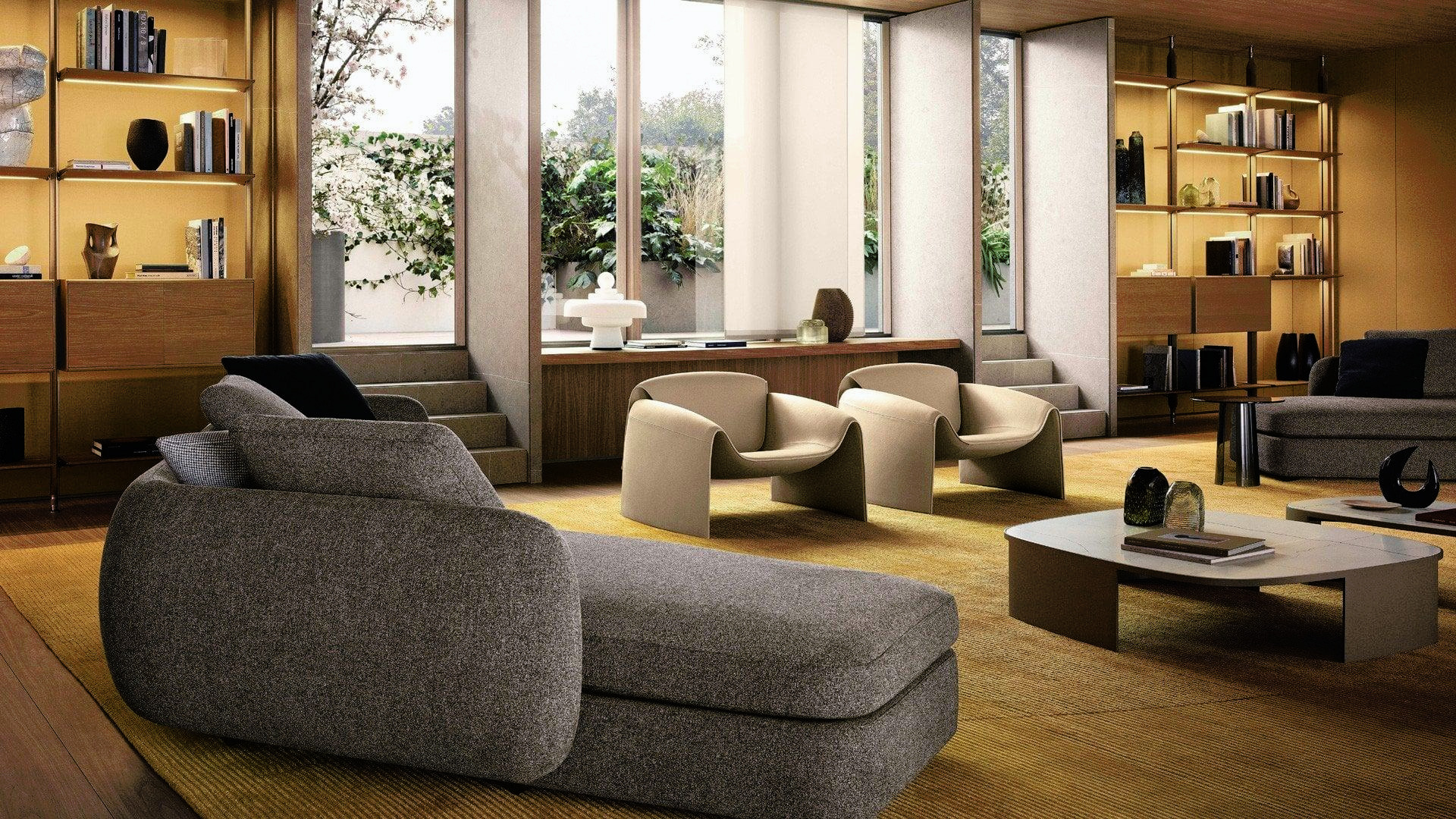
Le Club, Poliform, designed by Jean-Marie Massaud
History
Le Club offers a modern interpretation of the club chair without visual heaviness. Jean-Marie Massaud removes rigidity and retains a clean, enveloping form.
Facts
Le Club belongs to the 2020s trend for soft minimalism
The chair is widely used in residential and hospitality projects
Upholstery options include bouclé and leather.
Features
Low centre of gravity
Sculptural, seamless form
A cocooning effect without visual overload.
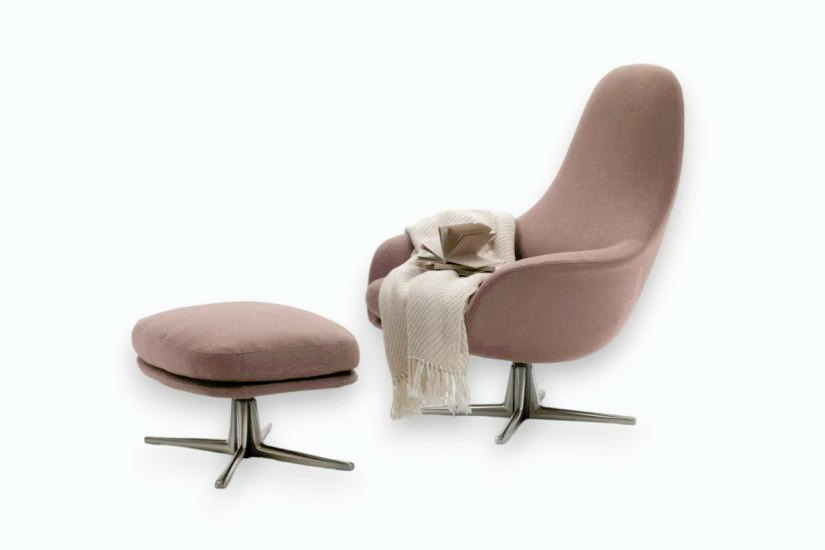
Flexform armchair Guscio , designed by Antonio Citterio
History
Antonio Citterio has shaped the Flexform design identity for decades through restrained luxury, precise proportions and comfort without display.
Facts
Many models feature swivel bases
Premium leather and textiles come from European manufacturers
The designs are developed as components of complete living systems.
Features
Carefully considered ergonomics
Minimalism without coldness
Durability remains a key value.
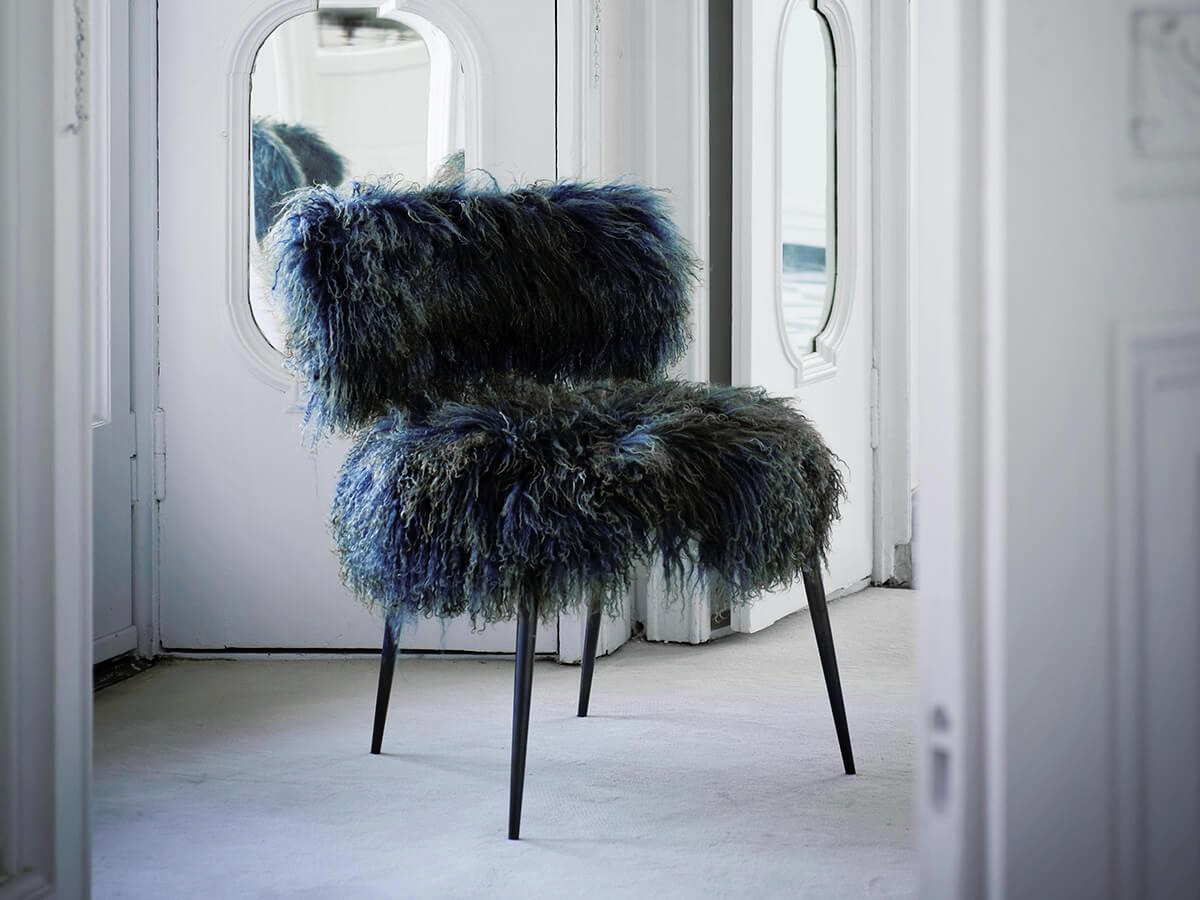
Baxter armchair Nepal , designed by Paola Navone
History
Paola Navone brings sensuality and “imperfect” beauty to Baxter. Baxter Nepal armchairs appear already lived in, with a sense of history.
Facts
Every piece is upholstered by hand
The leather is dyed and finished by hand
The design prioritises tactility over geometry.
Features
Deep, relaxed seating
Soft, fluid forms
A vintage patina effect.
Summary
Sofas introduced new ways of living, while armchairs shaped the philosophy of comfort:
• Barcelona Chair, the ideal form of modernism
• Wassily Chair, technology as an aesthetic
• Eames Lounge Chair, comfort as status
• Poliform, soft contemporary minimalism
• Flexform, intelligent luxury
• Baxter, sensual, material design
These designs are more than armchairs.
These objects reveal the history of 20th and 21st-century design.