
Against the Rules, Against Form: Iconic Sofas
Design icons do not appear by chance. Each sofa has a specific context: political commissions, technological breakthroughs, industry crises and radical ideas from designers. The selection below offers more than descriptions. The selection presents facts that explain why these models have endured for decades and continue to shape taste.
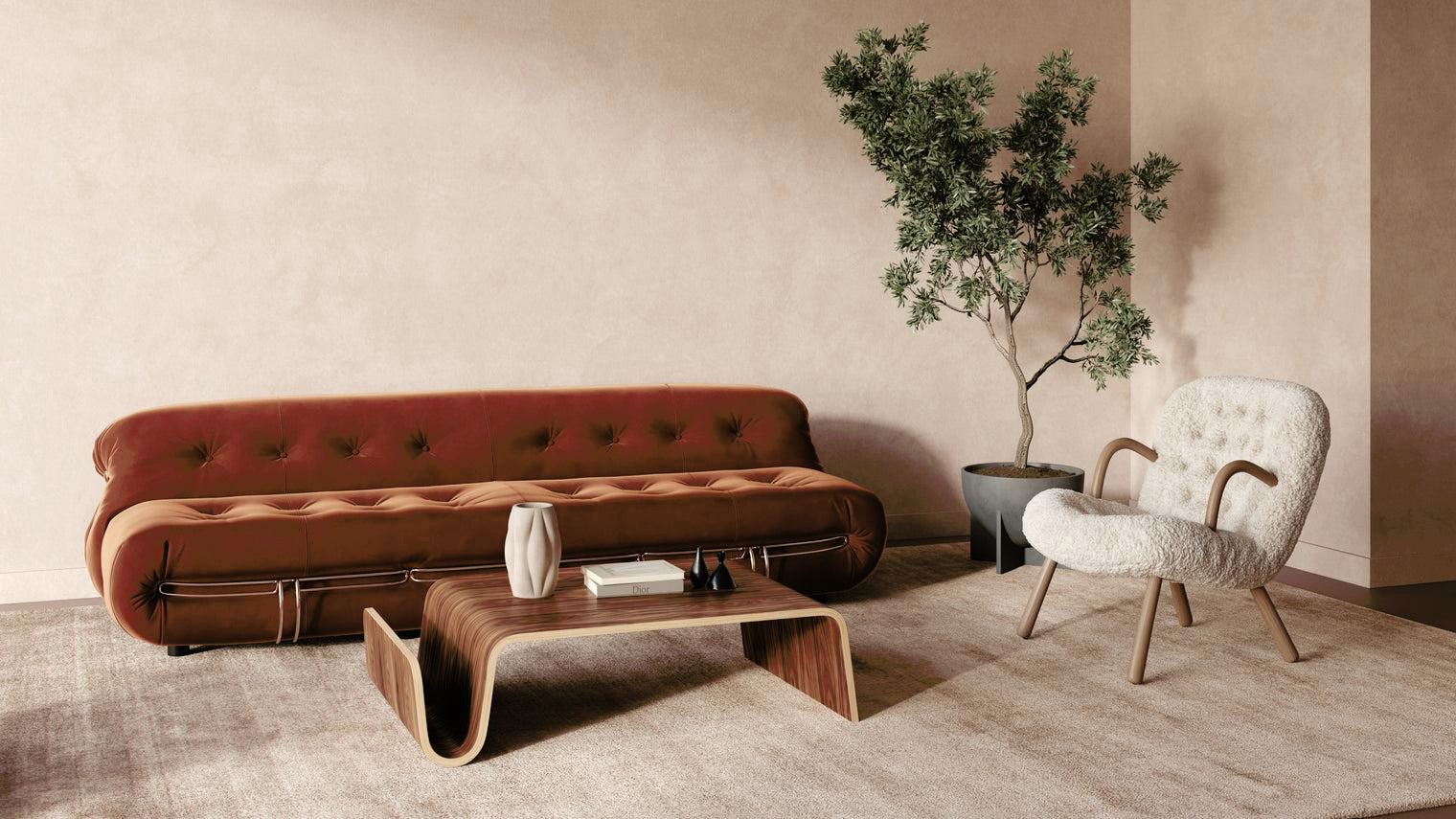
Soriana sofa, Afra Scarpa and Tobia Scarpa, 1969 (Cassina)
Creation history
The Soriana sofa was designed in the late 1960s in response to growing interest in informal, “anti-bourgeois” interiors. According to one account, the project was developed under strict time limits. The Scarpas proposed a concept in which the structure would effectively disappear.
Facts
The Soriana sofa received the Compasso d’Oro award in 1970
Production resumed in the 2020s with recycled materials
The metal clamp is a structural element that holds the form, not decoration
Features
- No rigid frame in the conventional sense
- The filling consists of moulded polyurethane
- Leather or textile is stretched and gathered by a clamp
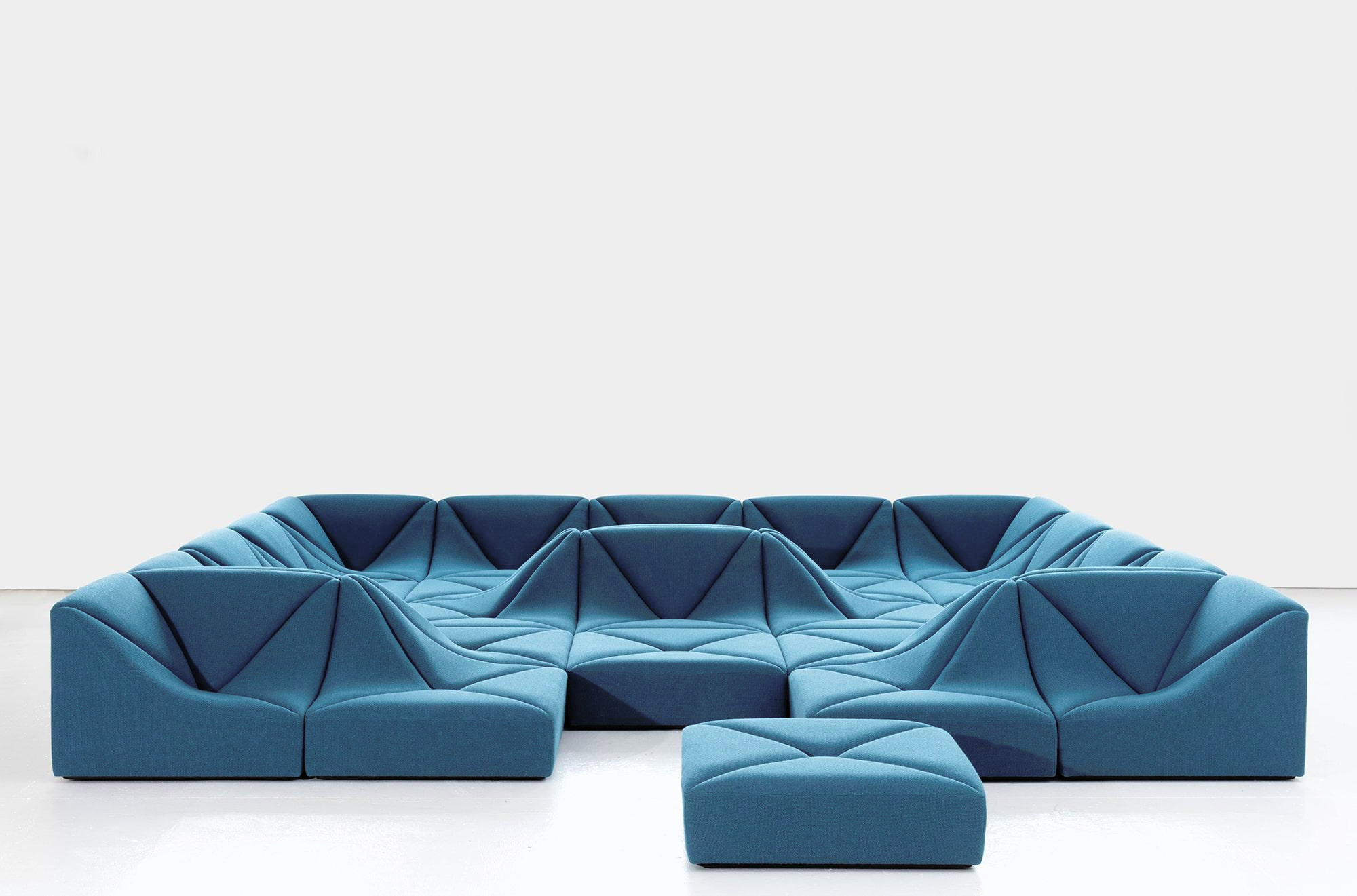
Dune sofa, Pierre Paulin, 1970
Creation history
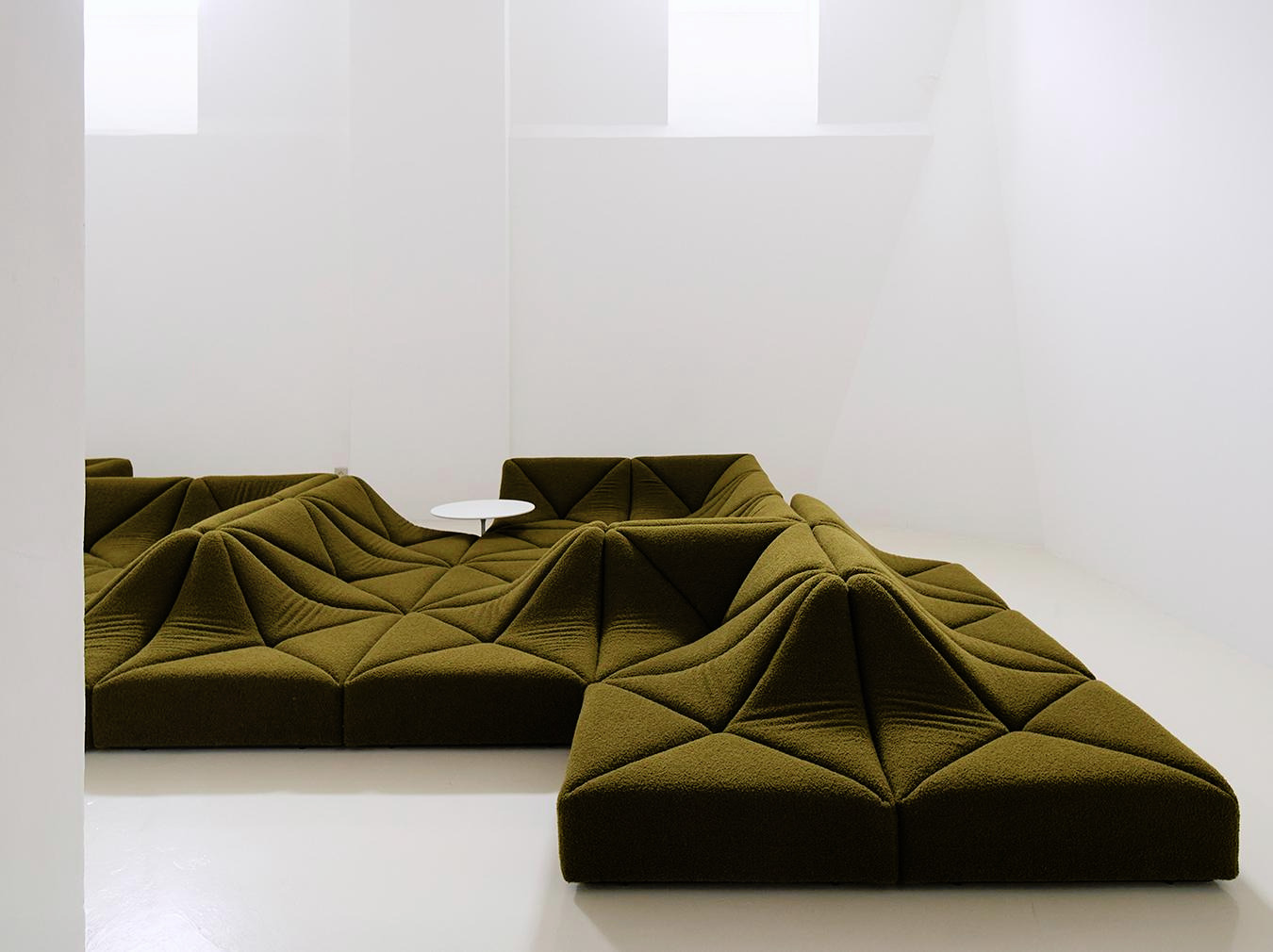
In the early 1970s, Pierre Paulin actively experimented with the concept of a “total interior”, a space where furniture is not divided into separate objects. The Dune sofa resulted from this idea. The sofa forms one continuous surface.
Facts
The Dune sofa was originally created for public and representative spaces
The sofa was rarely produced in series and was more often made for individual projects
The model became a prototype for contemporary island-sofa compositions
Features
- A modular system without rigid geometry
- Low seating and flowing forms
- The ability to create endless configurations
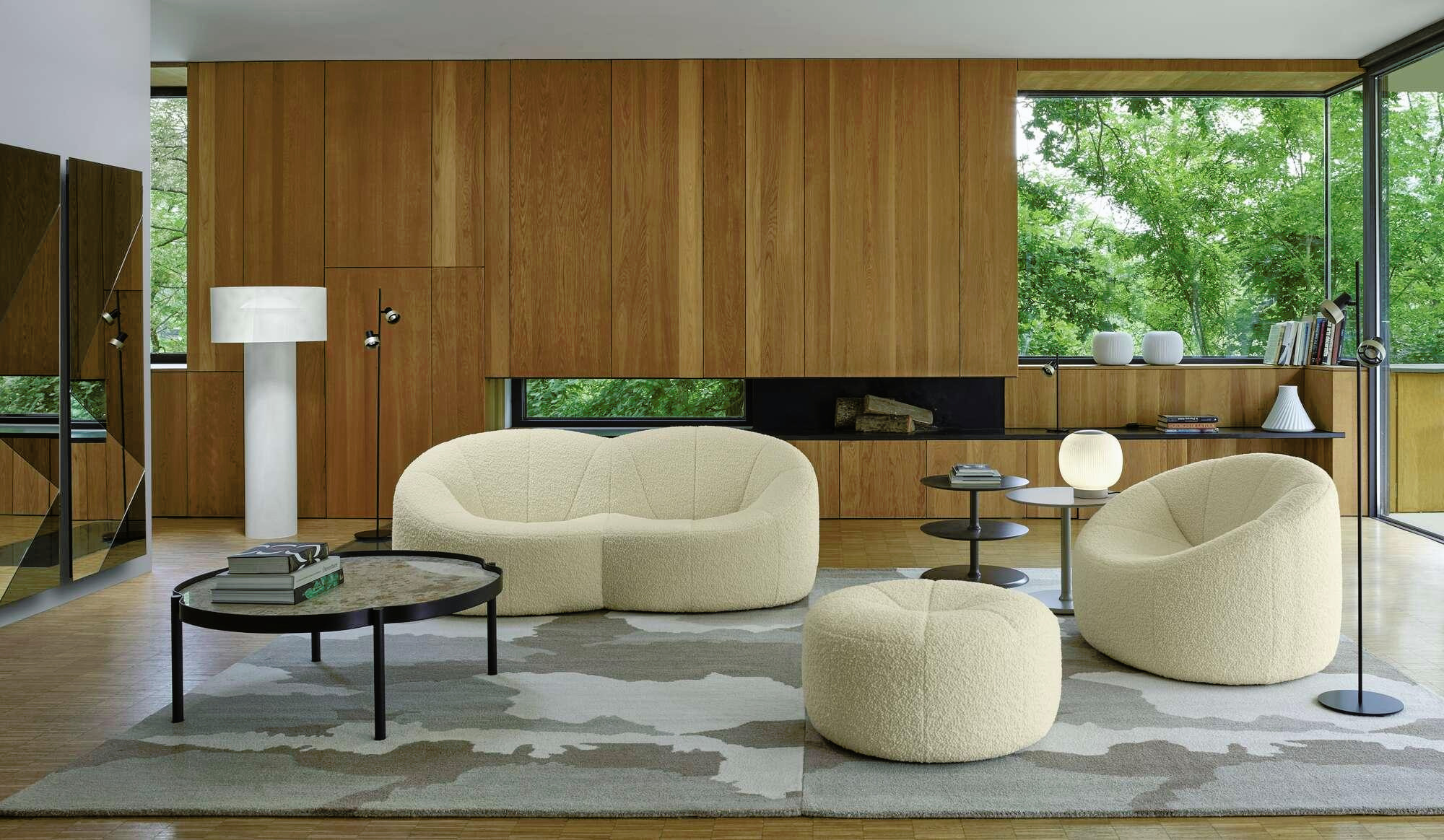
Pumpkin sofa, Pierre Paulin for Ligne Roset, 1960
Creation history
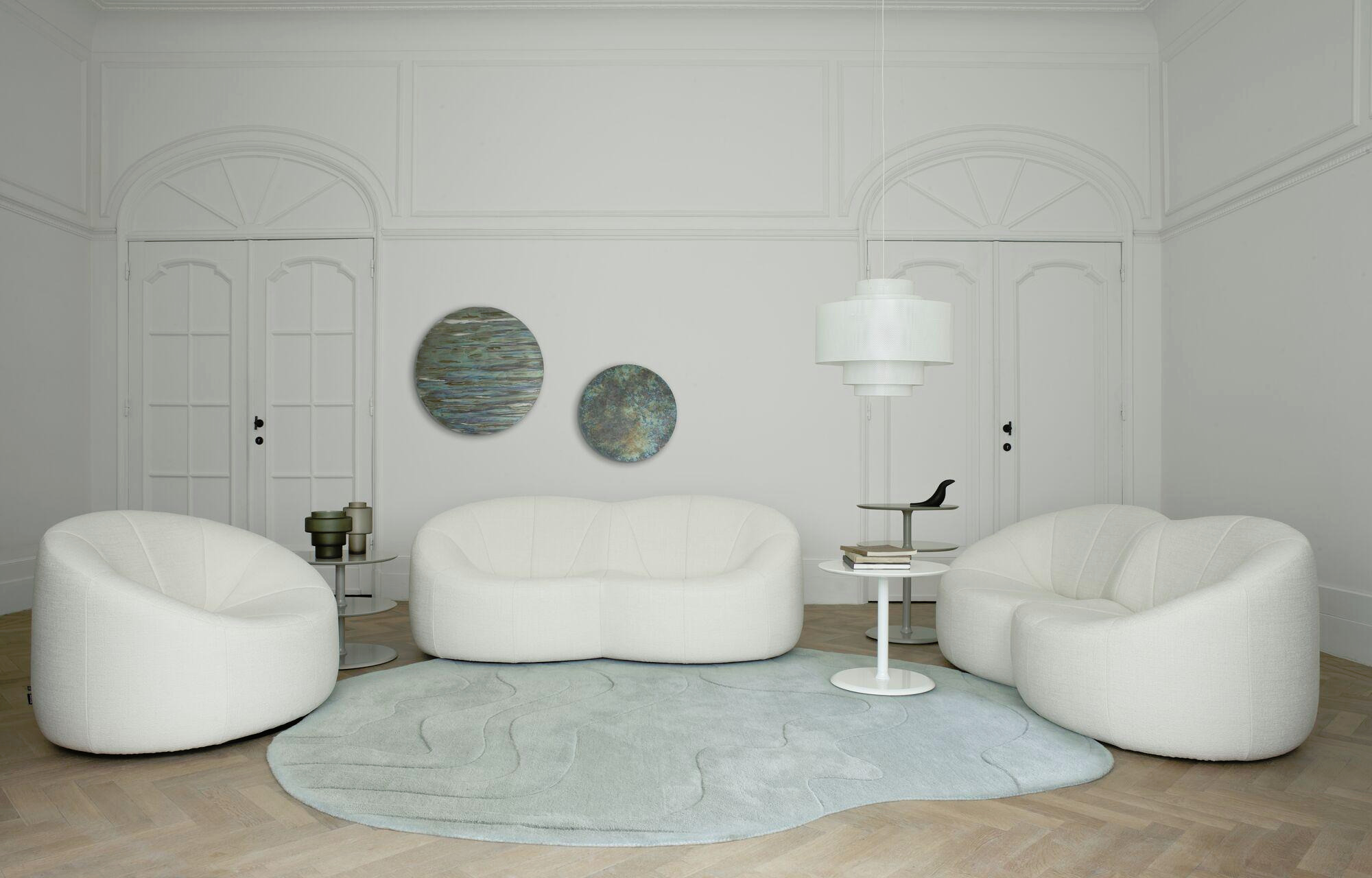
The Pumpkin sofa was commissioned for the private apartments of French President Georges Pompidou at the Élysée Palace. The project marked a moment when a state residence became a setting for avant-garde design.
Facts
The original models were lost and reissued by Ligne Roset decades later
The form draws inspiration from the natural segmentation of a pumpkin
The sofa formed part of a major modernisation programme for the Élysée Palace
Features
- The frame is completely hidden beneath foam and upholstery
- The ergonomics are based on a “cocoon” effect
- A strongly sculptural form
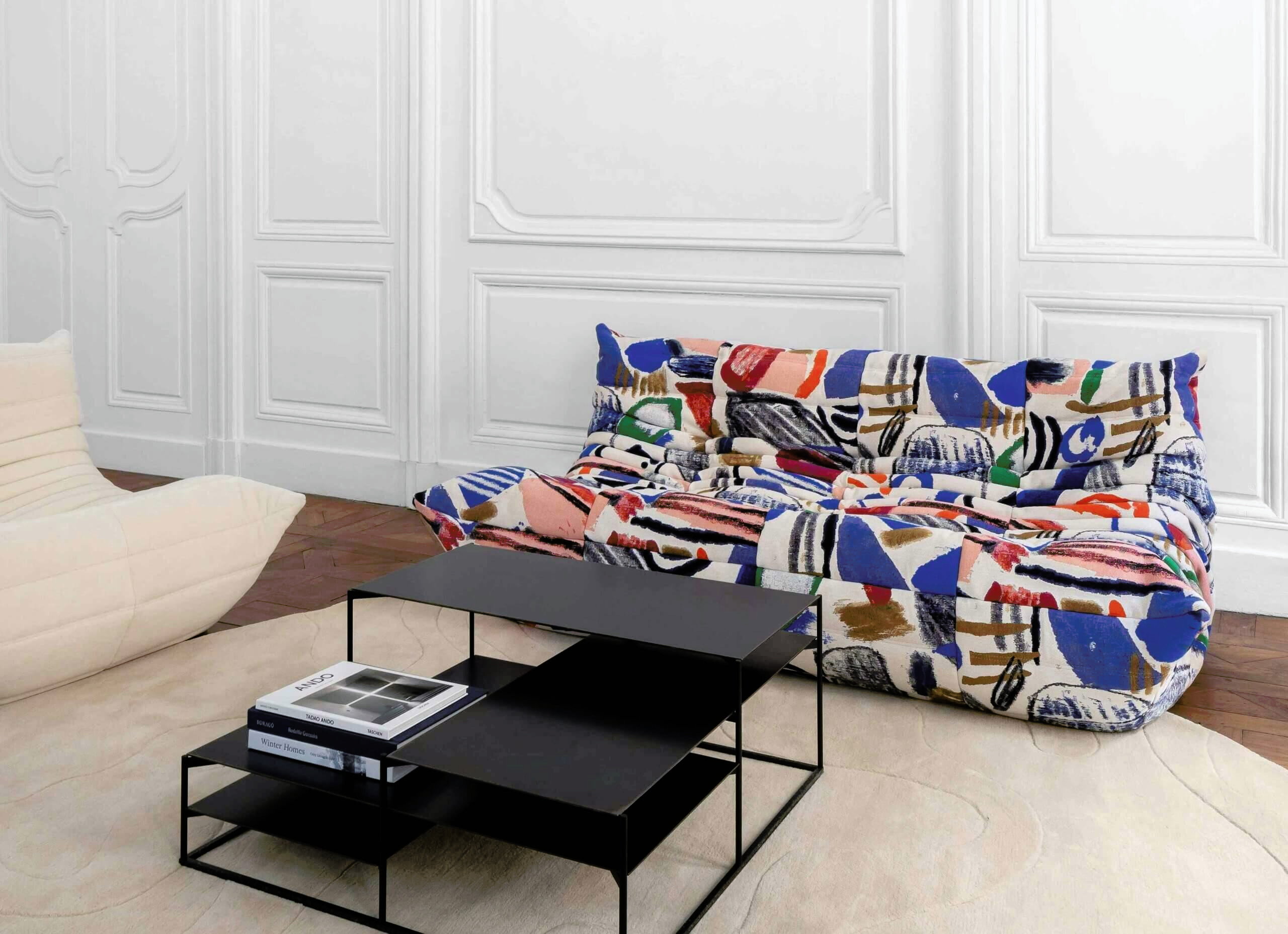
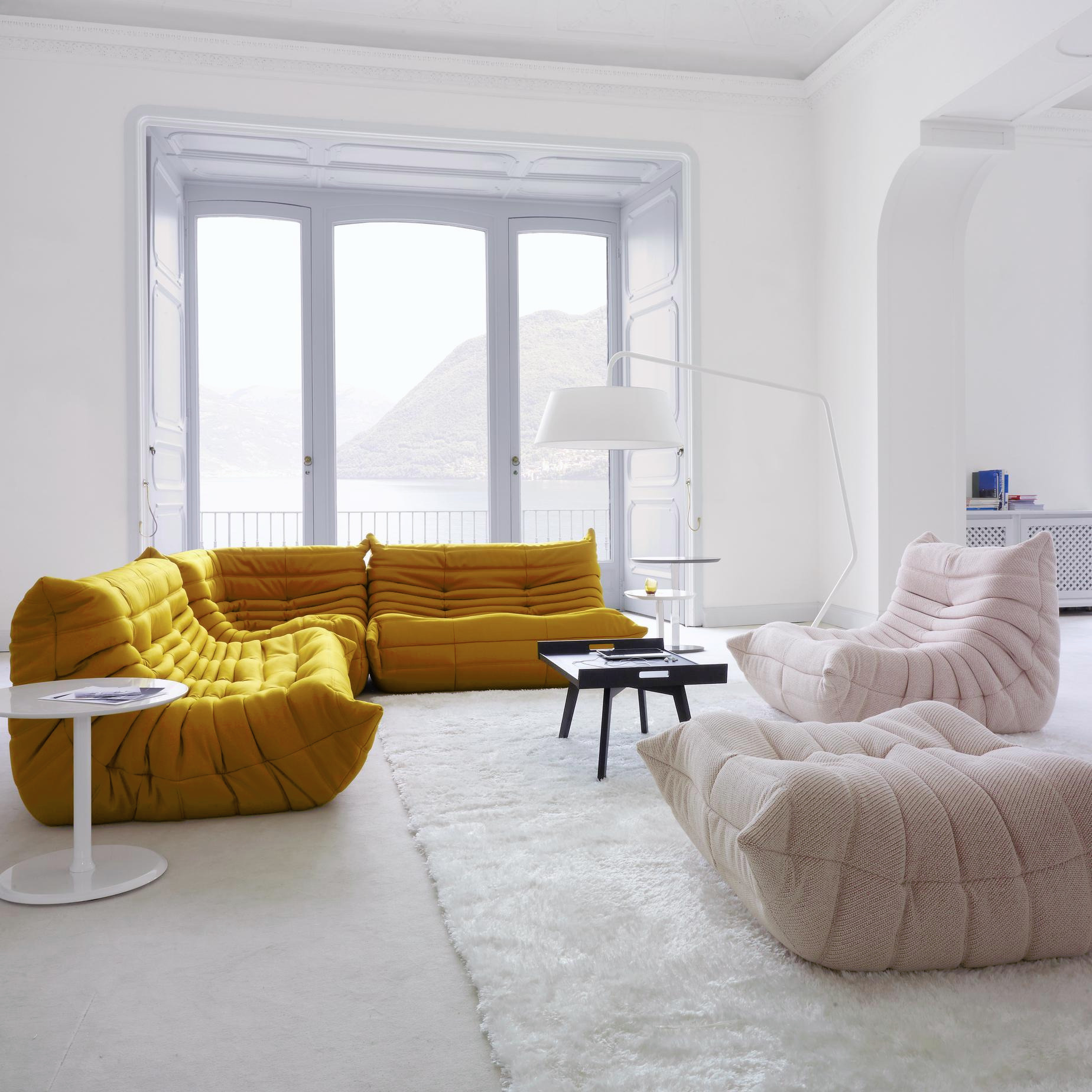
Togo sofa, Michel Ducaroy, 1973 (Ligne Roset)
Creation history
Michel Ducaroy drew inspiration from a collapsed tube of toothpaste, which explains the sofa’s characteristic folds. Ligne Roset was seeking a radically new model. The Togo sofa responded to changing lifestyles in the 1970s.
Facts
The Togo sofa was one of the first fully foam sofas without a frame
The sofa consists of several layers of polyester foam with different densities
The sofa has been in continuous production since 1973
Features
- Ultra-low seating
- Ergonomics designed for a relaxed position
- The recognisable folds result from the construction, not decoration
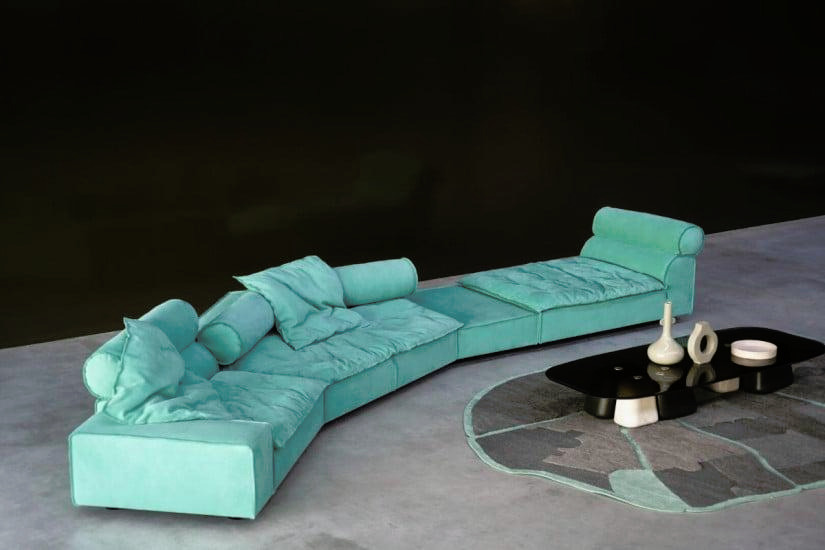
Miami Soft, Baxter
Creation history
The Miami Soft sofa developed Baxter’s design philosophy, with maximum emphasis on materials, especially leather. The model represents mature luxury at the beginning of the 21st century rather than a modernist experiment.
Facts
Each sofa is upholstered by hand
The model uses exclusive leathers with a natural patina
The sofa is aimed at the American and Middle Eastern markets
Features
- Deep seating and large modules
- Soft geometry with a relaxed effect
- The leather becomes more expressive over time
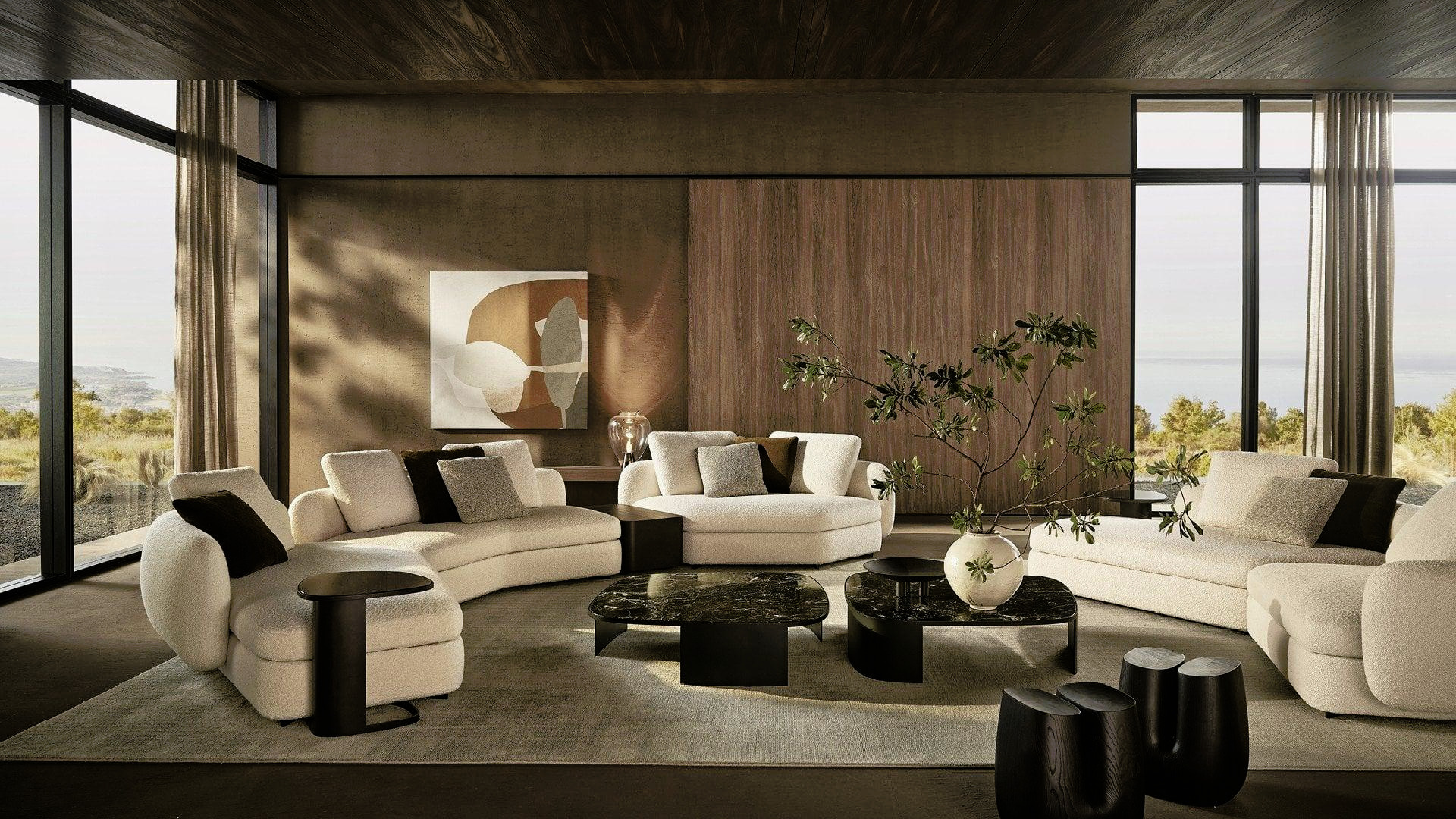
Saint-Germain, Poliform, designed by Jean-Marie Massaud
Creation history
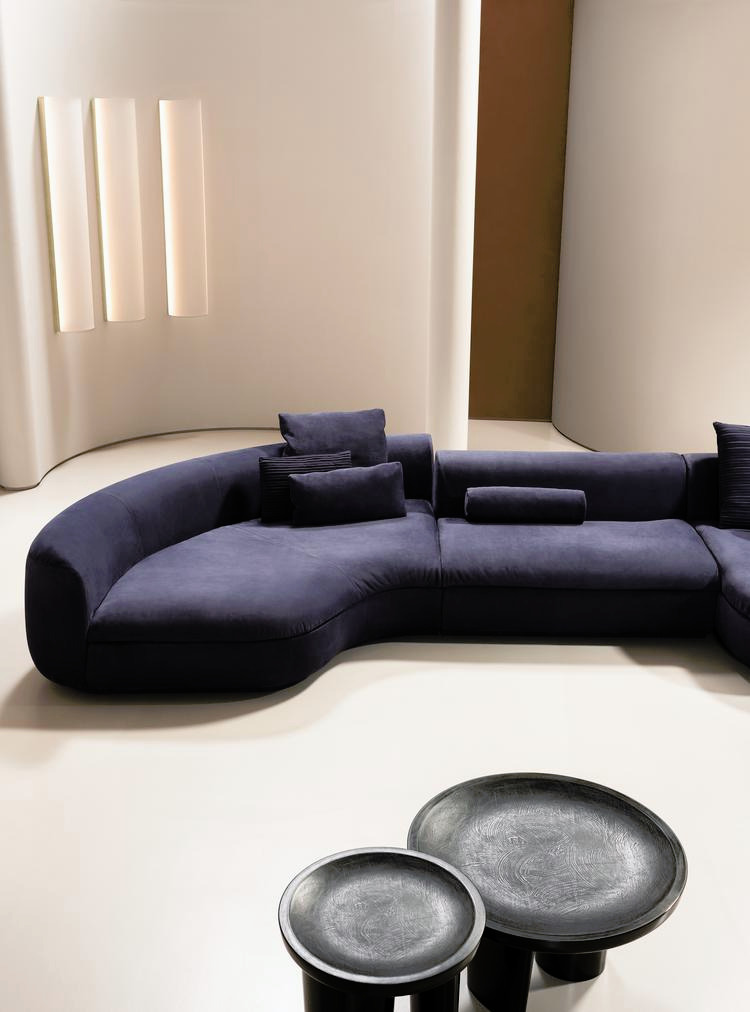
The Saint-Germain sofa was created in the 2020s in response to renewed interest in the 1970s, with contemporary engineering and premium materials. Jean-Marie Massaud sought to combine lounge comfort with architectural expression.
Facts
The sofa is named after the Paris district of Saint-Germain
The model is one of Poliform’s most sought-after sofas of recent years
The sofa is actively used in high-end residential projects
Features
- A modular system with flowing lines
- A broad choice of fabrics, from bouclé to leather
- A balance between softness and structure
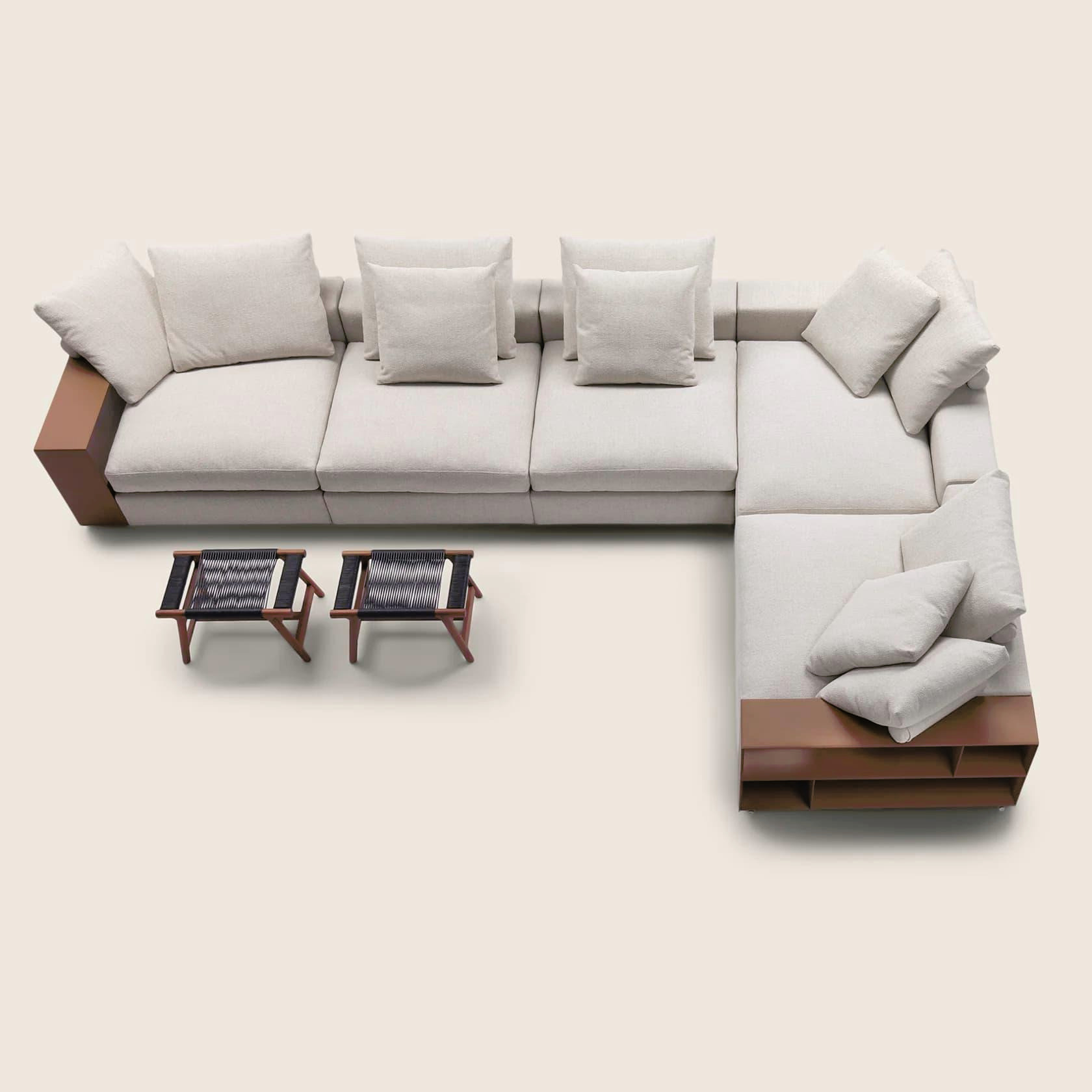
Groundpiece , Flexform, designed by Antonio Citterio, 2001
Creation history
The Groundpiece sofa was created in the early 2000s, when the way people used living rooms was changing. People no longer sat “properly”. Antonio Citterio proposed a sofa for lying down, reading and everyday life.
Facts
The Groundpiece sofa is one of Flexform’s most commercially successful models
The model introduced the concept of integrated storage modules
The sofa became a benchmark for deep sofas
Features
- Increased seat depth
- Low seating
- Modules with shelves in place of armrests
Conclusion
The facts make one point clear:
These sofas are more than attractive forms
- These sofas represent technological breakthroughs, including Togo and Soriana
- These sofas represent political and cultural statements, including Pumpkin
- These sofas introduced new ways of living, including Groundpiece
- These sofas trace the evolution of luxury, including Baxter and Poliform
These sofas remain relevant because the original designs were never about fashion alone.