
Lamps That Shaped Light: Four Lighting Strategies
From the modernist humour of the Castiglioni brothers to Poul Henningsen's scientific optics and Verner Panton's pop radicalism, these lamps do more than illuminate a space. These lamps shape the language of the modern interior. Four icons reveal how light became architecture, technology became aesthetics, and form became a cultural code.
Snoopy, 1967: irony as a functional strategy
Designers: Achille Castiglioni and Pier Giacomo Castiglioni
Brand: Flos
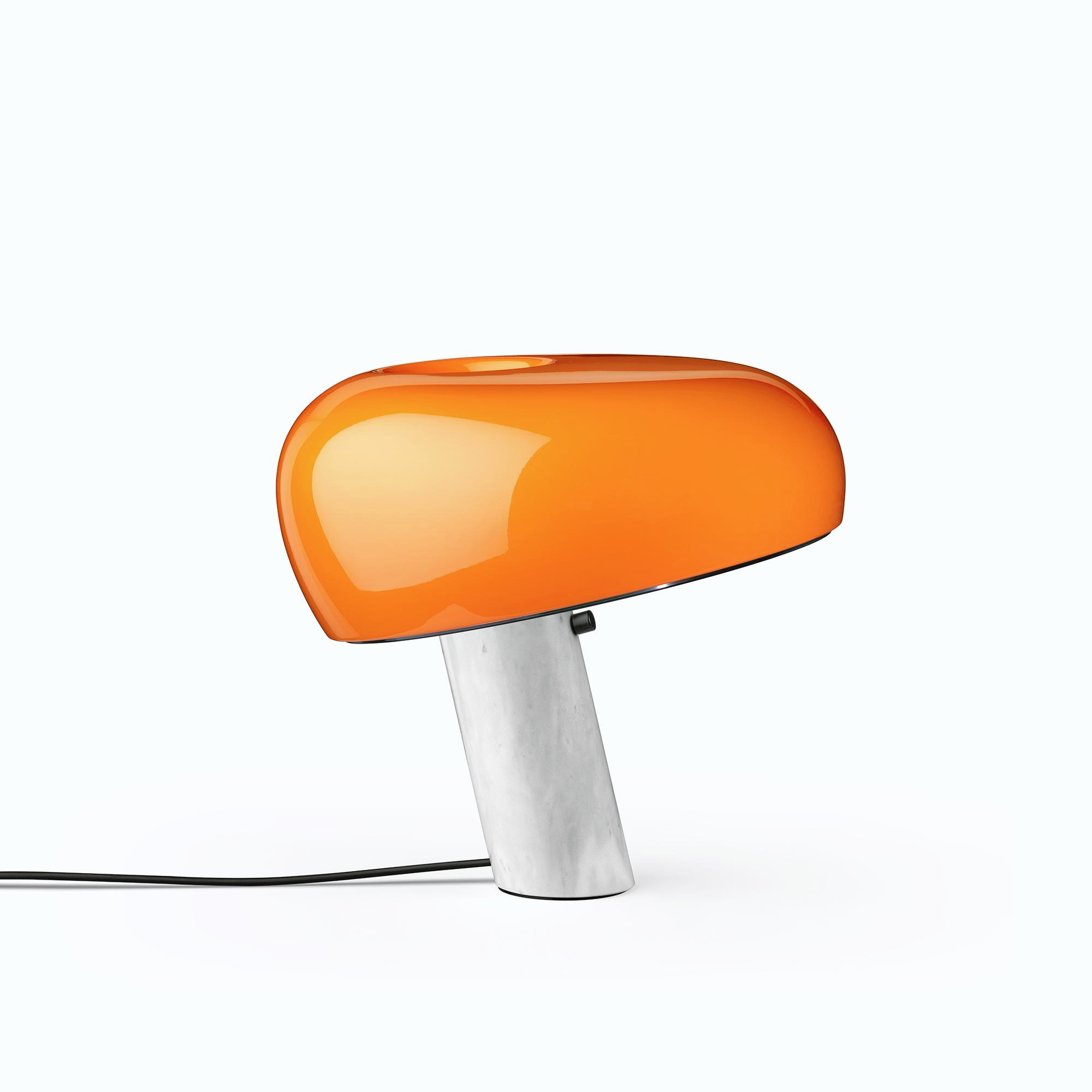
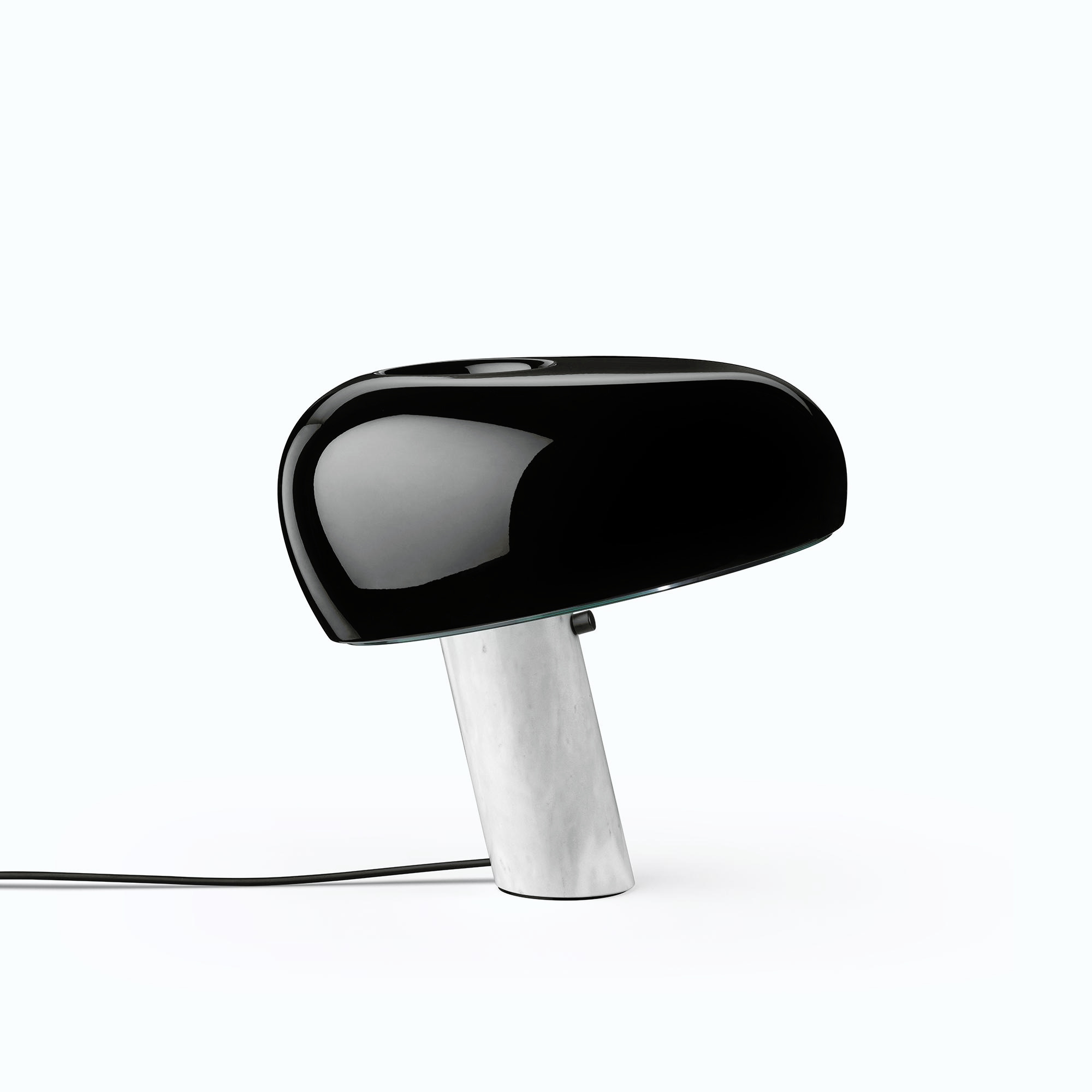
Snoopy is one of the rare objects where humour becomes part of the engineering logic. The lamp was created in 1967 and visually references a comic-book character. The playful gesture conceals precise work with balance, material and light.
The solid white marble base performs an aesthetic and structural function. The marble base stabilises the heavy enamelled reflector. The internal technical components remain concealed, which was innovative for the period.
The Castiglioni brothers consistently worked with human-centred design. The designers introduced everyday and cultural associations into objects. Snoopy is more than a lamp. Snoopy is an early example of emotional design, where an object enters into dialogue with the user.
Snoopy functions as an accent object in interior design. The lamp does not dissolve into the space. The lamp creates a visual centre and often replaces a decorative sculpture.
Panthella, 1971: light as a total form
Designer: Verner Panton
Brand: Louis Poulsen
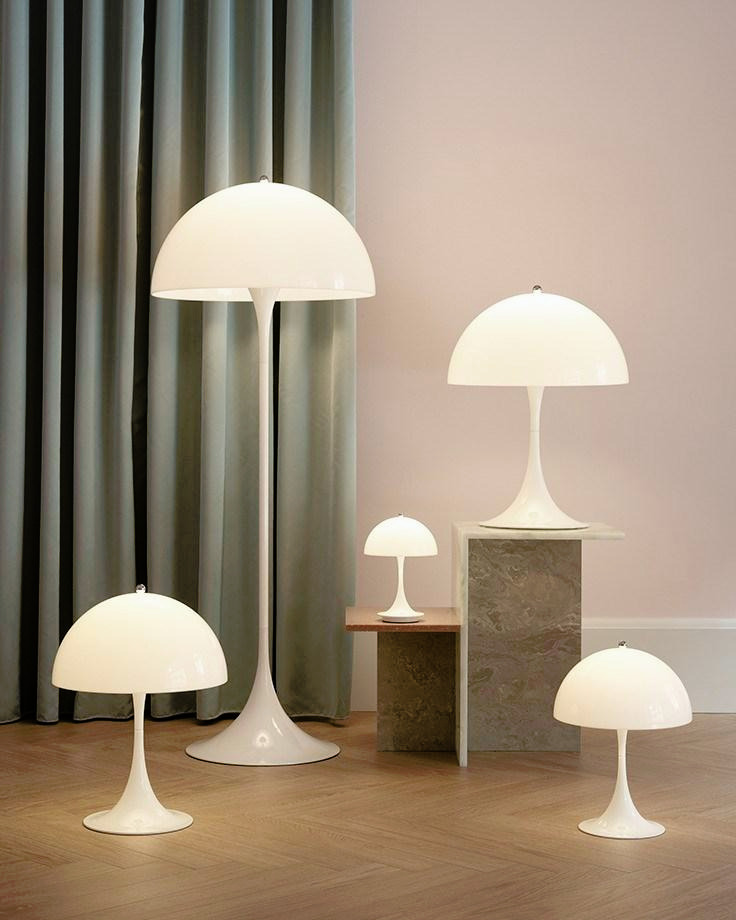
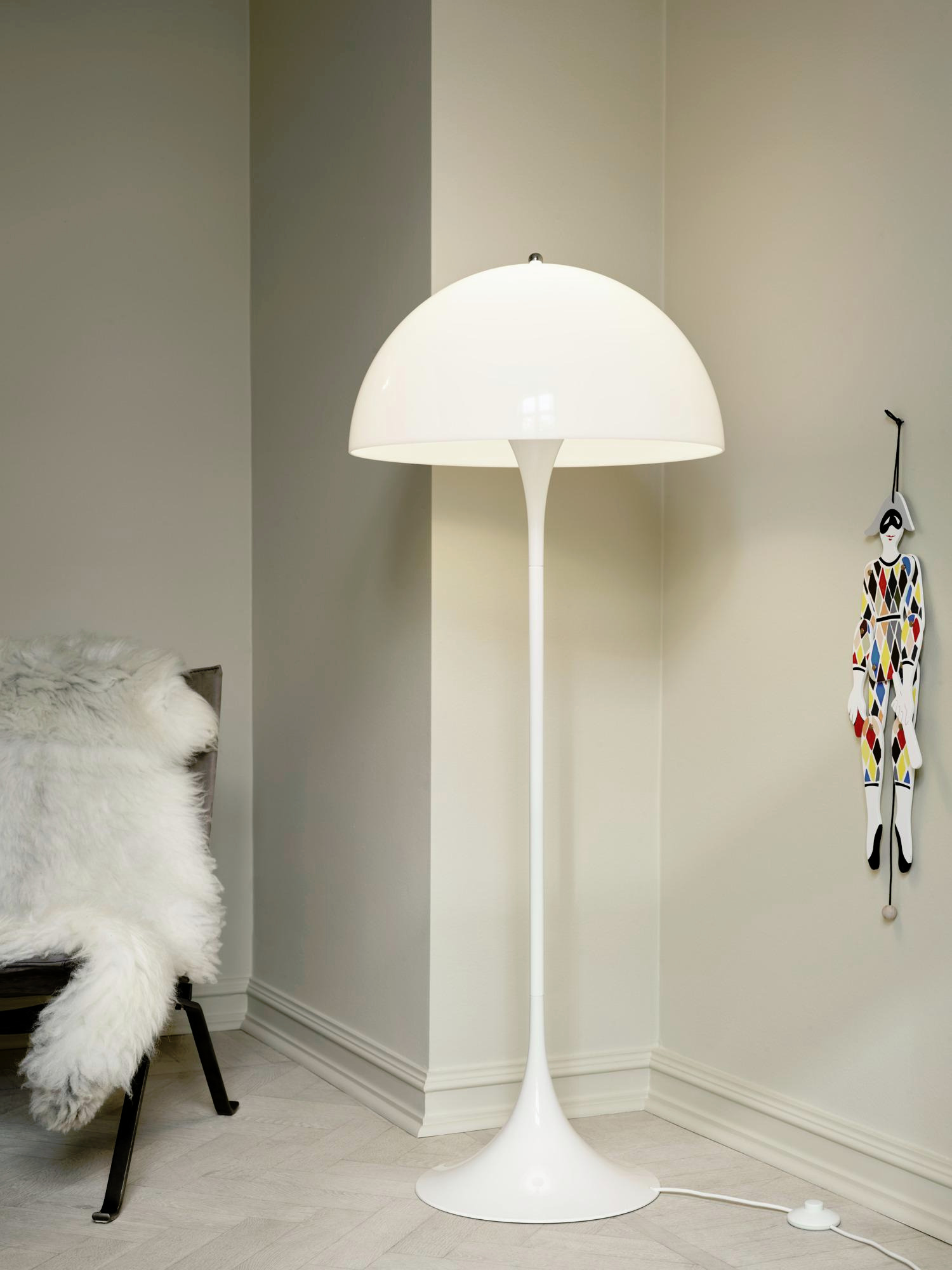
Panthella represents the culmination of Verner Panton's experiments with plastic, light and total interiors. Panton created the object in 1971 without the usual division between a base and a shade. The entire form functions as one reflector.
Verner Panton designed both the base and the shade to reflect light, creating soft, diffuse illumination.
Organic geometry functions as a tool for controlling the light flow rather than as a decorative treatment.
Panthella is more than a lamp. Panthella creates a micro-environment. The lamp creates atmosphere rather than simply providing illumination. The shift is fundamental: the lamp becomes part of the spatial scenario.
Panthella works as an ambient-light tool for professional designers. The lamp reduces contrasts and brings an interior together, especially in soft, fluid compositions.
PH5 Pendant, 1958: a scientific approach to light
Designer: Poul Henningsen
Brand: Louis Poulsen
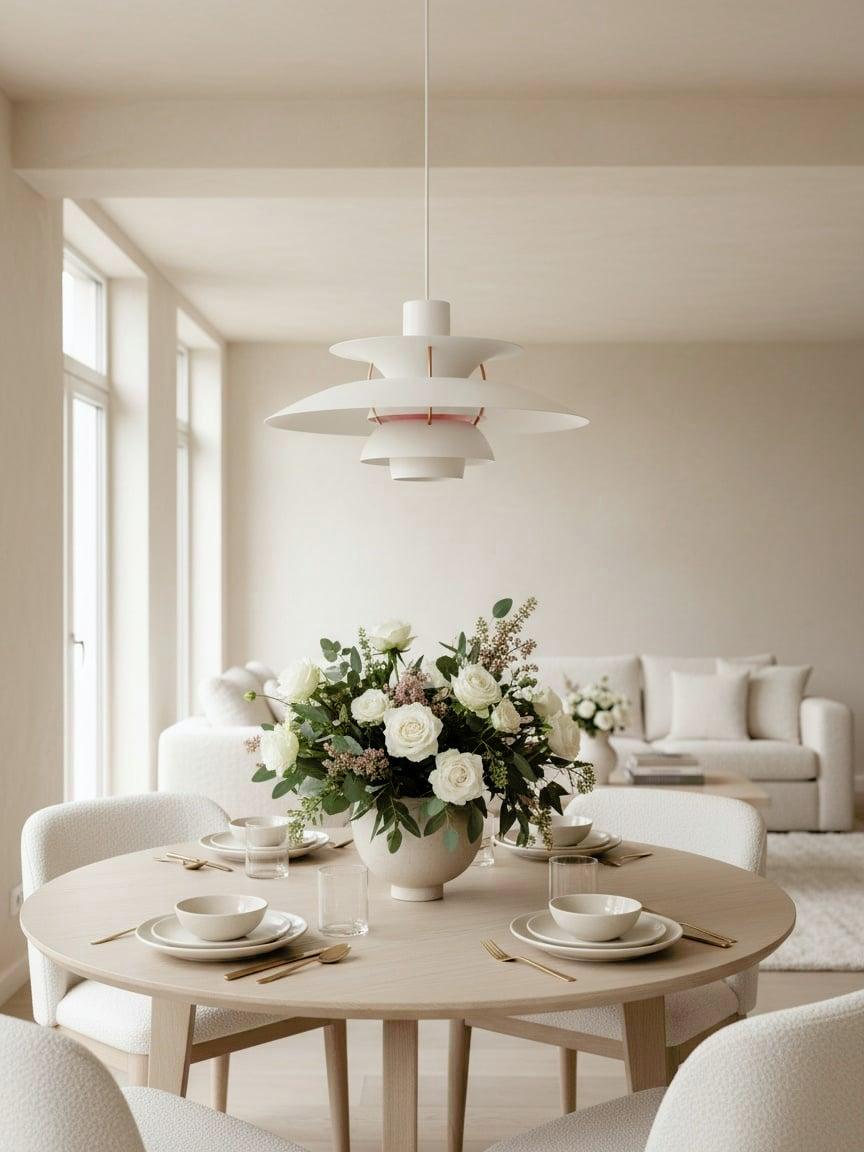
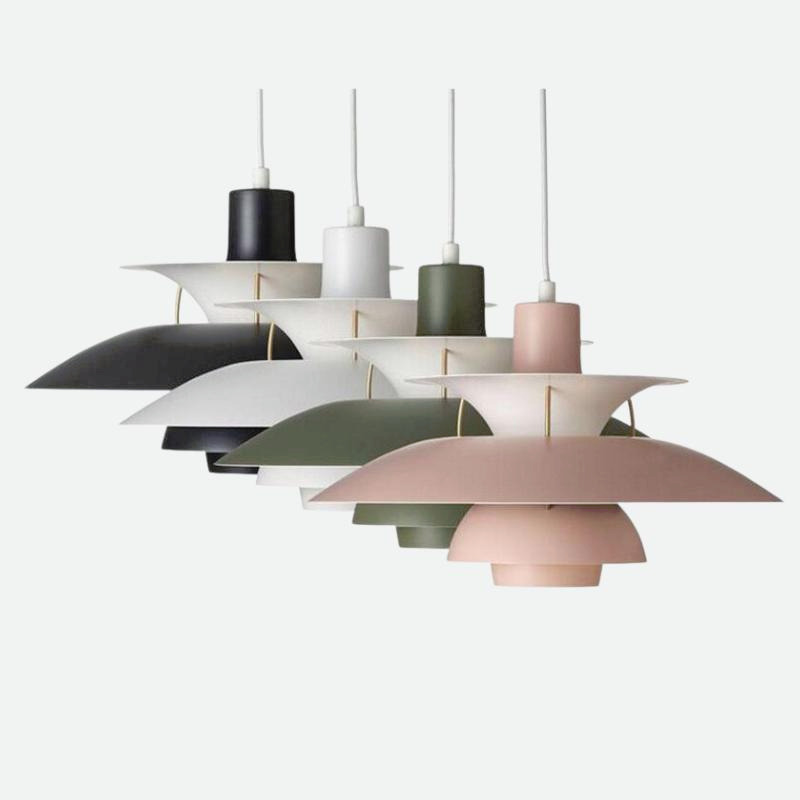
PH5 may be the most intellectual lamp of the twentieth century. The form resulted from research into light distribution rather than from a search for a particular style.
The model uses a system of five shades to redistribute light, remove glare and create soft, even illumination.
Poul Henningsen approached artificial light as a scientific problem. The designer sought to bring artificial light closer to natural light. PH5 answered the arrival of brighter bulbs that required control of the light flow.
PH5 provides precise light control in interiors. The pendant suits dining areas, work surfaces and spaces where visual comfort matters.
PH5 is not decorative in the classical sense. The aesthetic results from the function. The principle explains why PH5 has remained relevant for more than 60 years.
AJ Floor Lamp (IJ), 1957: architecture at object scale
Designer: Arne Jacobsen
Brand: Louis Poulsen
(Note: the lamp is more commonly known as the AJ Floor Lamp and formed part of the SAS Royal Hotel project in 1957.)
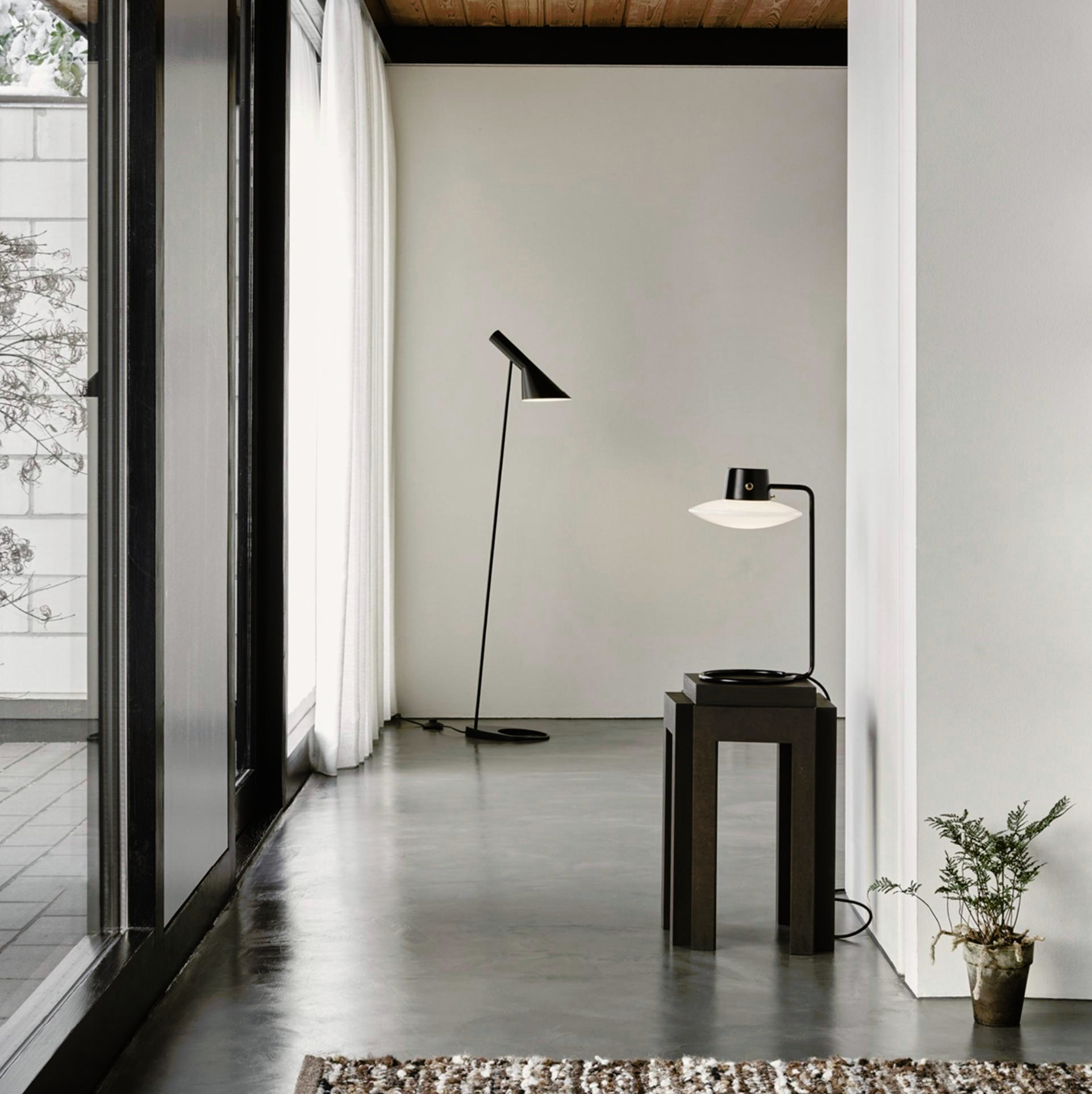
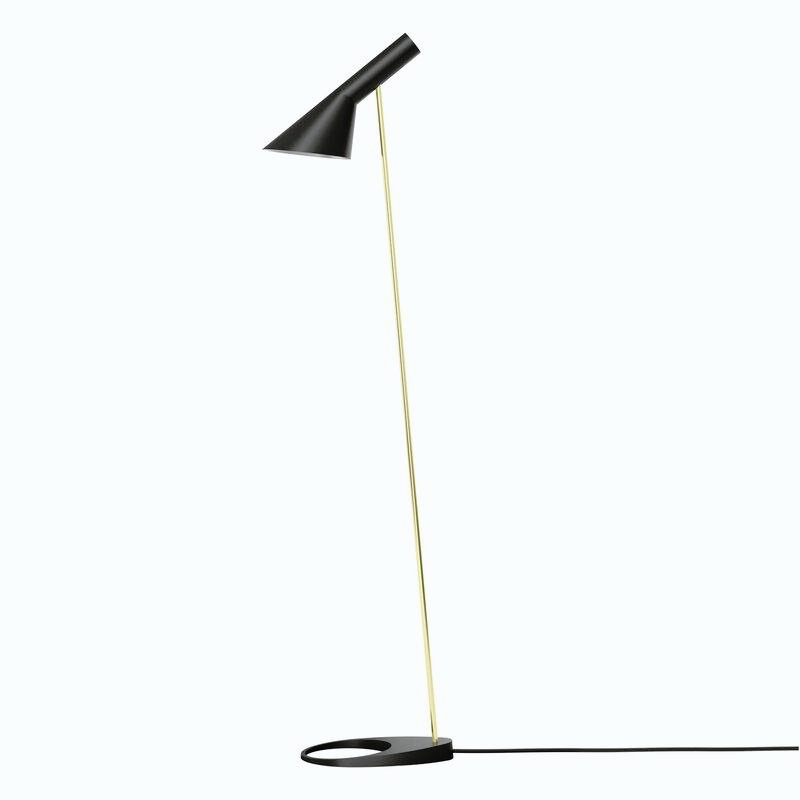
The AJ Floor Lamp expresses Arne Jacobsen's architectural approach. Jacobsen designed a system rather than an isolated object, covering everything from the building to the door handle. The lamp became part of the total design.
The angled shade provides directed light that is strictly functional and almost graphic. The shade does not diffuse light like PH5. The light remains disciplined and precise.
AJ Floor is about line, angle and proportion. Minimalism functions as a method rather than an aesthetic.
The lamp works as a graphic element in an interior. The lamp draws the space, strengthens vertical lines and creates rhythm.
Conclusion: four lighting strategies
These lamps represent four fundamentally different approaches that continue to shape lighting design:
Snoopy: an emotional object where form communicates with the user
Panthella: light as an environment rather than a source
PH5: scientific control of light
AJ Floor: architectural discipline of form
Professional designers should understand that these lamps are more than iconic objects. These lamps are prototypes for typologies that continue to appear in contemporary collections.