
The Material Revolution: Flexform’s New Direction
The premium interiors industry is undergoing a shift that is gradually changing the logic of design itself. Brands no longer compete through form or recognisable style alone. Material is becoming the key carrier of quality, aesthetics and function.
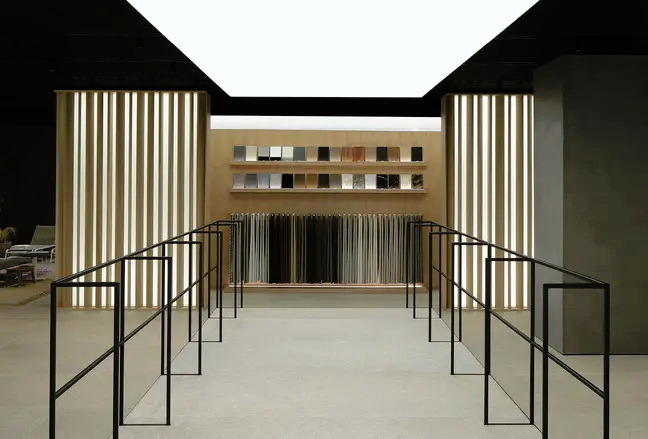
Flexform’s new Material Library, opened at the showroom in Mede, is neither a display statement nor an expansion of the collection. The Material Library is an infrastructure solution that records the move from furniture design towards material-based environmental design.
The professional community gains a different primary working tool. Material now serves as the starting point rather than the object.
Material Library and the New Professional Model
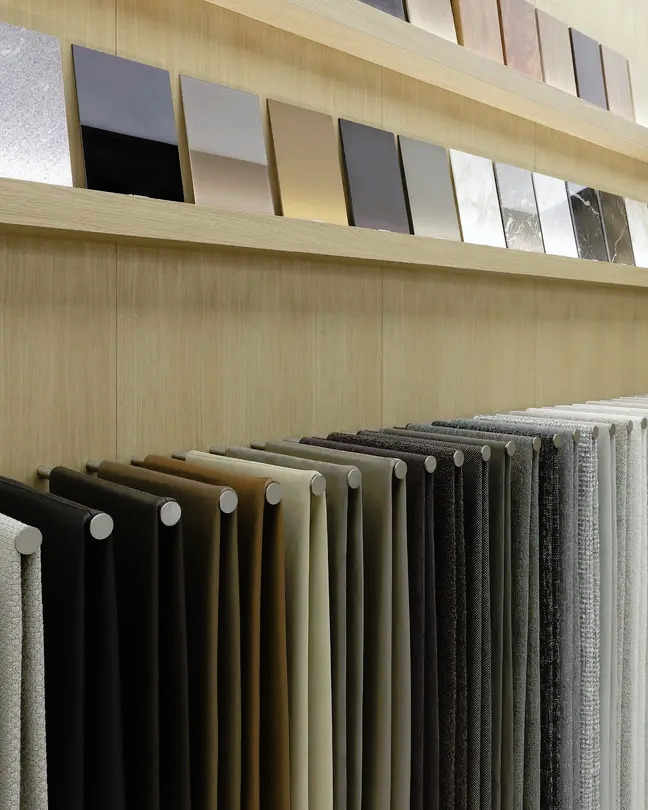
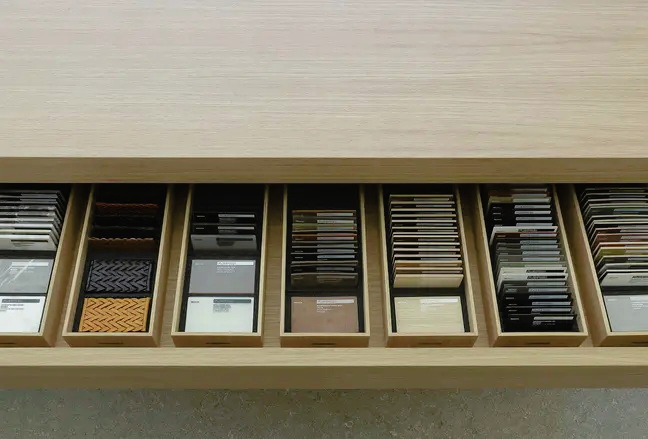
Flexform creates a space where material is no longer a supporting category. Fabrics, leather, wood, marble, metal, glass, ceramics and textiles are organised as a system of interactions rather than as a catalogue.
The central principle allows designers to work with materials as architectural tools rather than decorative choices.
Antonovych Home director Dmytro Korotchuk assesses the effect of such spaces on design structure:
«We are seeing a move from object-based thinking towards material-based thinking. Designers no longer assemble interiors from individual items. Designers shape interiors through the interaction of surfaces, light and tactile characteristics.»
Material as the Starting Point for Interior Design
Traditional design begins with a composition, followed by material selection. Flexform establishes the opposite logic. Material becomes the primary parameter.
In the Material Library, designers work with:
* the behaviour of textures in natural light;
* combinations of natural and engineered surfaces;
* the tactile density of materials;
* visual responses to spatial scale;
* finish variations within a single system.
Material physics takes priority over stylistic language.
Dmytro Korotchuk notes that the change already affects design practice:
«A designer who starts with material builds space differently. Layout, lighting and proportions become consequences of material selection rather than a backdrop for material selection.»
A Laboratory Rather Than a Showroom
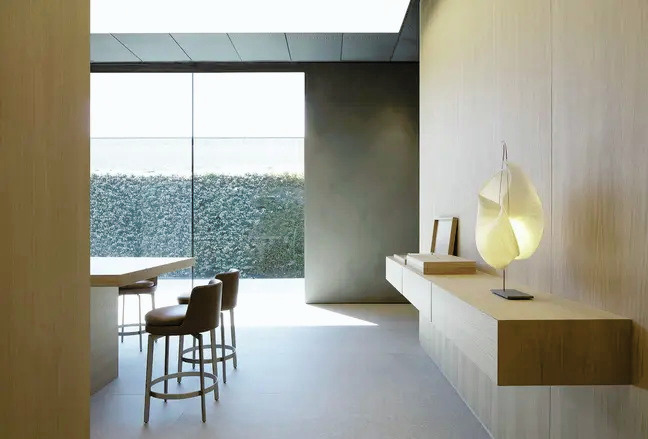
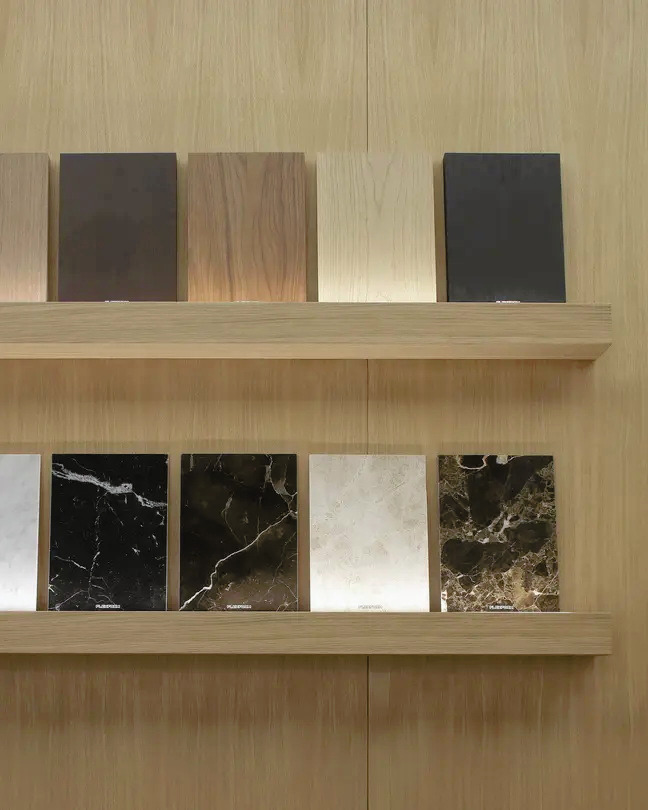
Flexform’s library architecture avoids decorative competition with the display. Light wood, a neutral palette and natural light create an environment where material becomes the only active element of perception. The space answers the question of how a material laboratory differs from a conventional showroom: the laboratory supports analysis, testing and project decisions rather than product presentation alone.
The priority is not product display. The priority is providing conditions for analysis.
The laboratory format is gradually replacing the conventional showroom as a type of space.
Dmytro Korotchuk explains:
«The showroom is no longer only a place for presenting collections. The showroom becomes a working environment where designers make project decisions. The format creates a fundamentally different interaction with the brand.»
Tactility as a Professional Design Tool
Digital visualisation has increased working speed, but digital visualisation has not replaced physical understanding of material.
The Material Library places tactile experience at the centre. Designers assess fabric density, light reflection on stone, the temperature of metal and the depth of matt surfaces.
Digital environments cannot fully communicate these parameters. Material parameters determine the final perception of an interior.
Dmytro Korotchuk defines the change as a new professional standard:
«Photorealism is not reality. Material always behaves more complexly than its digital model. Working with material therefore requires physical presence and direct experience.»
From Furniture to Material Systems
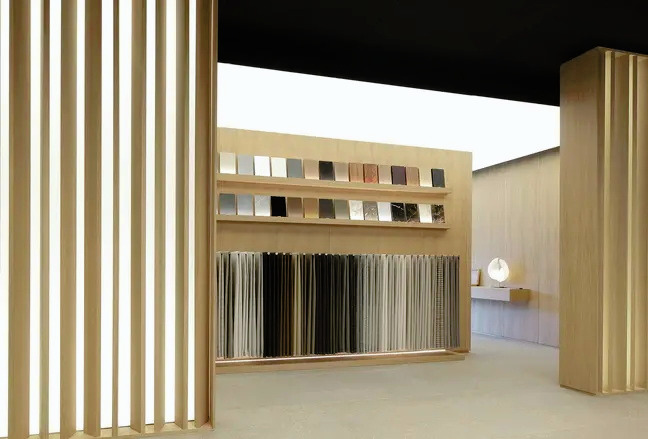
One key consequence of the Material Revolution is the narrowing boundary between furniture and architecture.
Material is no longer tied to a specific object. Material becomes part of a system that includes:
* walls and planes;
* built-in elements;
* furniture structures;
* lighting scenarios;
* engineering solutions.
Design therefore moves beyond individual objects and becomes systemic.
Dmytro Korotchuk observes:
«Furniture cannot be designed separately from space today. Material connects every level of an interior into one structure, including architecture and hardware details.»
Why the Material Library Is Not About Product Display
Flexform’s Material Library has a commercial foundation, but the library functions as a professional design tool. The library’s value lies in changing decision-making logic rather than displaying a collection. Designers test possible future-interior scenarios instead of selecting only from ready-made solutions. Flexform therefore becomes a participant in the design process rather than only a manufacturer.
The value of the library lies not in collection display but in changing decision-making logic.
Designers do not select only ready-made solutions in the library. Designers test possible scenarios for future interiors.
The brand’s role consequently changes. Flexform becomes a participant in the design process rather than only a manufacturer.
The Material Revolution demonstrated by Flexform records an important shift in the premium design industry. Material is no longer a secondary element. Material becomes the foundation of design thinking.
The professional community faces a change in working methodology: designers now develop material systems rather than individual objects.
The shift defines the current direction of high-end interior design.