
Minotti 2026: Architecture of Precise Proportions
At Salone del Mobile.Milano 2026, Minotti presented a collection that demonstrates one of the most relevant directions in contemporary luxury design: a return to architectural thinking as the foundation of furniture design. Unlike many brands focused on visual impact, Minotti concentrated on a complete system of spatial solutions in which furniture, architecture, art and materials form one environment.
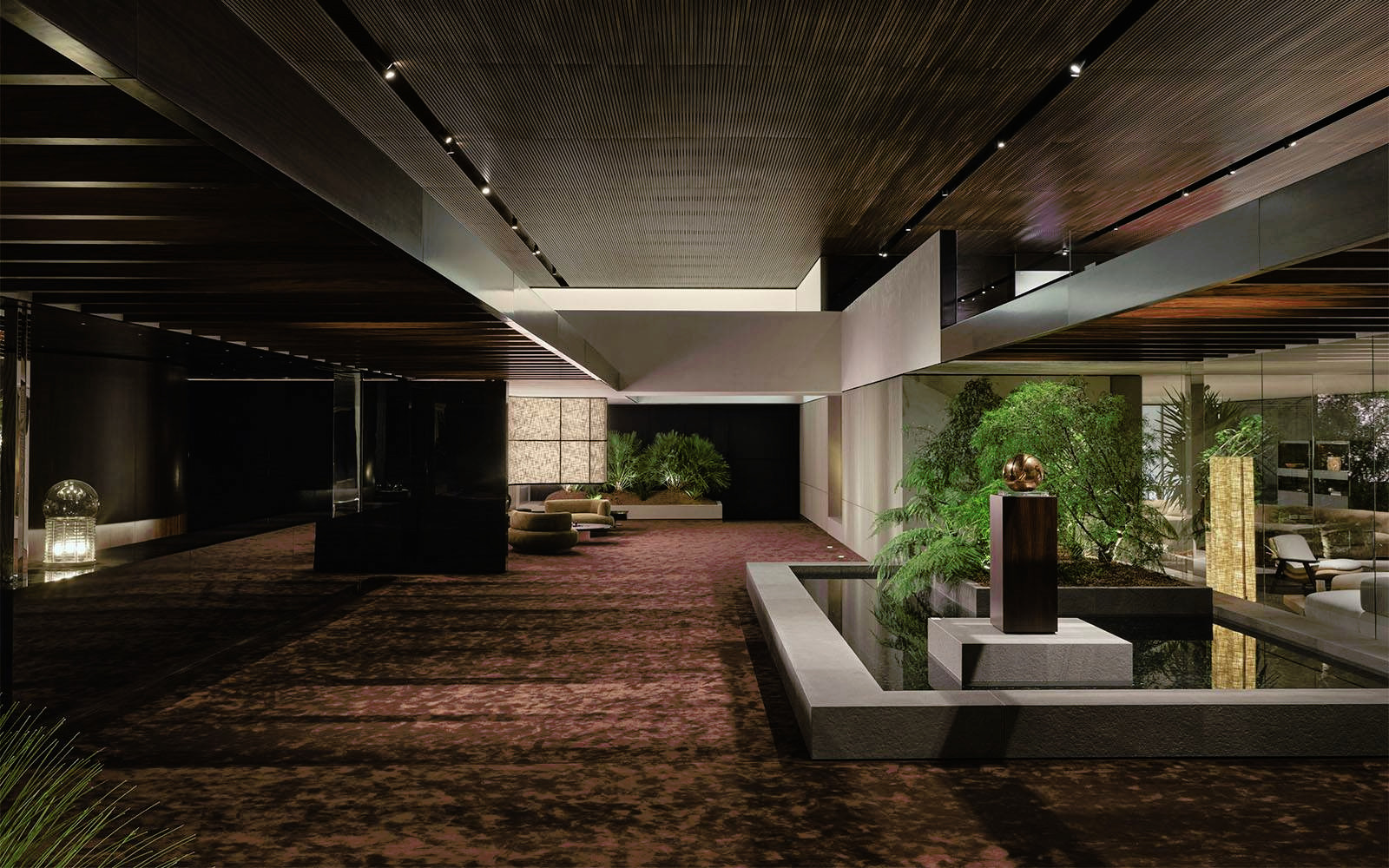
Minotti presented the new collection in Minotti Pavilion, a purpose-designed architectural installation measuring approximately 4500 m². Minotti Studio and Giampiero Tagliaferri created the pavilion together. The space became a full demonstration of the brand philosophy rather than a conventional exhibition stand.
Why the Minotti 2026 collection matters to design professionals
According to Dmitry Korotchuk, director of Antonovych Home, the key value of the collection lies not in the number of launches but in Minotti's interpretation of contemporary living environments. The interior market has been shaped by two opposing tendencies in recent years. One tendency values emotion and visual expression, while the other responds to demand for intellectual restraint and architectural clarity. Minotti 2026 combines both approaches. The collection is conceptually based on the connection between 1970s aesthetics and 1990s rationality. The 1970s contributed plasticity, rich materials and emotion to design, while the 1990s introduced structure, graphic character and disciplined proportions. The entire collection is built on this balance. The balance matters to architects and designers because current projects require systems that can create a distinct spatial identity rather than isolated furniture pieces.
The central idea of the collection
The Minotti 2026 collection centres on architectural continuity. Minotti consistently removes the boundary between interior and exterior, furniture and architecture. The pavilion expressed the concept through open perspectives, double-height spaces, reflecting pools and planted areas that created one continuous viewing route. Materials play a significant role. The exterior of the pavilion contrasted exposed concrete with Dark Brown rosewood, while the interior combined matte and reflective surfaces, natural stone, metal and textiles. Minotti therefore presents a key idea for the contemporary market: luxury is defined by the quality of spatial relationships rather than by the number of decorative elements.
Key new products in the collection
Orion
Designer: Giampiero Tagliaferri
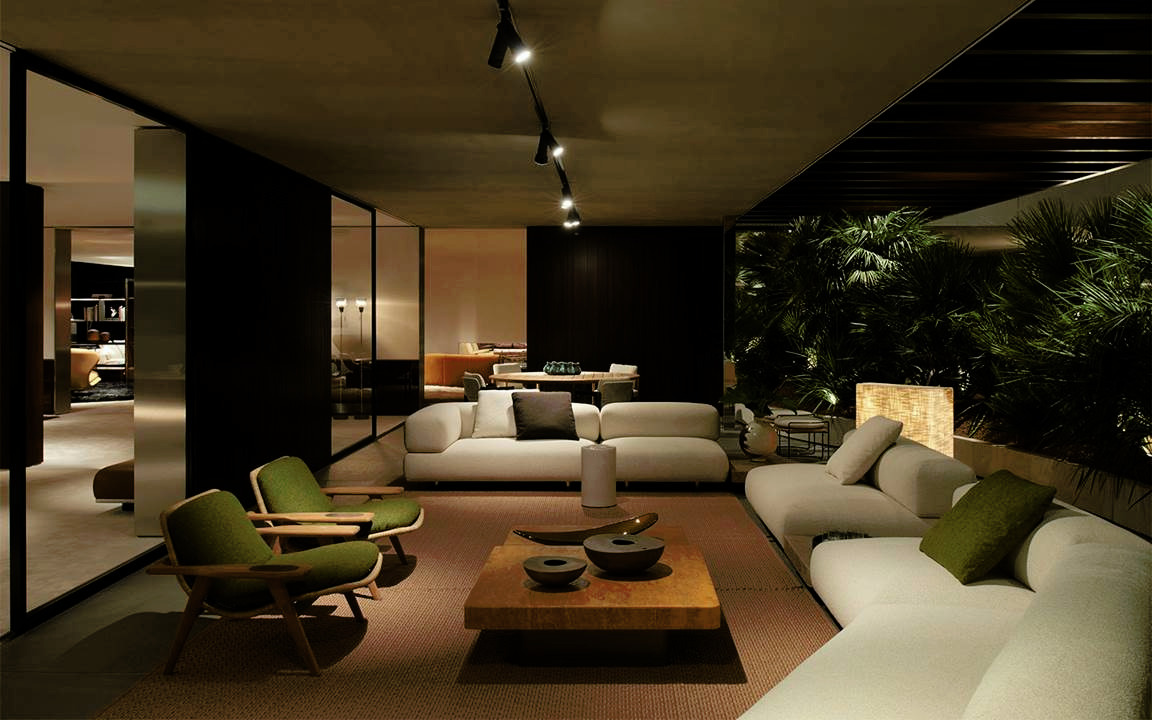
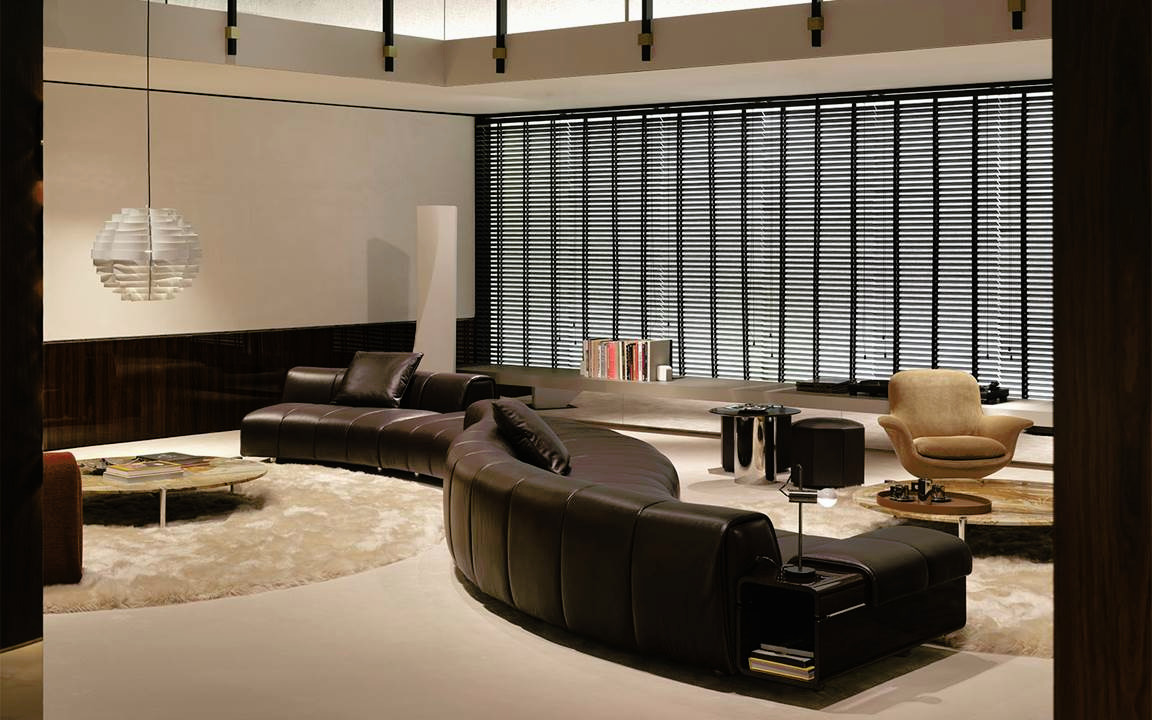
Orion became one of the central pieces in the 2026 collection. The upholstered furniture system combines architectural geometry with pronounced structure. The design shows the influence of late twentieth-century modernism, while softer proportions and an emphasis on comfort keep the composition contemporary. Orion interests design professionals as an example of Minotti's adaptation of architectural thinking to the requirements of contemporary residential spaces.
Ruffle
Designers: GamFratesi
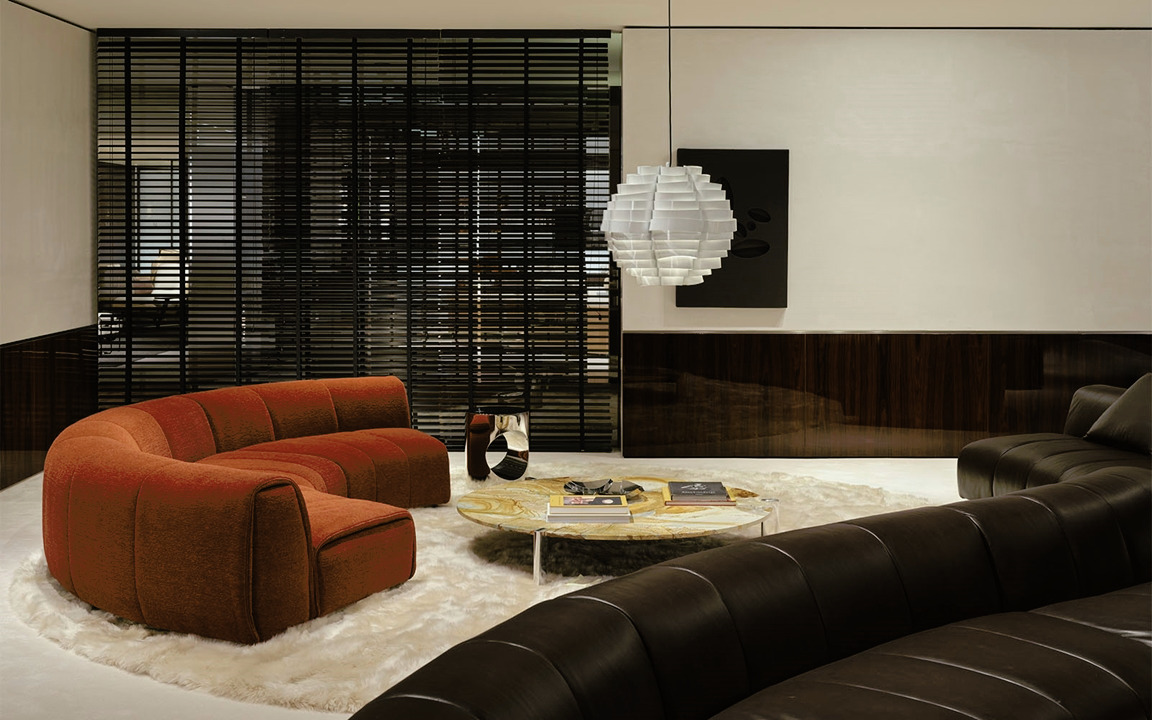
GamFratesi presented Ruffle, a system that brings a more sculptural and emotional character to the collection. Ruffle provides visual balance against the collection's overall architectural restraint. Soft forms and complex volume create more intimate and comfortable living arrangements.
Softcase
Designer: Hannes Peer
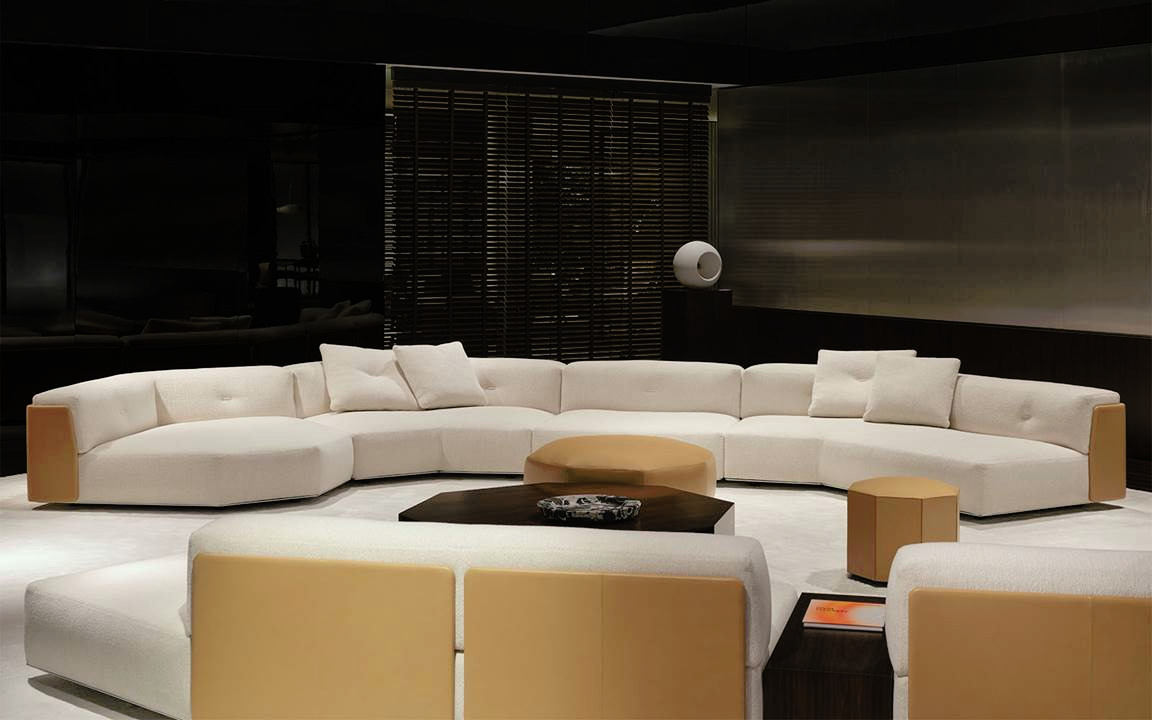
Softcase reflects the combination of visual monumentality and physical comfort. Hannes Peer's work traditionally shows close attention to materials and architectural expression. The new system expresses those qualities through a contrast between substantial volumes and a soft visual impression.
Designers of the 2026 collection
Minotti invited six international studios and designers to create the collection:
* Giampiero Tagliaferri;
* GamFratesi;
* Hannes Peer;
* Nendo;
* Marcio Kogan / Studio MK27;
* Inoda+Sveje.
Each author created a project within the wider Minotti design system rather than an autonomous collection. The shared system preserved the collection's unity despite the variety of authorial approaches.
Trends reflected by Minotti 2026
The return of an architectural approach
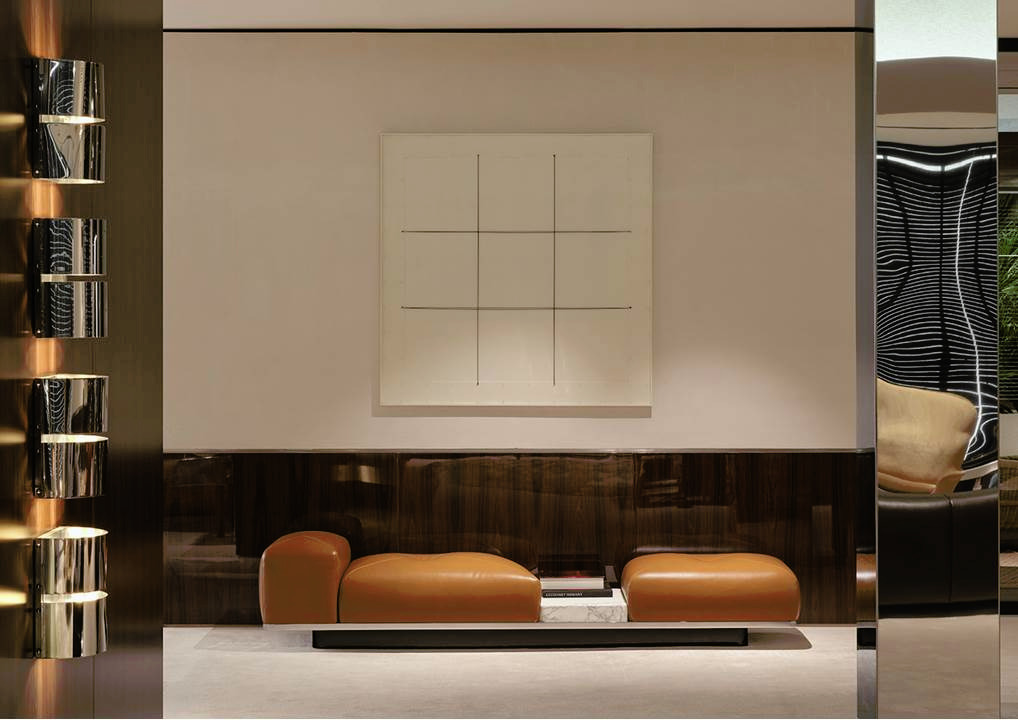
Furniture is once again considered part of spatial architecture. Minotti therefore designed the exhibition as a sequence of architectural scenes rather than a display of individual objects.
A dialogue between the 1970s and 1990s
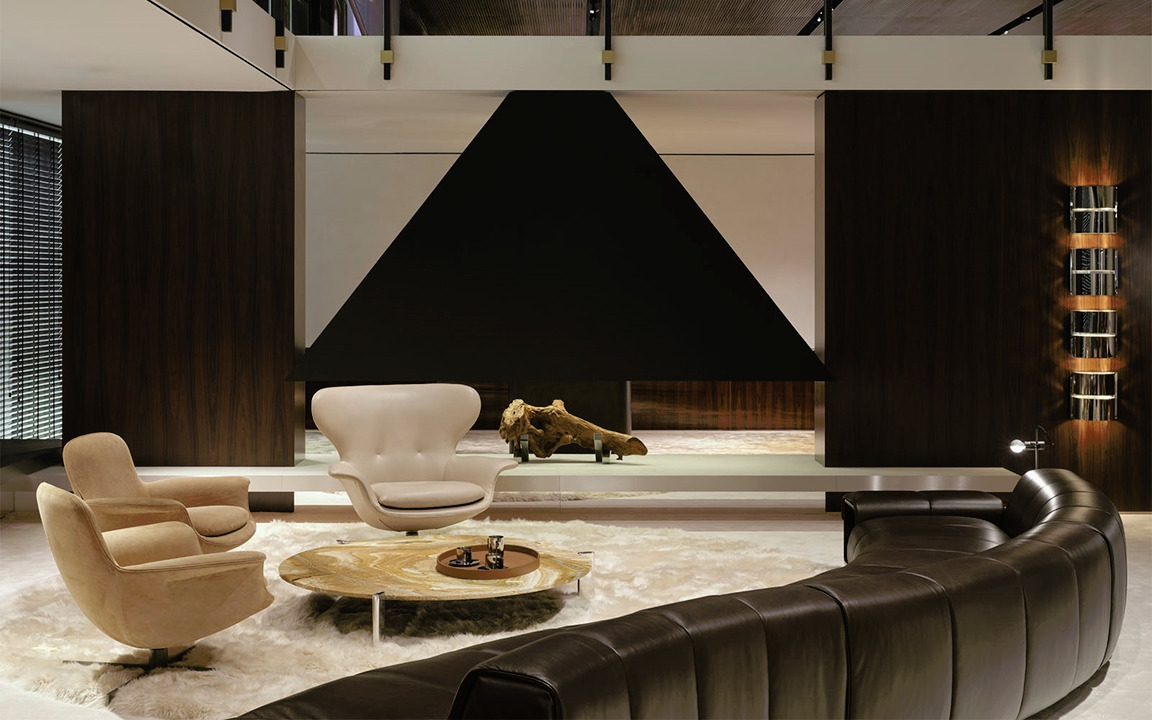
One of the most visible trends of 2026 is renewed interest in the legacy of late modernism. Minotti interprets the period through a combination of expressive materials and rational proportions.
Material depth
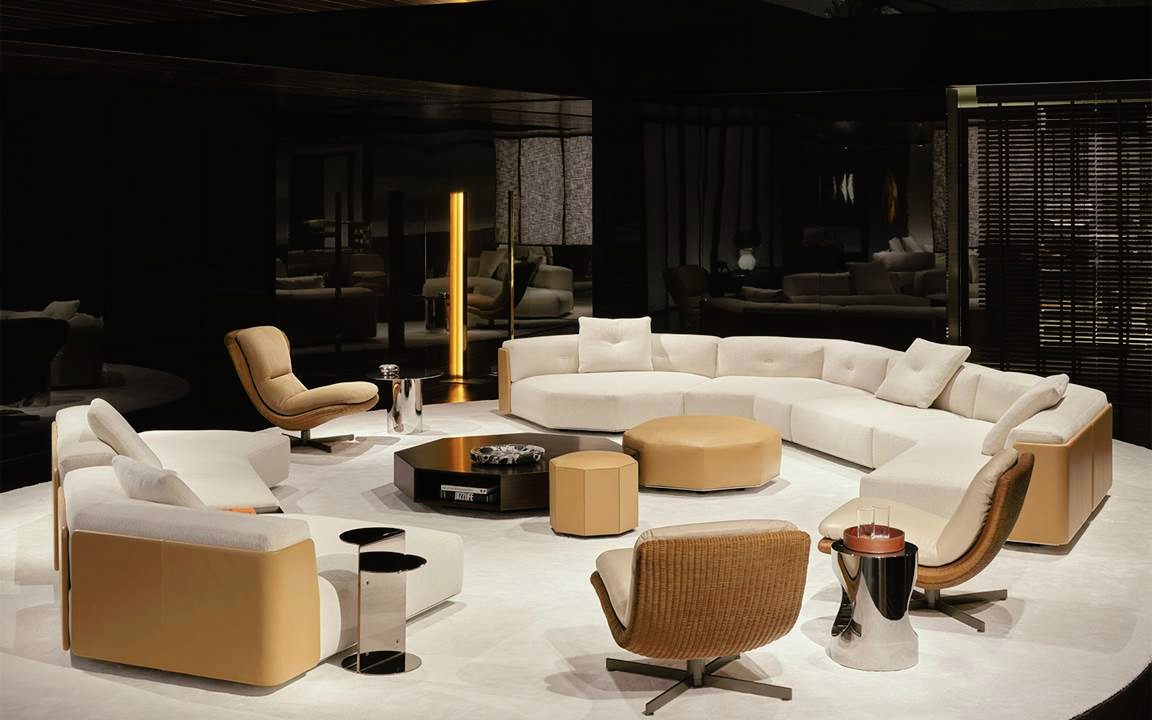
The contrast between reflective and absorbent surfaces, concrete, metal, wood and textiles matters more than decorative effects. Materials define the character of the space.
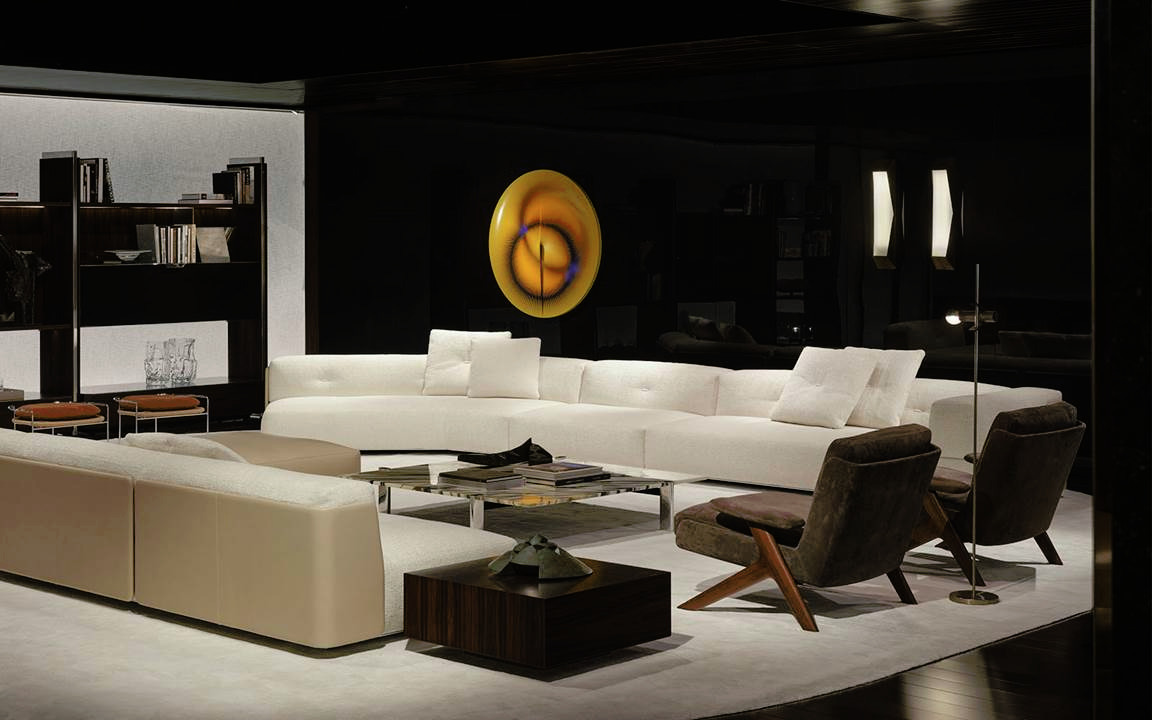
Integrating art into residential spaces
Collaboration with Tornabuoni Arte gallery and the inclusion of works by Italian artists from the 1950s to the 1970s demonstrate the growing role of art as part of interior architecture.
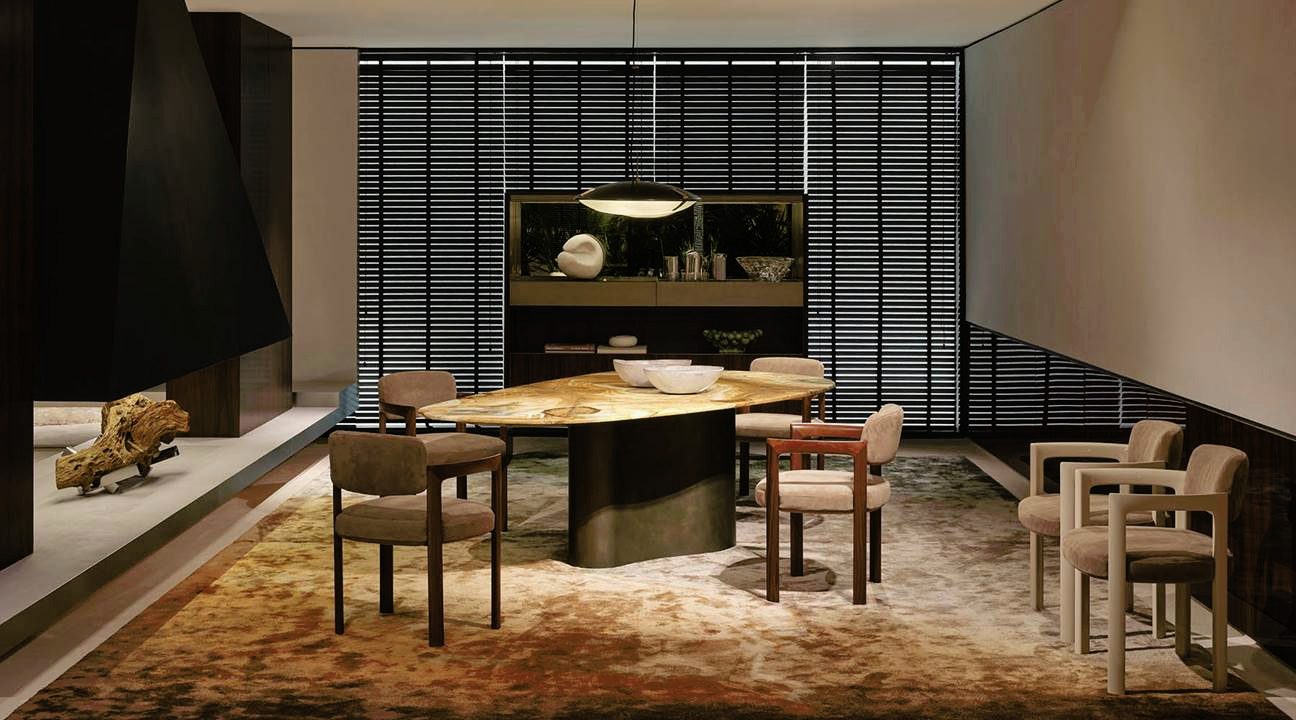
The Minotti 2026 collection confirms that contemporary luxury interiors are moving towards greater architectural character, depth and intellectual unity. The brand prioritises precise proportions, material quality and the ability of space to create an emotional human experience rather than visual impact. The collection offers architects and designers a valuable example of furniture becoming an extension of architecture. The collection also shows how an interior can become one spatial system in which every element contributes to a coherent environment.