The Legend of the Rondanini Medusa, the Versace Fashion House Logo
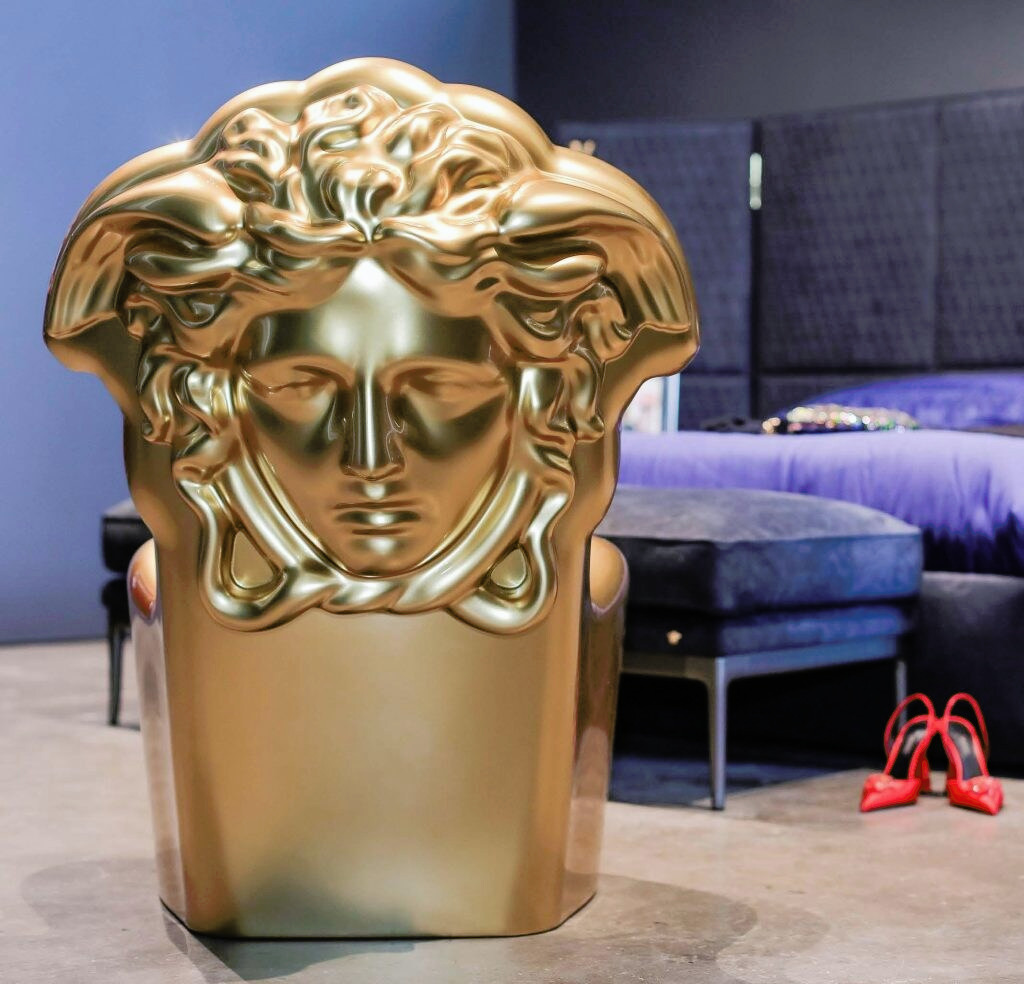
Calabria is the region where Gianni Versace was born. Calabria belonged to the Greeks from the 8th to the 3rd century BC and remains rich in artefacts from ancient Greek culture. Gianni Versace drew inspiration from Greek and Roman culture. Gianni Versace saw a wall drawing of the Rondanini Medusa during his childhood in Calabria. The beauty of the image impressed Gianni Versace, and the Medusa later became the logo of the fashion house.
Medusa comes from the ancient Greek word for “protectress” or “ruler”. Ancient Greek myths describe Medusa as an innocent girl, the daughter of sea gods and the sea depths, and the only mortal among the three Gorgon sisters. Medusa was a golden-haired beauty who captivated Perseus and Poseidon. Athena transformed Medusa into a monster with snakes instead of golden hair out of jealousy. Every living thing turned to stone when it looked at Medusa Gorgon, and nobody had the strength to look away. Over the centuries, artists stopped depicting Medusa’s head as purely frightening, and the image became associated with protection. The gorgoneion became a decorative element.
Gorgoneion comes from the ancient Greek phrase meaning “belonging to the Gorgon”. A gorgoneion is a protective talisman mask showing the head of Medusa Gorgon. Ancient buildings and objects, including coins, carried the image to protect against evil. Gorgoneion became a decorative motif in modern art. The motif protected owners from misfortune and appears on the official coat of arms of Sicily. Versace products attract attention with their beauty and protect their owners from evil. Versace products are as difficult to look away from as the fatal eyes of Medusa. Some accounts also claim that the Gorgon Medusa was a symbol of the Mafia in Italy, particularly in Sicily. According to these accounts, a three-legged Medusa sign above a home’s entrance meant that the Mafia protected the house and that criminals could not touch it. Other rumours claimed that the Italian Mafia financed Gianni Versace’s business from the beginning.
The Virtus V signature by Versace takes its form and philosophy from ancient Rome.
Virtus, pronounced in Classical Latin as [ˈwɪrtuːs], was a distinctive virtue in ancient Rome. Virtus carried connotations of valour, masculinity, excellence, character and value, which Romans viewed as masculine qualities. The word derives from the Latin vir, meaning “man”. Roman emperors often proclaimed Virtus as a virtue, and Romans personified Virtus as a deity. Virtus emerged from an aristocratic tradition in which Virtus represented a specific form of public conduct. Virtus serves as a visual metaphor for enduring strength.
Patterns and Prints
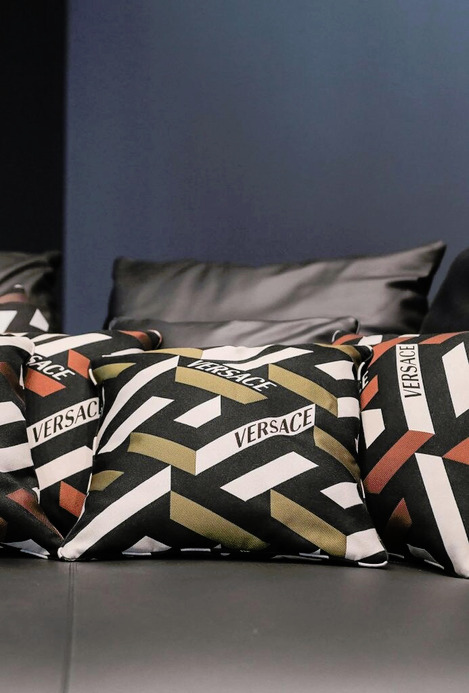
The Versace La Greca pattern moved from the catwalk into the interior collection through jacquard textile pieces. The distinctive pattern offers a modern interpretation of the legendary Versace meander and creates a striking background in selected rooms of the Milan Versace Home boutique.
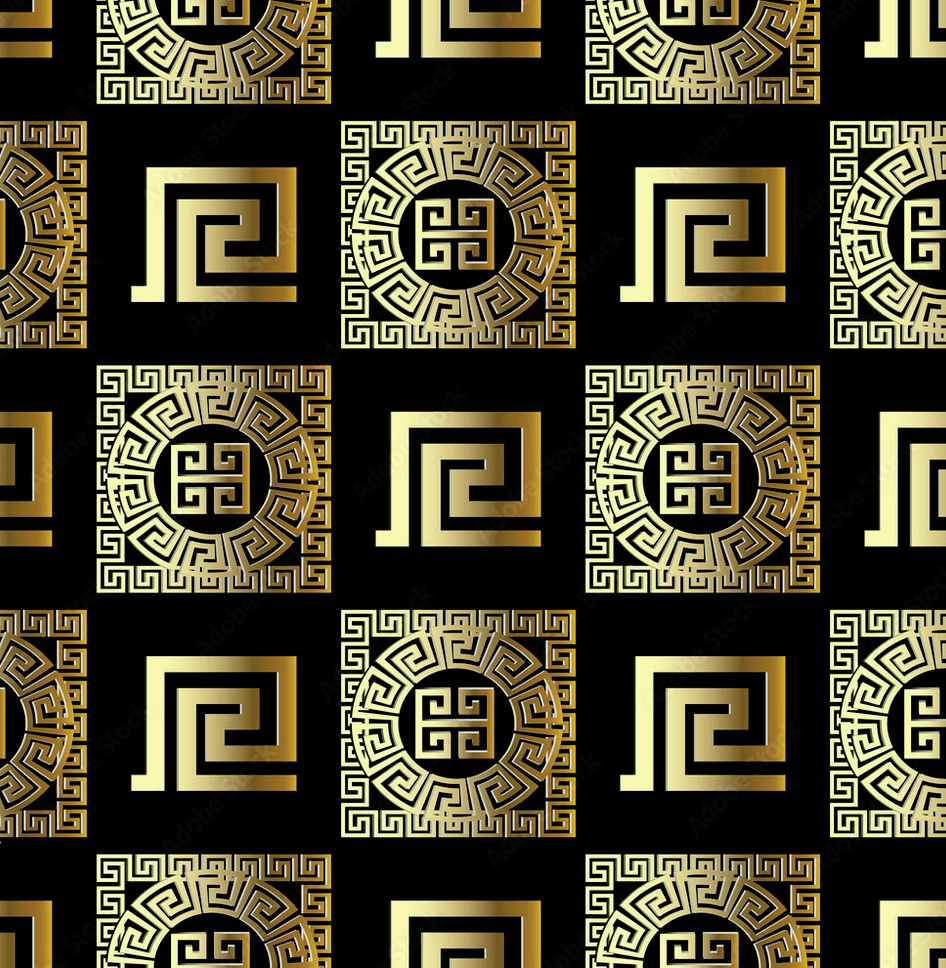
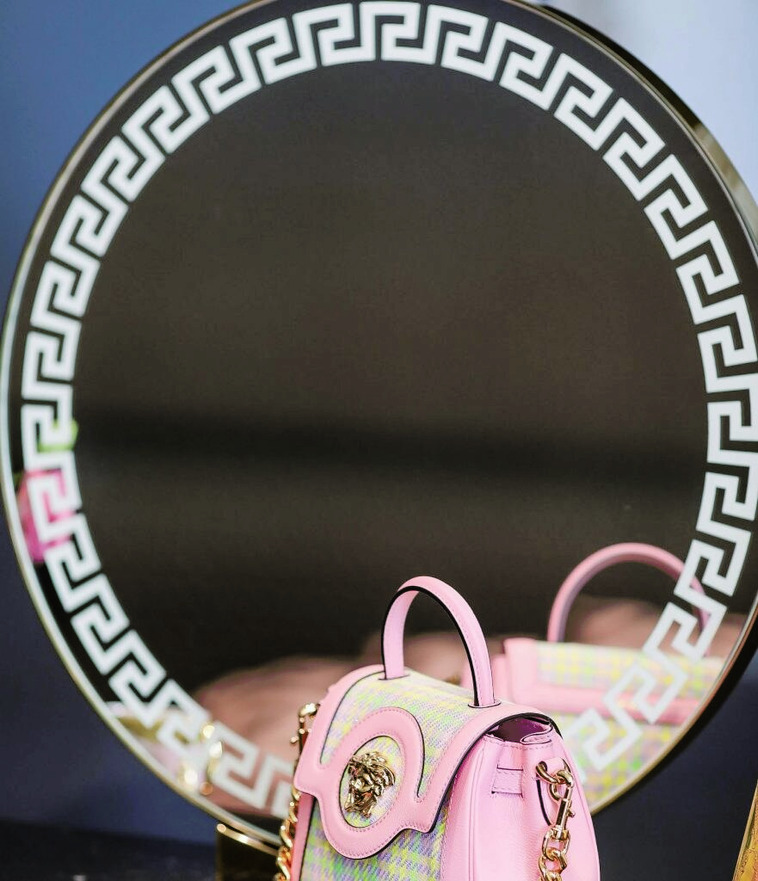
Meander is a common type of orthogonal ornament. The meander has been known since the Paleolithic period. In ancient art, the meander was a geometric motif formed by a broken line with right angles or by spiral curls. The meander’s continuity, direction and movement made the motif a common decoration for architectural friezes, bands, mouldings, frames, pilasters and window surrounds. Etruscan, ancient Greek, ancient Roman, Byzantine and Romanesque architecture used the meander.
La Greca connects with the classical Greek meander. La Greca can be understood as a three-dimensional, reinterpreted and modern meander.
Versace signature motifs include Medusa, Baroque and Trésor de la Mer. The motifs give three-dimensional character to sofas, chairs, coffee tables, beds, lighting, mirrors and cabinets. Tone-on-tone engraving, screen printing, special textile treatments and intricate pleating add movement and texture to surfaces. The techniques contrast with smooth, glossy finishes.
Trésor de la Mer, meaning “treasure of the sea”, is a Versace aquatic print celebrating nature and harmonising with the elements. Trésor de la Mer came from the fashion industry. Gianni Versace developed the print himself. The print appeared in some of the most legendary and iconic Versace shows. Models including Cindy Crawford, Linda Evangelista, Naomi Campbell and Carla Bruni presented Trésor de la Mer designs that embodied the joy of life.
Milla Jovovich opened the legendary 1992 show on a magnificent swing surrounded by flowers. The print became legendary and iconic and caused a sensation.
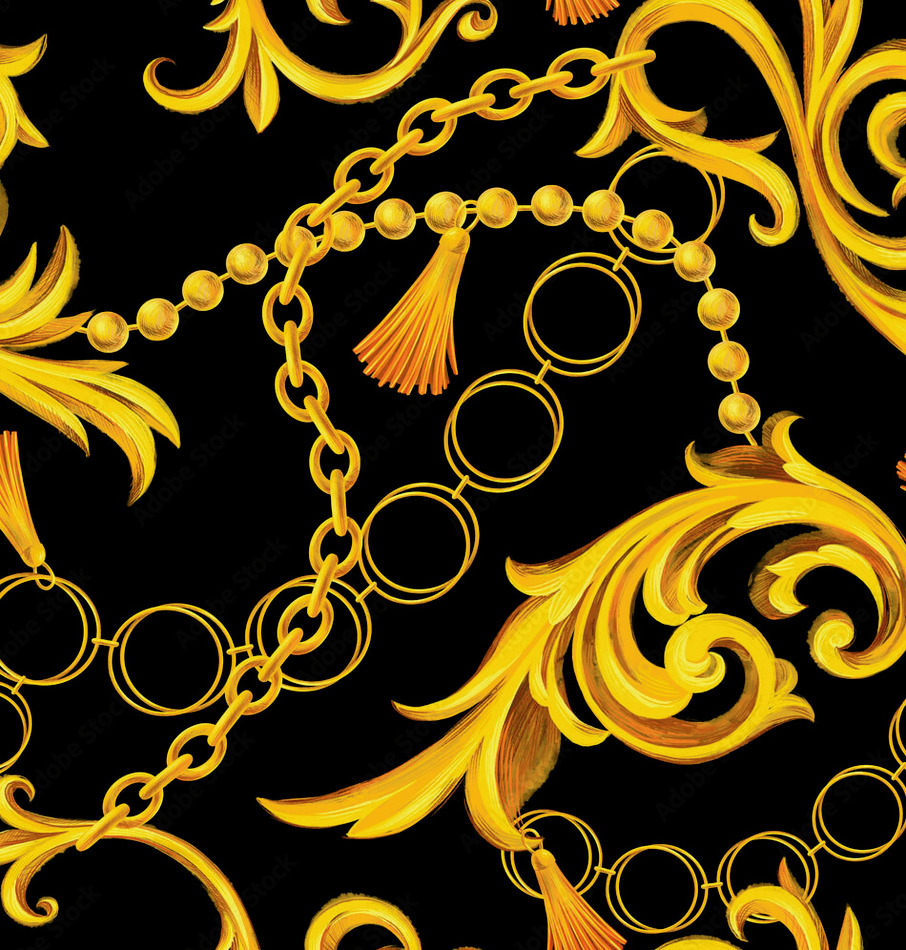
The Baroque signature print is the brightest expression of Versace style and creates an atmosphere of luxury and splendour. Baroque print was not associated with Versace several decades ago. The globally known brand is relatively young. Gianni Versace presented his first collection only in the late 1970s. The fashion house gained followers around the world and experienced periods of success and decline.
Gianni Versace admired the Baroque style and was one of the few designers who adapted the print skilfully to contemporary life. Gianni Versace turned classic Italian ornaments into decadent American pop art. The public welcomed his bold decisions. Catwalk looks included dresses with stylised Medusa Gorgon images and bombers with gold impressions on handmade silk. Baroque ornament also appeared on accessories, including glasses with the signature logo and beach towels with variations of the ancient print. The brand represented a distinct bohemian and glamorous lifestyle. Gianni Versace used lush botanical ornaments, complex geometric patterns and threads of precious metals in his fabrics. Gianni Versace placed refined architectural lace from Italy in the service of kitsch. The print continues to appear on silk scarves, shirts and dresses in unusual colour combinations and in the brand’s traditional gold.
Versace has a rich history. The brand spent many years searching for its identity and changing its strategy, heroes and prints. The most successful elements were the elements established at the beginning of the brand’s journey. Versace became known for luxury, extravagance and iconic prints. After Gianni Versace died, his sister Donatella did not immediately identify the right direction for the fashion house. The brand became less relevant, sales fell and attempts to restore interest failed. Donatella said that the brand and Donatella herself had to experience the fear of decline. Donatella restored the brand’s former popularity after a long search and detailed analysis. Donatella focused on the fashion house’s legendary history. The Spring-Summer 2018 collection dedicated to Gianni Versace conquered the world through its Baroque prints. Iconic prints, characteristic extravagance, considered details and fashion icons at the end of the show made the public talk about Versace again.
Versace continues to present the brand’s history through a series of short films in which supermodels read myths about the legendary Medusa. Naomi Campbell, Gigi Hadid, Kaia Gerber, Irina Shayk and other models wear looks from the new collection and lead viewers into the mysterious world of ancient Greece.
Donatella Versace gave the collections a new interpretation. Donatella Versace modernised the signature fabrics with a skilled approach. The more simplified and restrained fabrics became more versatile. Fashion followers began combining Versace accessories with Asian-style outfits and strictly tailored European suits. The signature ornaments retained their unique style and remained examples of sensual design. Donatella Versace developed Versace Home and moved the Baroque print from the catwalk into interior showrooms. The bold Italian and refined feminine motifs brought a fresh perspective to interior designers around the world.
Milan 2022 to 2023
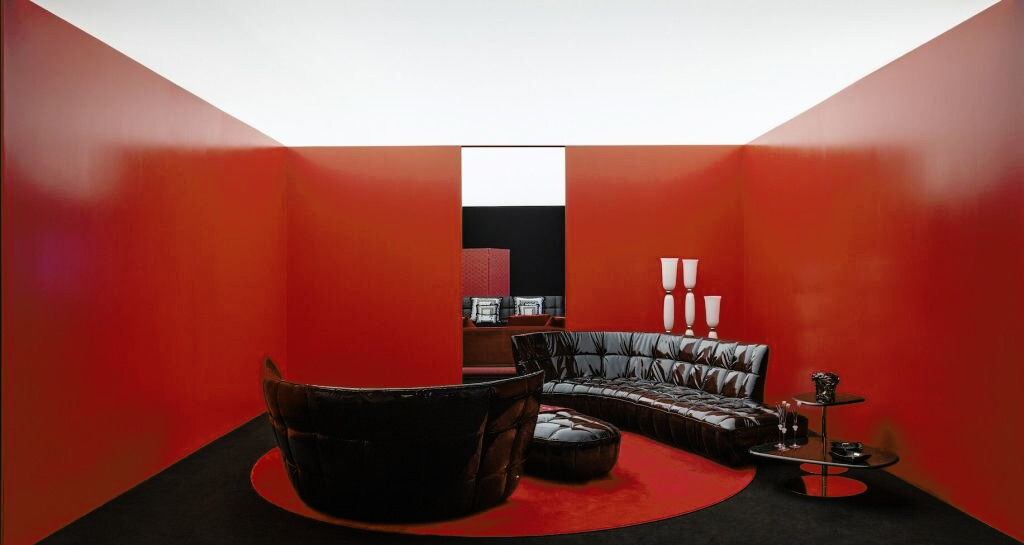
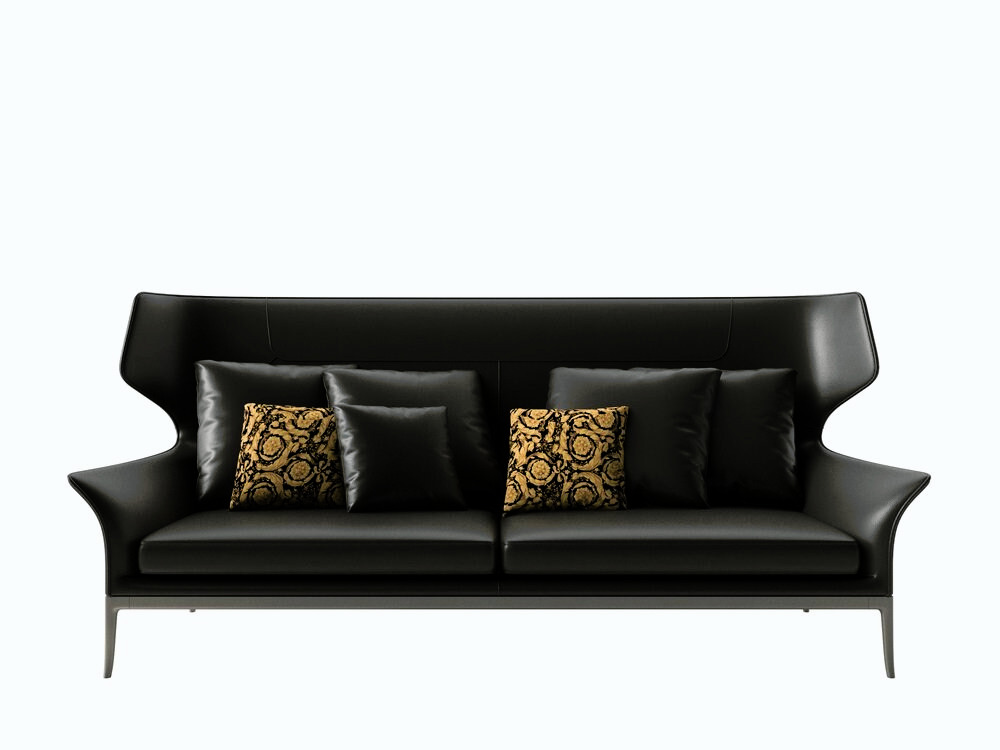
Versace presented a completely new furniture collection at Isaloni Milano 2022. Donatella Versace worked on the Versace exhibition at Palazzo della Permanente for Isaloni Milano 2022 with architects and designers Roberto Palomba and Ludovica Serafini. Their collaboration produced interiors and furniture in black and red that combined design, fashion and art according to the creators’ concept. The exhibition created a haute couture atmosphere, with top-model silhouettes displayed on screens. The La Medusa sofa, covered in black vinyl, was probably the most interesting new Versace Home piece. The sofa represented haute couture entering the interior.
The new Versace Home collection represents more than a transformation of the fashion brand’s stylistic codes. The project was created by architects in partnership with Luxury Living Group and combines fashion, luxury and interior design. The project invites each person to experience the Versace world. The new Versace Home collection resulted from research into the brand’s history, fashion shows, heritage and graphic elements that define the brand’s philosophy. Versace consistently refers to classical art from ancient Greece and to mythology. Versace combines eclecticism and geometry.
Designers
The L+R Palomba family duo
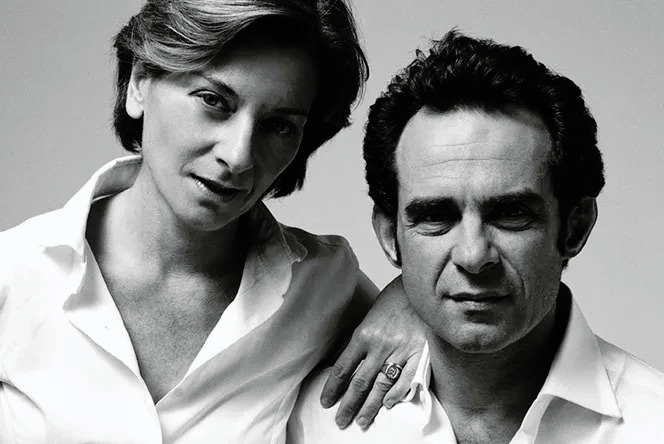
Roberto Palomba and Ludovica Serafini are qualified architects who live and work in Milan. More than 20 years ago, Roberto Palomba and Ludovica Serafini founded Palomba Serafini Associati. Their portfolio includes numerous design awards, including Red Dot, Design Plus, Good Design Award, German Design Award and Compasso D’Oro. Roberto Palomba and Ludovica Serafini do not approach products and objects separately. The designers compose a space and gradually condense the space into the required object. Every table, shelving unit, lamp, sink and light therefore has a measured individuality. Each object has a distinct image without overpowering other objects or competing for attention.
Contrast guided Roberto Palomba and Ludovica Serafini while they worked on the Versace collection. Dense leather meets fine silk. Glossy precious metals meet textured marble. Monochrome meets vivid prints. The collection’s design concept creates a polyphony in which every product has its own story and character while remaining part of a coherent environment.
Versace Home is developed by Donatella Versace with technical support from the Palomba family. Versace Home remains closely connected with the Versace fashion brand.
The new Versace furniture collection demonstrates the fashion house’s ability to combine heritage with modernity and mythology with pop culture. Three key designs are the Venus armchair, the Goddess sofa and the Stiletto cabinet.
The Versace Venus armchair is a sculptural chair with a zip fastening on the back. The design pays tribute to the top models, particularly Naomi Campbell, who supported the brand from the beginning. The design refers to the Versace prêt-à-porter collection. The asymmetrical design has soft black leather upholstery and a glossy rear zip decorated with the signature Medusa plaque. Gold steel details express the brand’s preference for distinctive hardware.
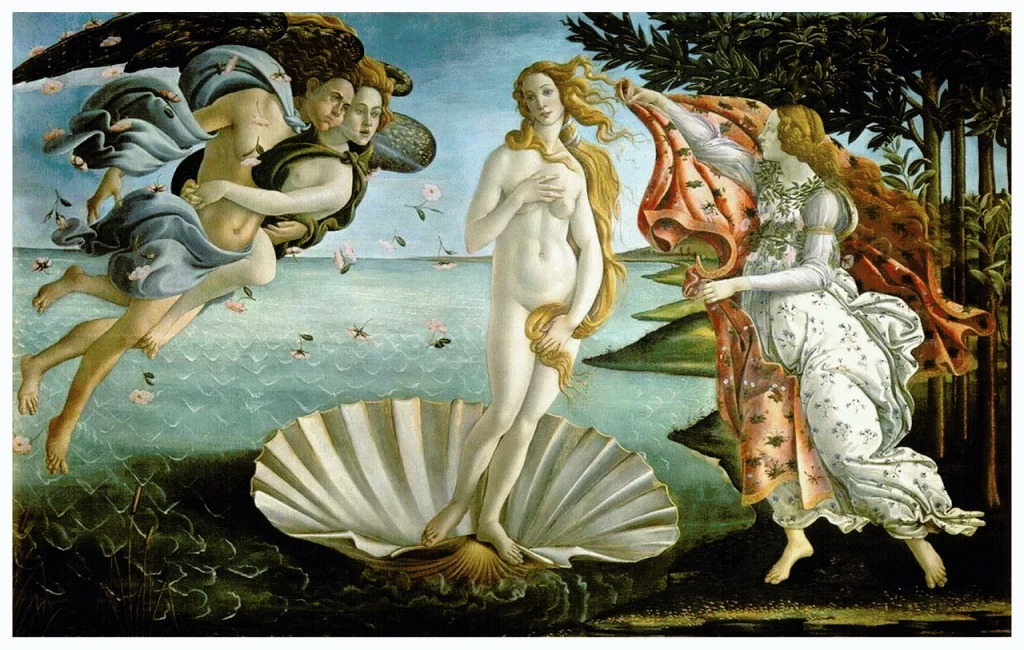
The Venus Goddess sofa refers to Venus, the Roman goddess of beauty, physical love, desire, fertility and prosperity. Roman Venus corresponds to the ancient Greek Aphrodite. The second planet from the Sun is named Venus. Sandro Botticelli depicted Venus in the famous painting The Birth of Venus.
The Goddess sofa The Goddess sofa presents sensual Versace design through curved lines that recall the brand’s leather jackets. The Goddess sofa is available as a two-seater or three-seater. The modular design includes central or side elements, a chaise longue and a pouf.
The rebellious and refined Stiletto Low sofa has sporty, precise forms. Versace’s strong femininity appears in every detail.