
Tobia Scarpa
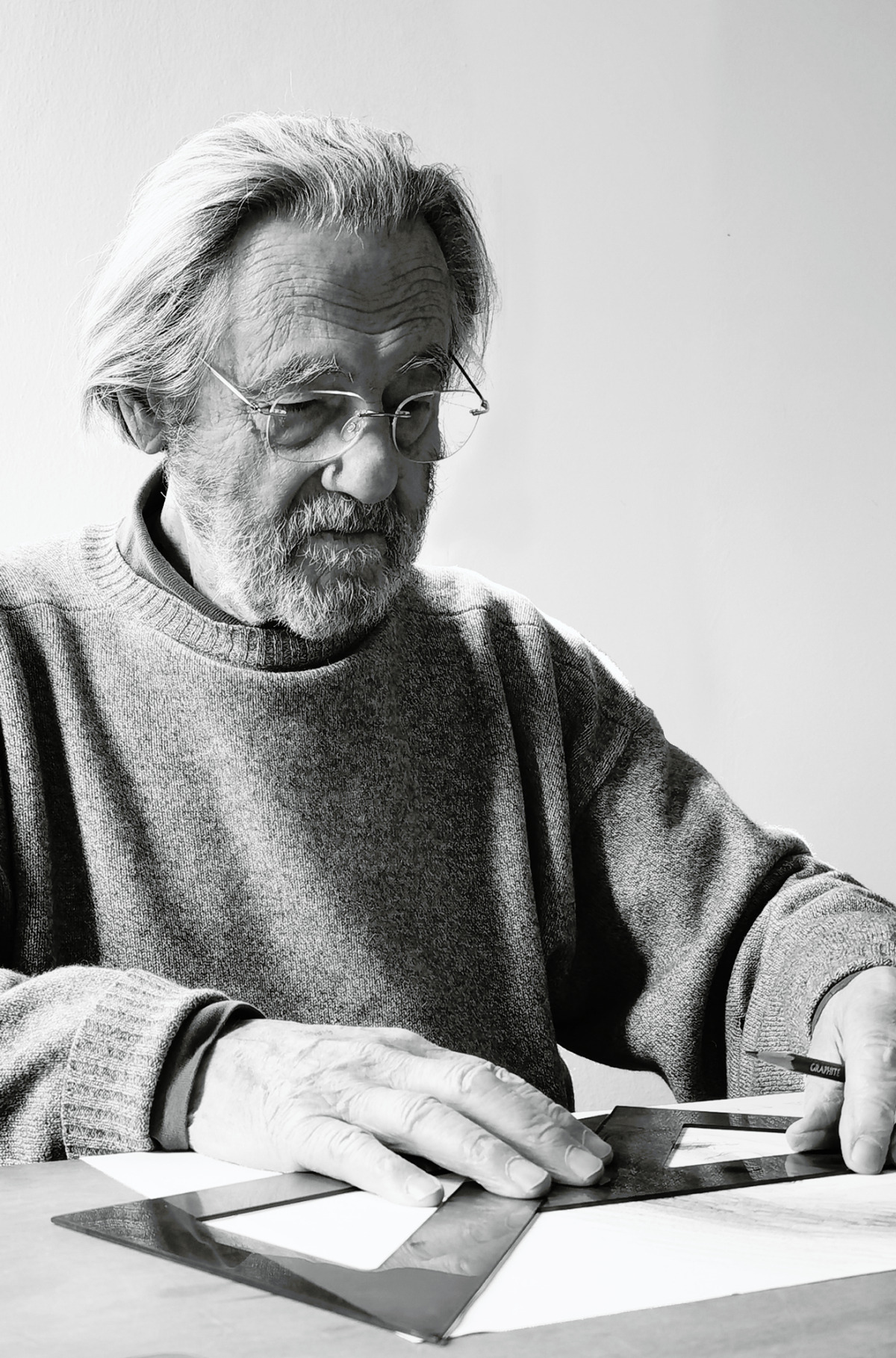
Tobia Scarpa: the architect who turned light into architectural matter
Tobia Scarpa was one of the key figures in Italian design during the second half of the 20th century. Unlike many designers of his generation, Tobia Scarpa never separated architecture, industrial design and craft. Tobia Scarpa treated a light fixture as an architectural element that shaped space through light, material and construction rather than as a decorative object.
Tobia Scarpa helped Flos acquire several lighting designs during the company’s early years. The designs now belong to the heritage of international design. Many designs have been produced for more than half a century and remain current and sought after.
Biography
Tobia Scarpa was born in Venice in 1935 to the family of the great Italian architect Carlo Scarpa. The atmosphere of Tobia Scarpa’s childhood shaped his approach to the profession. Tobia Scarpa viewed architecture as a culture of thinking rather than as a style.
Tobia Scarpa graduated from the architecture faculty of Università Iuav di Venezia in 1969. Tobia Scarpa worked with his wife, Afra Bianchin Scarpa, for several decades. The pair created furniture, lighting, architectural projects and industrial products for major Italian manufacturers.
Tobia Scarpa collaborated with B&B Italia, Cassina, Gavina, Benetton, Molteni&C, Knoll and Flos. Tobia Scarpa received the Compasso d'Oro alla Carriera award in 2008 for an outstanding contribution to the development of international design.
Design philosophy
The central principle of Tobia Scarpa’s work was complete structural honesty.
Tobia Scarpa did not seek striking forms for decorative effect. Each object was built around the material, the physical properties of the material and the logic of production.
Tobia Scarpa’s design principles included:
architecture as the foundation of every object;
respect for natural materials;
construction before decoration;
engineering precision;
durability;
harmony between craft and industrial production.
Tobia Scarpa repeatedly said that design and architecture differed in scale but not in their principles of creation. Tobia Scarpa’s lighting designs are therefore perceived as small architectural structures.
Collaboration with Flos
The collaboration between Tobia Scarpa and Flos began almost at the same time as the company’s own history.
Flos became a platform for bold experiments by young Italian designers in the early 1960s. Tobia Scarpa gained an opportunity at Flos to develop projects that many manufacturers considered too complex or commercially risky.
Tobia Scarpa recalled that the most engaging part of working with Flos was creating objects that initially seemed impossible and later became successful products.
Fantasma (1960)
Fantasma was one of the first joint projects by Tobia Scarpa and Flos.
Fantasma used an innovative process for its time, a polymer coating applied to a metal frame. The technology later developed widely across Flos collections.
Fantasma featured:
an organic sculptural form;
soft diffused light;
experimental materials;
no visibly readable structure.
Fantasma was one of the early examples of a light fixture perceived as an artistic object rather than only as a source of light.
Foglio (1966)
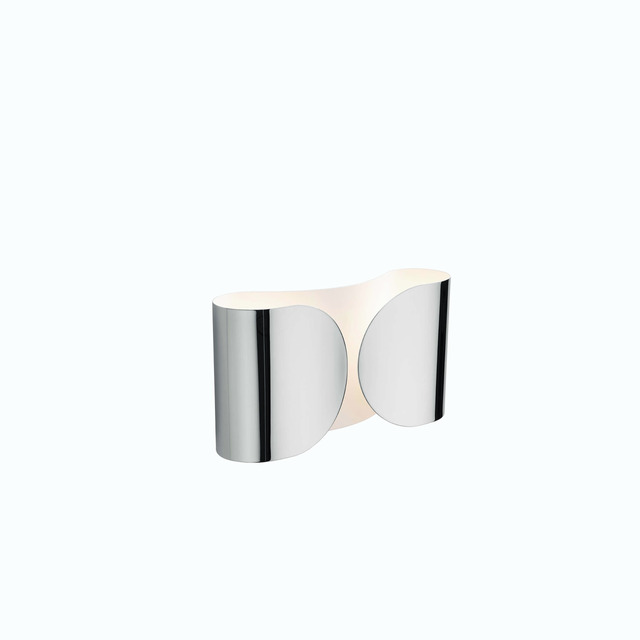
Foglio is one of the best-known Flos models.
Foglio appears extremely simple at first glance, consisting only of a bent sheet of metal. The simplicity of Foglio became the project’s main strength.
Foglio featured:
a single-piece steel body;
reflected light without glare;
a minimal number of components;
precise geometry.
Foglio has remained in the Flos catalogue for almost sixty years and is considered an example of Italian minimalism.
Biagio (1968)
Biagio is a table lamp and one of Tobia Scarpa’s most recognisable objects.
Biagio is carved from a single block of Carrara marble, making the design both a light fixture and a sculpture.
Biagio featured:
a monolithic body;
natural Carrara marble;
expressive sculptural form;
a combination of visual mass and lightness.
Biagio has long held the status of a collectible object and is considered one of the icons of 20th-century Italian design. Flos has also released a limited edition of Biagio in onyx in recent years.
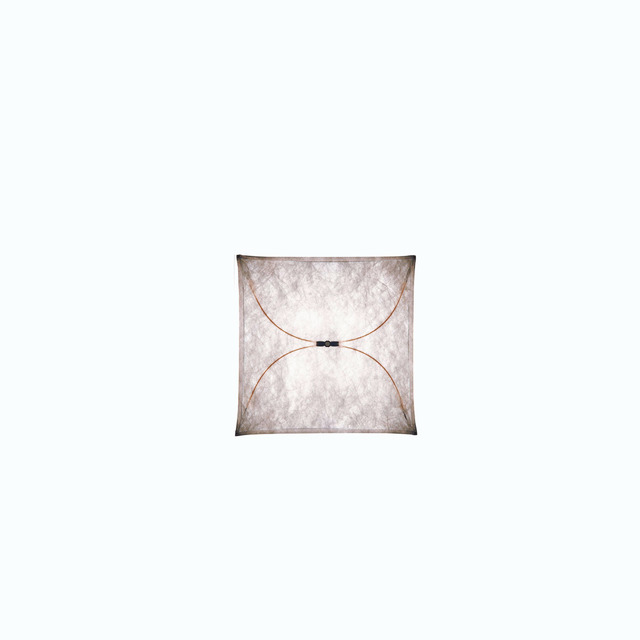
Ariette (1973)
Ariette demonstrates a different approach by Tobia Scarpa.
Tobia Scarpa used synthetic fabric stretched over a slim metal frame instead of a rigid body.
Ariette featured:
soft light diffusion;
a lightweight construction;
wall and ceiling installation options;
an almost weightless presence in an interior.
Ariette remains an example of how simple materials can create an expressive lighting atmosphere decades after its creation.
Seki-Han (1963 / reissue 2025)
The return of the legendary Seki-Han was one of the most anticipated events of recent years.
Flos reissued Seki-Han in 2025 in collaboration with Tobia Scarpa. Tobia Scarpa originally created Seki-Han in 1963.
Seki-Han consists of two wooden panels surrounding a linear light source. The new version has movable panels that allow users to change the direction and intensity of the lighting.
Seki-Han featured:
an architectural construction in natural wood;
adjustable pivoting panels;
modern LED technology;
a combination of historic design and contemporary engineering solutions.
The Seki-Han reissue demonstrates a careful update of a classic project without losing the original idea.
Why the collaboration with Flos became significant
Tobia Scarpa was one of the designers who shaped Flos’s visual identity during the company’s early years.
Tobia Scarpa’s projects showed that a contemporary light fixture could unite architecture, engineering and art. Many ideas proposed by Tobia Scarpa in the 1960s remain relevant today, including material honesty, structural logic, durability and respect for craft.
Foglio, Biagio, Ariette and Seki-Han therefore remain in the Flos catalogue decades after their introduction.
Tobia Scarpa in contemporary interiors
Tobia Scarpa’s work is valued in architectural interiors that require material presence, tactility and purity of form. Tobia Scarpa’s lighting designs suit private residences, galleries, boutique hotels, museums and public spaces.
Unlike many contemporary designers, Tobia Scarpa did not pursue visual effect. The designs create an impression through precise proportions, refined materials and intellectual simplicity.
Tobia Scarpa pieces
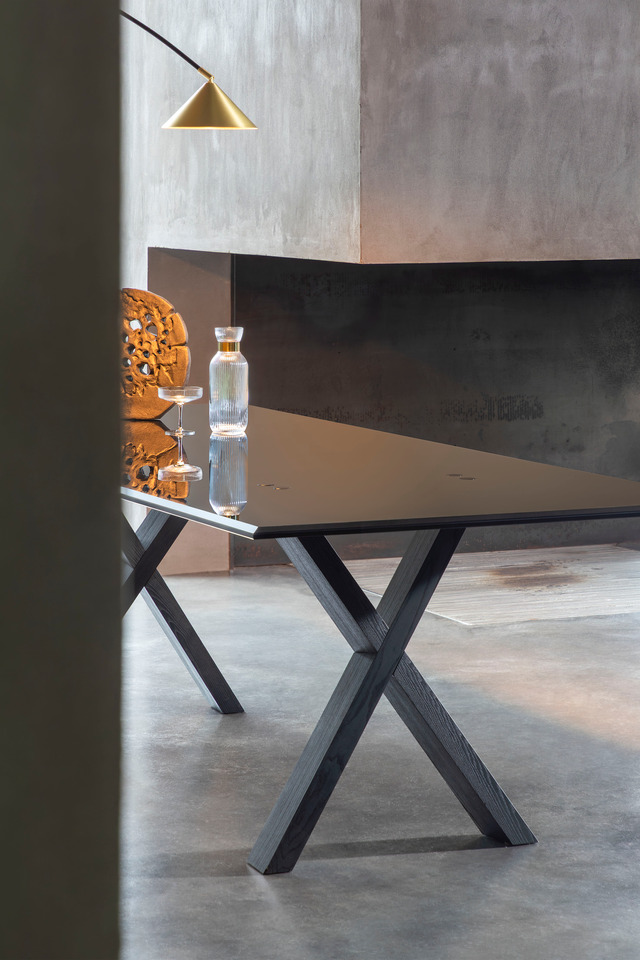
Looking for the right Italian furniture?
Antonovych Home advises on collections, availability, configurations and current offers.