Ceramica Flaminia: design that changed the bathroom
Some brands manufacture bathroom fixtures. Ceramica Flaminia belongs to the group of companies that made sanitaryware part of modern design history.
Ceramica Flaminia treats the bathroom as more than a collection of functional products. A basin can become the centre of a composition, a toilet can become an industrial design object, colour can shape an interior, and ceramic can support continuous experimentation.
Ceramica Flaminia is one of the best-known names in Italian bathroom design. The company has grown over 70 years from a small factory in Civita Castellana into an international brand working with leading names in global design.
Ceramica Flaminia developed its modern identity through a decision to change the accepted idea of sanitaryware rather than simply update its product range.
Ceramica Flaminia eventually chose to redefine what sanitary ceramic could be.
From a small factory to an international brand
Ceramica Flaminia began in 1954 in the Italian town of Civita Castellana, a region recognised as one of the historic centres of sanitary ceramic production.
After an unsuccessful strike at a local company, 23 young workers made an unusual decision. The workers chose to create their own factory instead of looking for new employment.
Some workers took out loans.
Other workers postponed their weddings.
Every founder contributed personal work and funds to the shared enterprise.
Ceramica Flaminia began producing sanitaryware in January 1955. Most production was manual at the time. Craftspeople shaped, dried and fired each product, while quality depended largely on the experience of people working with the material.
The origin of Ceramica Flaminia explains much about the brand’s character.
Flaminia retained a close connection with Civita Castellana and Italian ceramic culture after becoming an international manufacturer.
The major transformation came much later.
Ceramica Flaminia philosophy: design begins where convention ends
Ceramica Flaminia developed as a traditional sanitary ceramic manufacturer during its first decades.
The company faced the need for a radical change of direction during the 1990s.
The market was changing.
Consumers were becoming more demanding.
Traditional bathroom fixture designs were losing their appeal.
Flaminia responded by making design a central priority.
Roberto Palomba joined the company during the 1990s, beginning a major aesthetic transformation. New forms replaced familiar classical models, and sanitaryware became an object of contemporary industrial design.
The change was fundamental.
People had previously chosen a basin mainly by size.
Flaminia invited customers to choose a basin by character.
Shape also became important.
The role of a basin within a space also became important.
Sanitary ceramic became part of interior culture rather than purely technical equipment.
Acquagrande: the collection that began the transformation
Acquagrande became one of the symbols of Flaminia’s new direction.
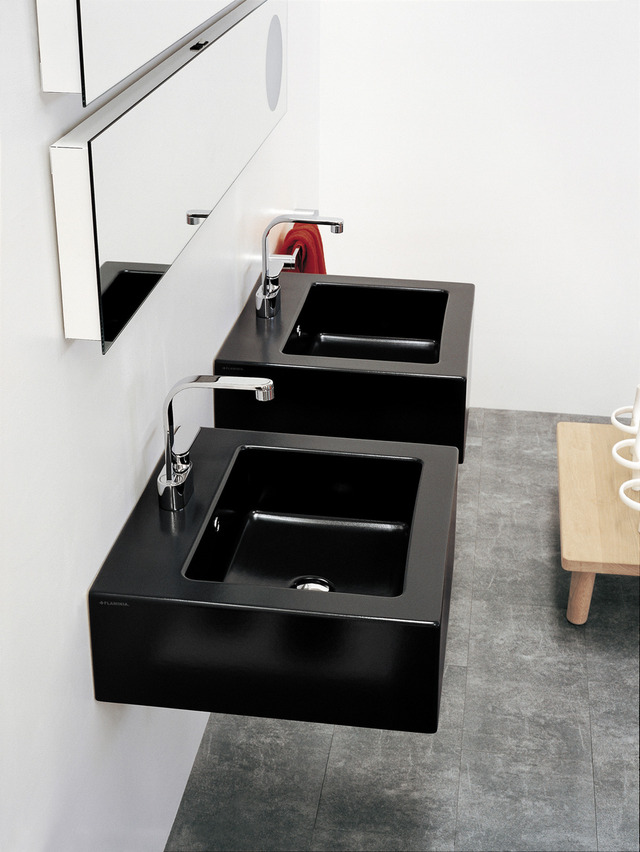
Giulio Cappellini created a large square basin for Flaminia in 1997.
The idea may appear familiar today.
Acquagrande represented a strong statement in the late 1990s.
The basin no longer tried to disappear.
The basin was large.
The basin was expressive.
The basin was almost monumental.
The basin could stand as an independent object within a space.
Flaminia’s official history identifies Acquagrande as one of the key products that marked a new era for Ceramica Flaminia.
Acquagrande also marked an important moment for bathroom design.
Bathroom design itself was changing.
A bathroom fixture no longer had to blend into a wall.
A bathroom fixture could become a visible design feature.
Ludovica + Roberto Palomba: a new bathroom culture
Ludovica Serafini and Roberto Palomba hold a special place in the history of Ceramica Flaminia.
The designers worked with the brand as bathrooms began to become independent interior spaces.
Ludovica + Roberto Palomba treated the bathroom as more than a technical room.
The bathroom became a room in its own right.
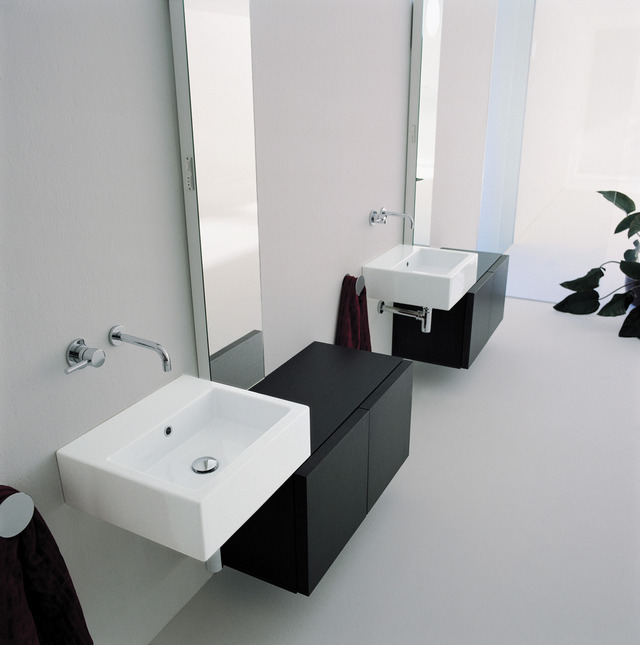
The room could include dedicated furniture.
The room could include considered lighting.
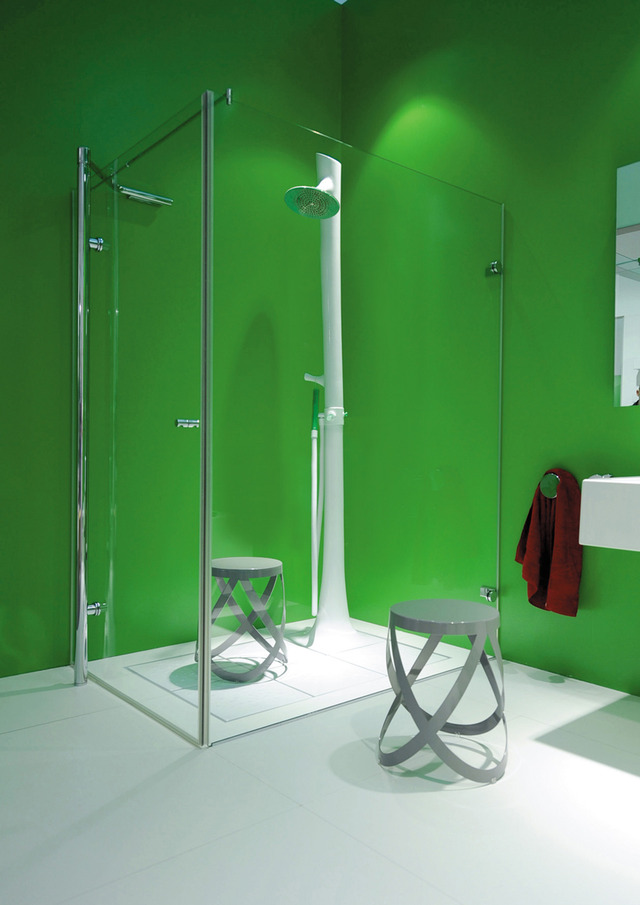
The room could include colour.
The room could include a compositional centre.
Key collections associated with Ludovica + Roberto Palomba include Nuda, Twin and Brick, together with other projects.
The designers placed particular emphasis on form.
A form should be contemporary without depending on short-lived fashion.
A form should be minimalist without appearing cold.
A form should be functional without appearing technical.
This philosophy shaped the continuing development of Ceramica Flaminia.
Giulio Cappellini: the person who turned Flaminia into a platform for designers
Giulio Cappellini became Ceramica Flaminia’s art director in 2004.
The appointment marked another important stage in the brand’s transformation.
Cappellini introduced a new working model to the company.
Flaminia began working actively with established designers and young designers.
The company became a laboratory for ideas.
Different design languages could meet within the company.
Minimalism.
Irony.
Organic forms.
Strict geometry.
Experimental design.
Flaminia states that this period made the company a meeting place for different design cultures and one of the sanitary ceramic manufacturers working with an especially broad group of designers.
The list of designers who have worked with Flaminia remains impressive.
Ceramica Flaminia designers: different views of one material
Ceramica Flaminia has no single dominant design signature.
The brand deliberately invites designers with different creative characters.
Flaminia designers include:
Jasper Morrison;
Paola Navone;
Nendo;
Patrick Norguet;
Fabio Novembre;
Alessandro Mendini;
Elena Salmistraro;
Giulio Iacchetti;
Rodolfo Dordoni;
Ludovica + Roberto Palomba;
Giulio Cappellini;
and many other designers.
The official designer list includes more than two dozen recognised international names and creative studios.
This diversity makes the Flaminia catalogue especially useful for interior designers.
The collections do not appear to follow one template.
Each collection has its own character.
Jasper Morrison: the beauty of ordinary things
Jasper Morrison is one of the leading representatives of intellectual minimalism.
Jasper Morrison rarely seeks attention at any cost.
Jasper Morrison follows a different approach.
A product should feel so natural that it appears to have always existed.
Jasper Morrison created the Bonola collection for Ceramica Flaminia.
Bonola expresses Morrison’s belief that good design does not need to announce its originality.
Creating a form without anything unnecessary can be the more difficult task.
This approach has particular value in a bathroom.
A bathroom is used every day.
A bathroom product should not visually tire the user.
A bathroom product should become a natural part of daily life.
Paola Navone: ceramic with emotion
Paola Navone represents a different temperament.
Paola Navone’s projects contain cultural associations, travel references, playfulness and freedom.
Paola Navone created the Boll collection for Flaminia.
Form is rarely only rational in Navone’s work.
Form can be soft.
Form can be ironic.
Form can be slightly unexpected.
Designers such as Paola Navone help Flaminia avoid becoming a brand of sterile minimalism.
A bathroom can feel calm.
A bathroom does not have to feel without emotion.
Nendo: Japanese precision and the art of the simple gesture
Japanese studio Nendo, founded by Oki Sato, is known for finding unusual ideas in ordinary things.
Nendo created several collections for Ceramica Flaminia, including Box, Roll and Taki.
Nendo’s approach centres on one precise gesture.
The aim is not to complicate a form.
The aim is to find an idea that changes how people perceive a form.
This approach is especially interesting in sanitaryware.
The function of sanitaryware is clearly defined.
A designer can still change the way people relate to a product.
A designer can use a line.
A designer can use proportion.
A designer can change the way people interact with a product.
Patrick Norguet: contemporary elegance
French designer Patrick Norguet is known for combining industrial precision with visual softness.
Patrick Norguet developed the Nile, Noké and Monò collections for Ceramica Flaminia.
These projects place emphasis on clean geometry.
The geometry never becomes cold.
The forms remain clear to users.
The forms remain comfortable.
The forms remain tactile.
These products suit contemporary premium interiors, where designers increasingly seek a balance between minimalism and emotional appeal.
Elena Salmistraro: sanitaryware as a visual character
Ceramica Flaminia’s collaboration with Elena Salmistraro shows another side of contemporary Italian design.
Elena Salmistraro is known for a vivid, emotional and highly individual visual language.
Elena Salmistraro created the Falala, Norma and Spire collections for Flaminia.
Her projects demonstrate that a functional product can have an individual identity.
A functional product can be recognisable.
A functional product can be emotional.
A functional product can be artistic.
A functional product can remain part of daily life.
Nuda: the beauty of open form
Nuda, created by Ludovica + Roberto Palomba, is one of the most expressive examples of Flaminia’s contemporary philosophy.
The name, meaning “naked”, expresses the project’s central principle.
Nothing unnecessary remains.
The form is freed from decorative covering.
Only what is necessary remains.
The minimalism does not appear cold.
The minimalism highlights the plasticity of ceramic.
Nuda shows how much the contemporary bathroom has changed.
A basin can now become a central object.
A basin no longer needs to be an addition to furniture.
A basin can become an independent form around which an interior composition is built.
Nuda is included in Flaminia’s current catalogue of designer collections.
App: versatility without losing character
Not every successful collection needs to be experimental.
Sometimes the main design task is to create a system that works in different spaces.
App, developed by Flaminia Design Team, follows this approach.
App is one of the brand’s most complete collections, with sanitary elements and basins united by soft, rounded lines and balanced proportions.
App is notable for its versatility.
App can work in a private apartment.
App can work in a large residence.
App can work in a hotel project.
App can work in a public space.
The collection does not appear anonymous.
Creating a product that adapts easily to different interiors while retaining its own identity is one of the more demanding design tasks.
Flaminia Design Team: an internal laboratory
Flaminia Design Team plays an important role alongside invited design figures.
The internal creative team has researched ceramic possibilities and developed bathroom products for decades.
The team’s strength is a deep understanding of production.
The designer works in direct connection with the factory.
The designer understands the possibilities of the material.
The designer understands the limits of the technology.
The designer understands the process of creating a form.
Flaminia Design Team can therefore experiment while maintaining industrial feasibility.
The team’s collections include App, AppLight, Efi, Evergreen, Look, Niagara, Pass, Play, Stil, Two and others.
Colour: one of Flaminia’s strongest features
Bathrooms traditionally used a very limited colour system.
White.
Sometimes cream.
Later, black.
Ceramica Flaminia was one of the first Italian manufacturers to make colour a significant part of its design strategy.
The company offers a broad selection of finishes and shades, including matt, deep and metallic options.
Colour is not a decorative addition for Flaminia.
Colour is a design tool.
Flaminia’s official philosophy directly emphasises colour as one of the brand’s key areas of contemporary design.
Colour is especially important in contemporary interiors.
A designer can build a bathroom around one colour concept.
Ceramic can support the shade of natural stone.
Ceramic can contrast with wooden furniture.
Ceramic can become the main accent in a neutral space.
Sanitaryware no longer needs to remain invisible.
Ceramica Flaminia in interior design
In contemporary minimalism
Flaminia works especially well in minimalist interiors.
The character of the product must be selected carefully.
One expressive basin can replace a group of decorative elements.
Clean form.
Quality material.
Accurate proportion.
Sometimes these elements are enough.
In contemporary interiors
Contemporary interiors provide a natural setting for Ceramica Flaminia.
Natural stone can be combined with Flaminia ceramic.
Wood can be combined with Flaminia ceramic.
Metal can be combined with Flaminia ceramic.
Designer lighting can be combined with Flaminia ceramic.
Contemporary art can be combined with Flaminia ceramic.
Flaminia ceramic becomes part of the overall composition.
Flaminia ceramic does not appear as a separate technical element.
In modern classic interiors
Combining contemporary sanitaryware with classical interior elements creates an interesting effect.
A concise Flaminia basin.
Natural marble.
Decorative wall panels.
Layered lighting.
The combination creates a modern classic interior without copying historical interiors literally.
The design works through contrast between eras.
In hotel projects
A hotel bathroom has long formed part of the guest’s impression of a room.
Bathroom fixture design therefore has particular importance in hospitality.
Guests remember more than the bed.
Guests remember the atmosphere of the space.
Guests remember materials.
Guests remember lighting.
Guests remember the basin.
Guests remember the mirror.
Guests remember the details.
Flaminia collections combine versatility and expression for private interiors and contract projects.
Why do designers choose Ceramica Flaminia?
Ceramica Flaminia does not offer one style.
The brand offers tools for creating an individual style.
Form
Form ranges from strict geometry to soft plasticity.
Colour
Colour ranges from neutral shades to expressive contemporary finishes.
Design diversity
Jasper Morrison.
Paola Navone.
Nendo.
Patrick Norguet.
Elena Salmistraro.
Ludovica + Roberto Palomba.
And many other designers.
Production culture
Every production stage remains closely connected with the manufacturing base and ceramic tradition of Civita Castellana, from development and modelling to forming, glazing and firing.
Current relevance
The brand continues to update its range regularly. The official website already presents Design Collection 2026 and a catalogue of new products for 2026.
Seventy years of ceramic experimentation
The history of Ceramica Flaminia is a history of continuous change.
The company began with traditional handmade ceramic production.
The company experienced industrialisation.
The company then made a design transformation during the 1990s.
The company opened its work to leading international designers.
The company turned the bathroom into a space for experimentation.
Ceramica Flaminia continues to work between industrial production, craft culture and author-led design.
This balance may explain why the brand remains relevant.
Flaminia does not try to make sanitaryware beautiful for beauty’s sake.
Flaminia asks a different question:
Why should an object used every day not receive the same careful thought as a designer armchair, light fitting or contemporary artwork?
That question begins genuine bathroom design.